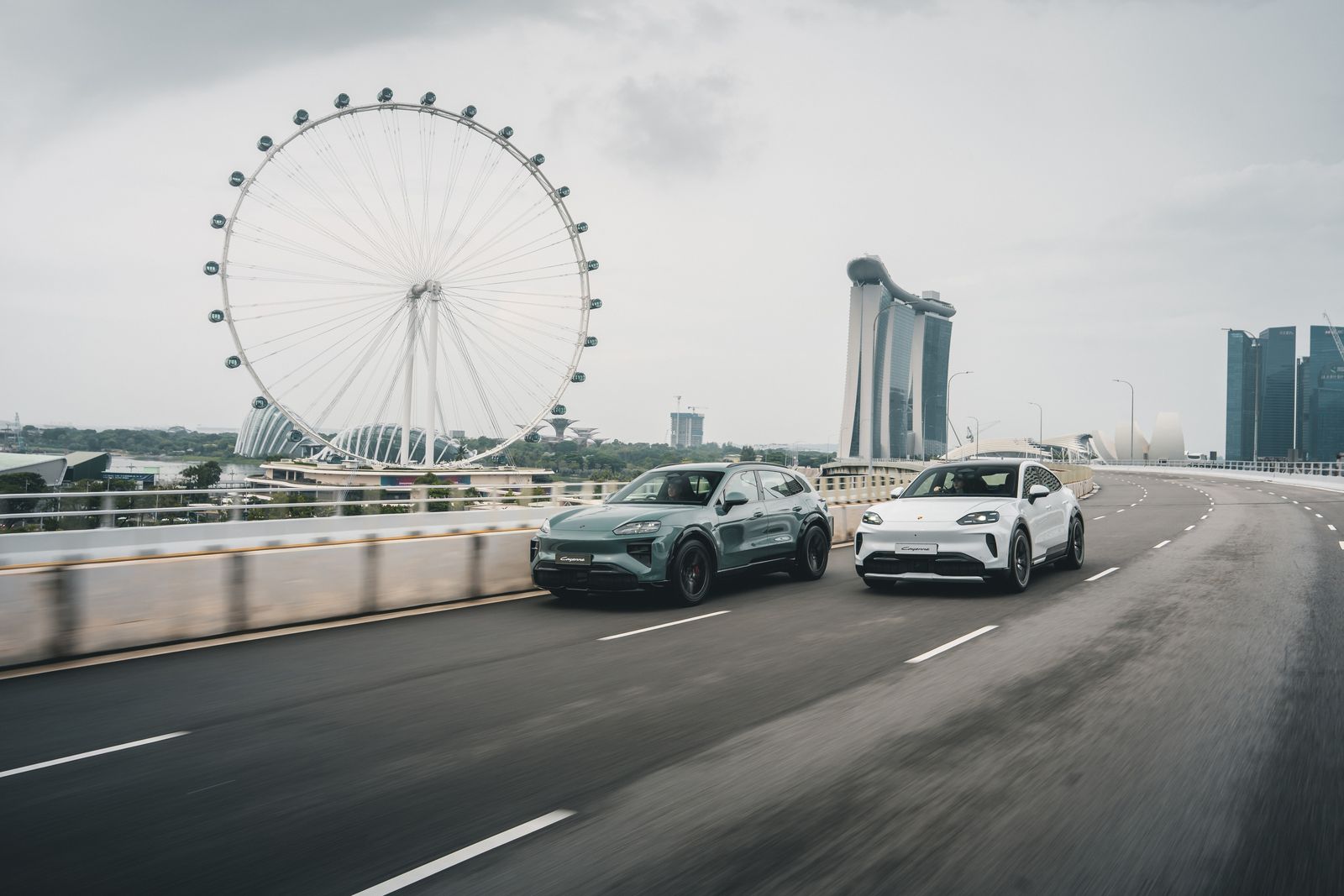
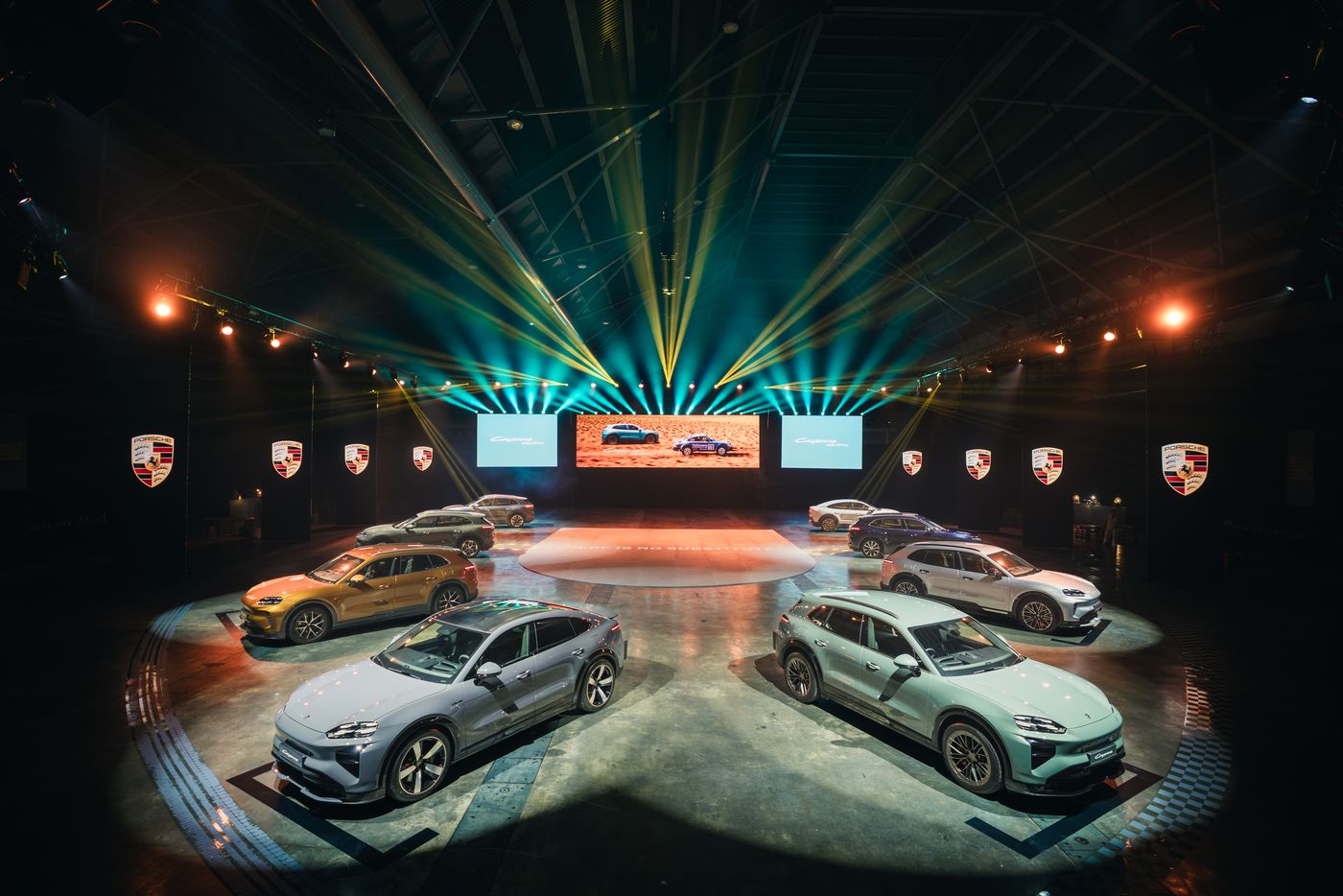
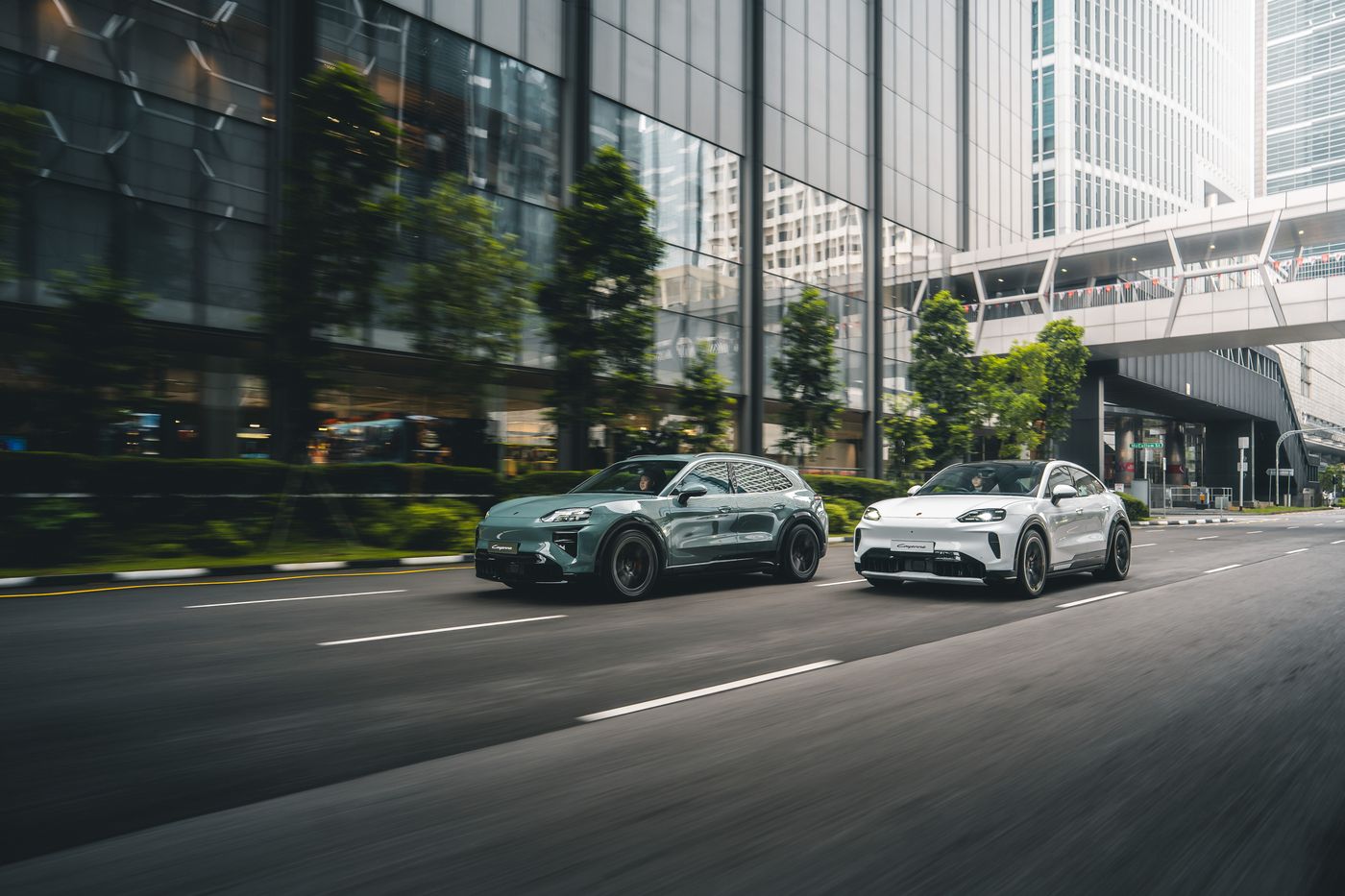
Porsche filled Singapore EXPO with silk dancers, live drummers and a lot of very expensive lighting to introduce the fourth-generation Cayenne. This one is fully electric, and it arrives here in both SUV and Coupé bodies at the same time.
It is worth remembering how much heat this car took the first time around. When the Cayenne launched in 2002, Porsche purists treated it as a betrayal: a tall, heavy SUV from the company that built the 911. They were wrong in the most expensive way possible. The Cayenne became one of Porsche's most successful model lines, and the money it made helped pay for the sports cars the purists actually wanted. It has been quietly carrying the company for over twenty years.
So there is a neat symmetry in asking it to lead again. What is strange is the timing. In 2022 Porsche said electric cars would be 80 per cent of its sales by 2030. That target is gone. Executives now talk about keeping combustion engines and hybrids on sale far into the next decade, and a new petrol Cayenne is already on the way. This electric one replaces nothing. It sits alongside the petrol and plug-in hybrid cars for the foreseeable future, a third option rather than a successor.
The numbers Porsche wants you to see
The Turbo Electric is the headline: 850 kW, or 1,140 hp, and 1,500 Nm with Launch Control. Porsche says that makes it the most powerful production car it has ever built. Zero to 100 km/h in 2.5 seconds, 260 km/h flat out.
Below that, the S Electric makes 490 kW (657 hp) and does the sprint in 3.8 seconds. The entry car, just called Cayenne Electric, gets 325 kW (435 hp), 835 Nm and 4.8 seconds.
Here is the quirk nobody at the event mentioned: the S has the longer WLTP range. Up to 653 km, against 642 km for the base car. So the middle child is both quicker and, on paper, the one that goes furthest.
The charging story is the real headline
The Cayenne runs an 800-volt architecture with a 113 kWh gross battery bonded into the body structure, which helps rigidity and drops the centre of gravity. Cooling runs above and below the pack.
Peak DC charging is 400 kW, and Porsche claims 10 to 80 per cent in under 16 minutes in ideal conditions. There is also a clever fallback: the 800-volt pack splits into two independent 400-volt banks so it can pull 200 kW from two-bank chargers.
Recuperation is quoted at up to 600 kW, with the technology traced back to Porsche's Formula E car. That is a genuinely large number, and it is the kind of thing you only really feel in traffic.
A sixteen minute charge is only a headline if the charger can deliver it. In Singapore, that is the part worth watching.
Three variants, two shapes
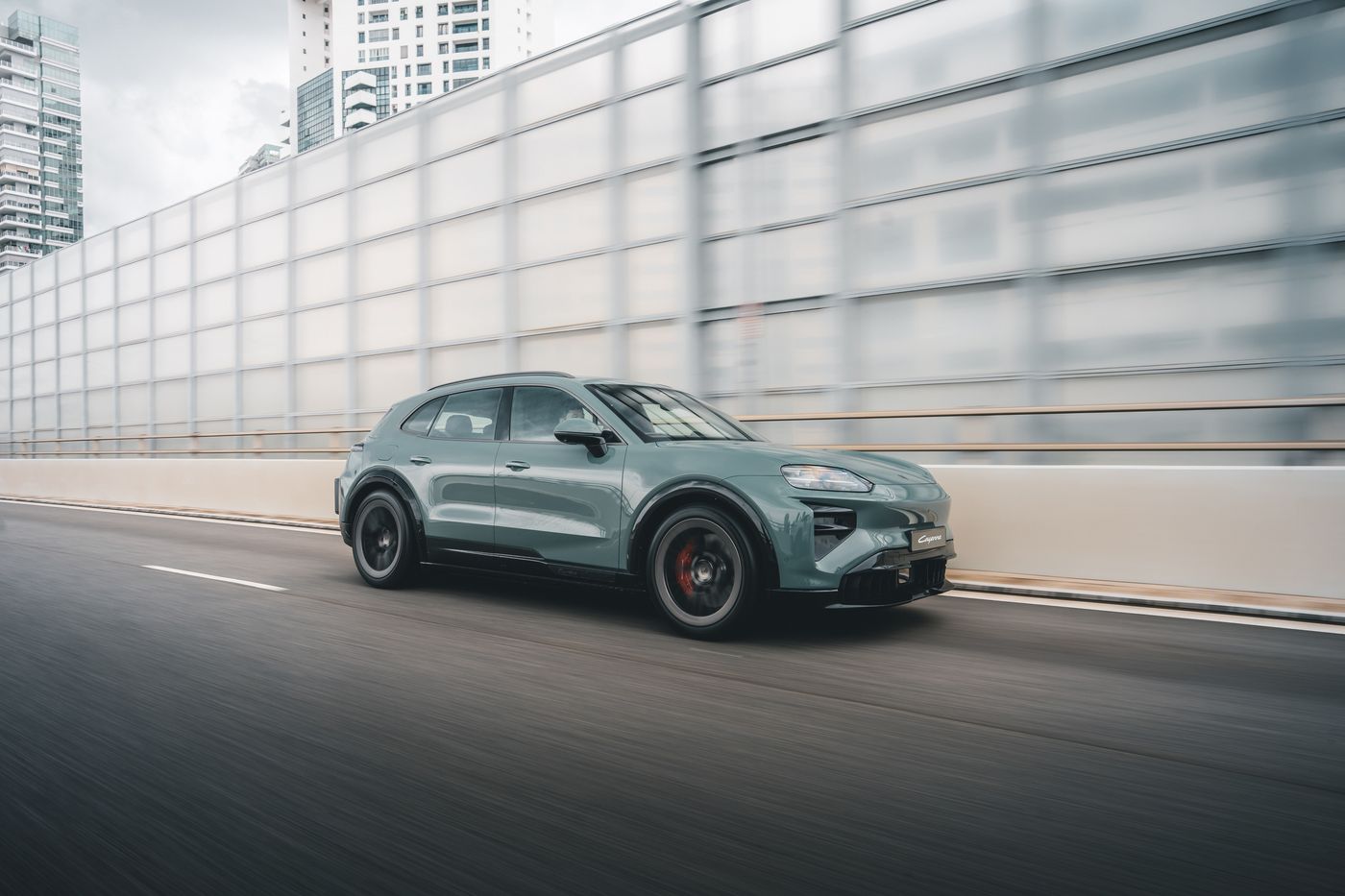
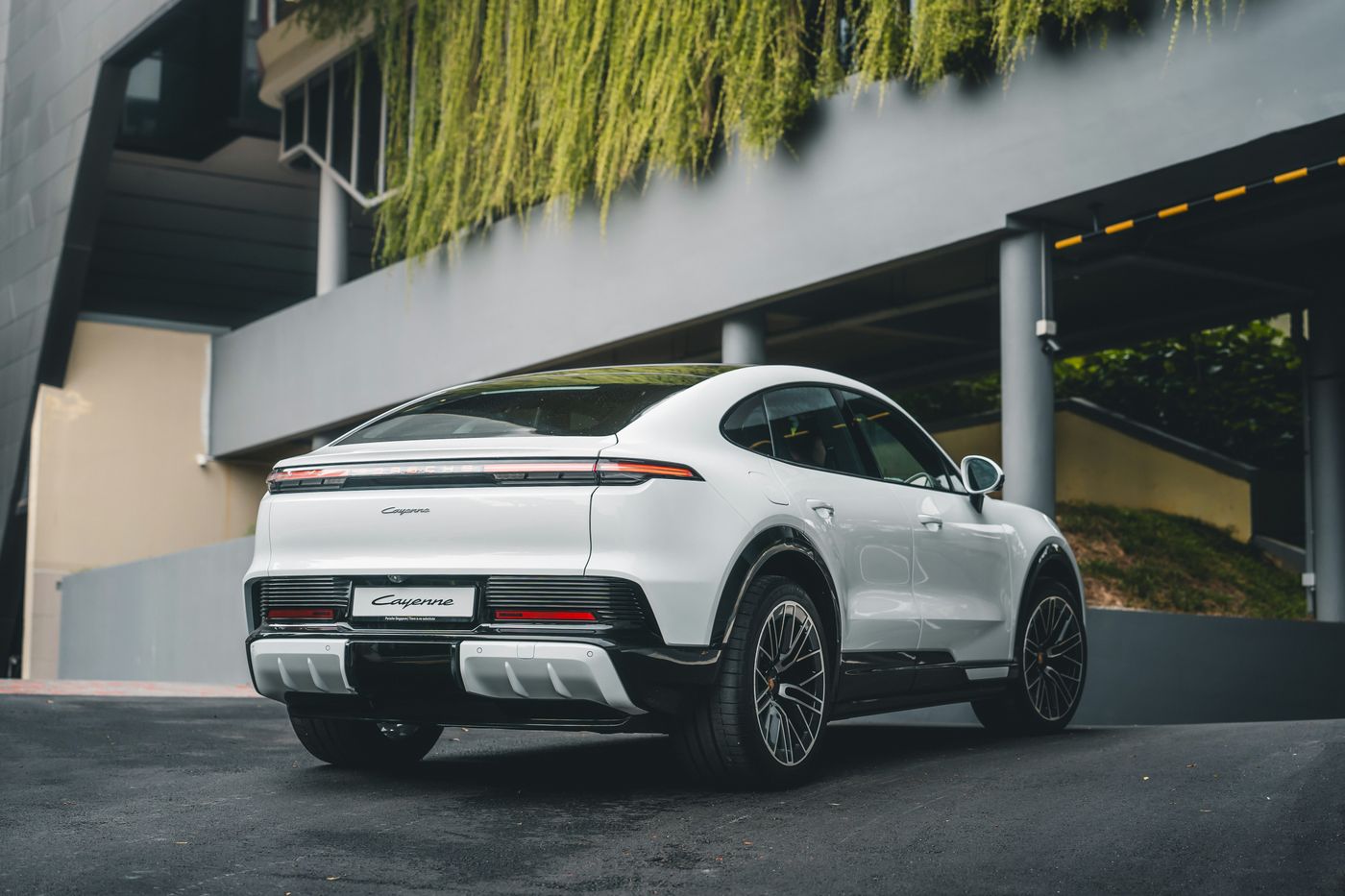
The Coupé is not just a roofline. Its drag coefficient is 0.23 against 0.25 for the SUV, which Porsche says is worth up to 18 km of extra WLTP range over the equivalent SUV. Boot space drops to 1,347 litres from 1,511, and both get a 90-litre frunk.
Singapore Coupés come standard with the Sport Chrono package, rear-axle steering and a fixed panoramic roof. Air suspension with PASM is standard across the range. Porsche Active Ride, the system that keeps the body flat under braking and cornering, is optional on the S and the Turbo.
The biggest screen Porsche has built
The new Porsche Driver Experience introduces what Porsche calls the Flow Display, and the company is describing it as the largest display landscape ever fitted to one of its cars. There is AI-assisted connectivity behind it.
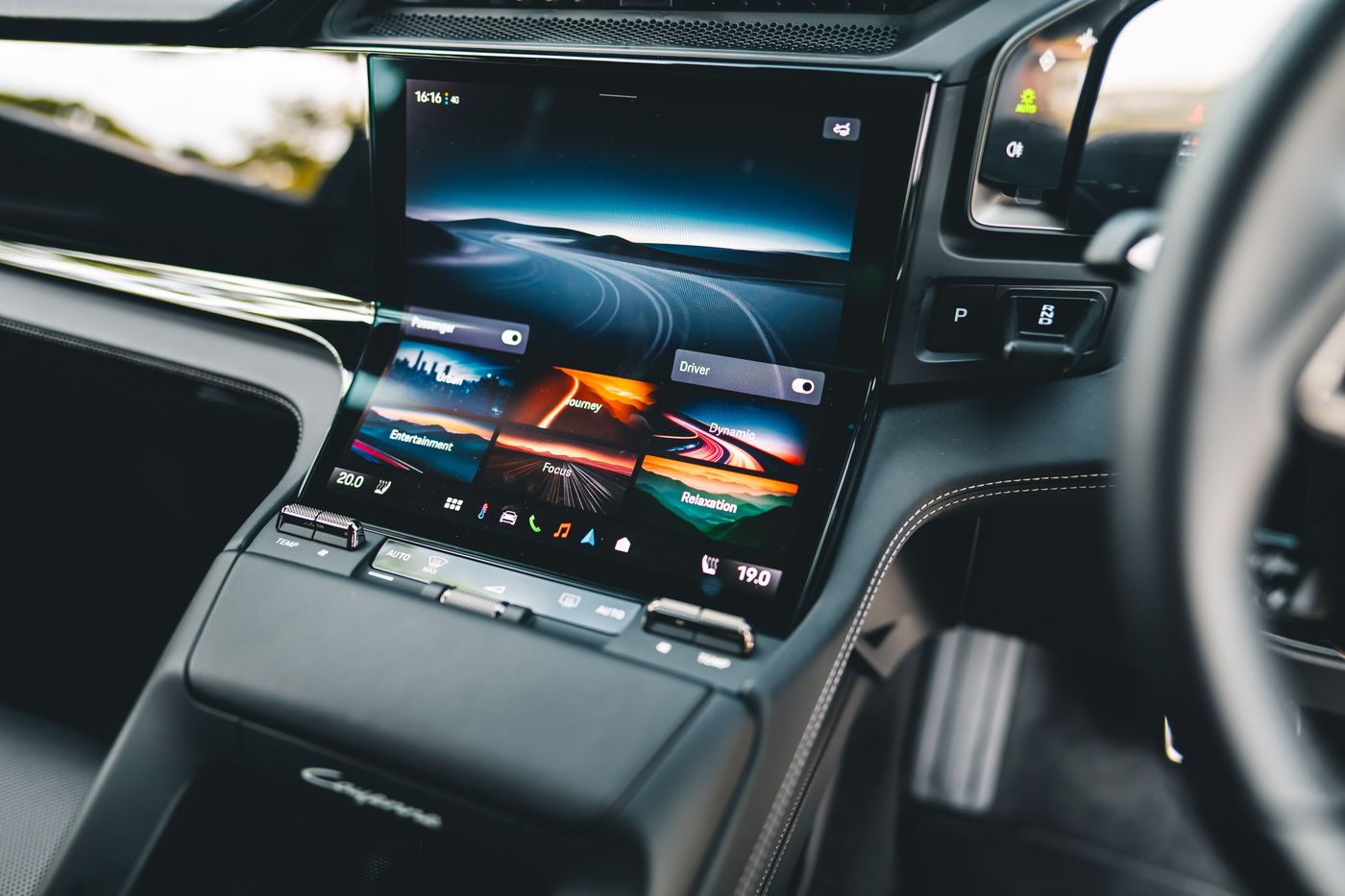
Singapore cars get Digital Key, automatic parking with 2D surround view and a BOSE surround system as standard, plus Mystic Green, Algarve Blue, Napali Blue and Madeira Gold at no extra cost. If you want to go further, Porsche quotes more than 110,000 personalisation combinations, including Lavender and Delgada Green leather.
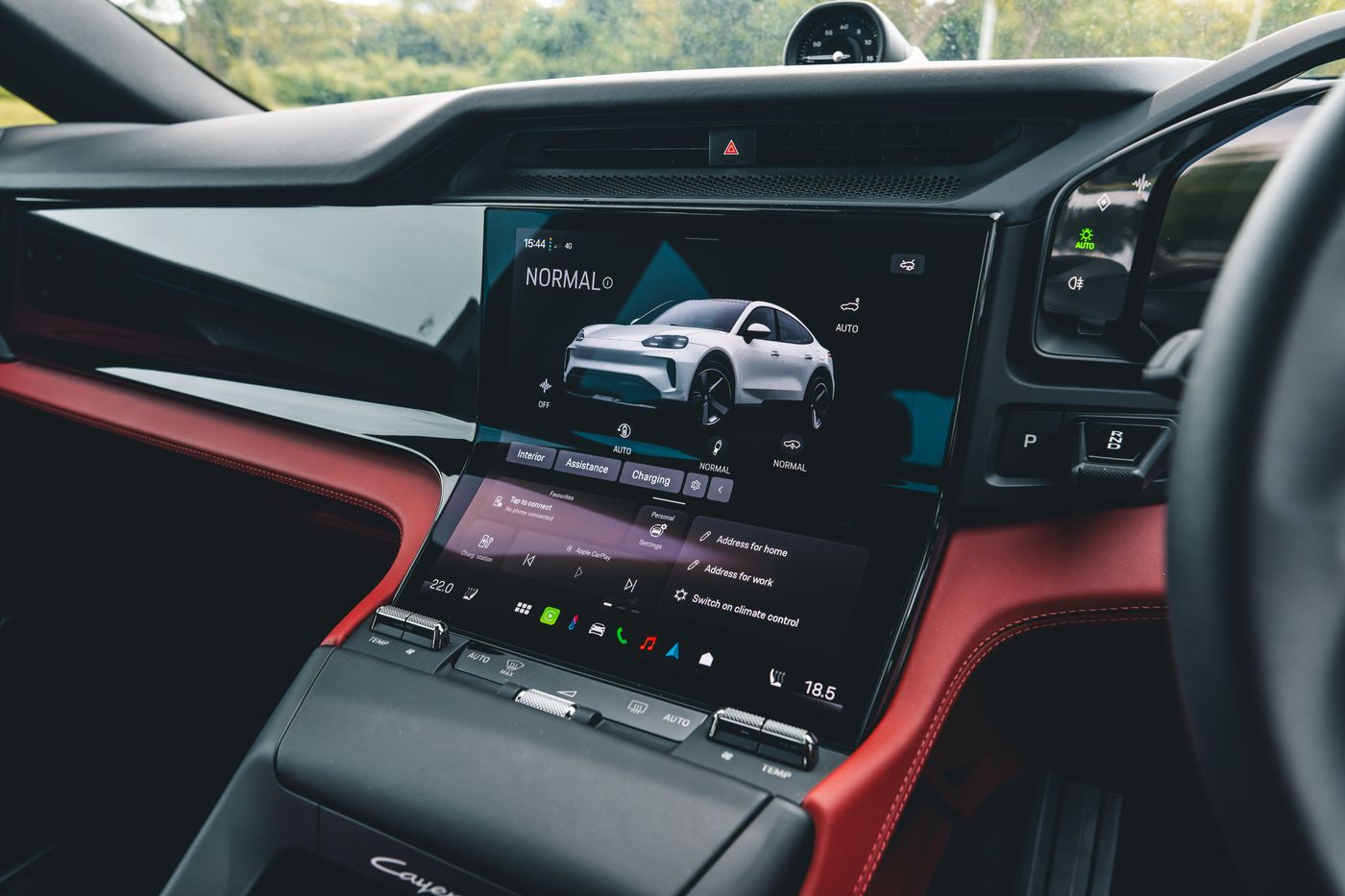
I care about screens more than most, and this is the part of the car I most want a week with. A huge display is easy to announce and very hard to get right.
What it costs here
From S$372,788 before COE, and that is the indicative figure for the entry Cayenne Electric. It includes five years of maintenance and warranty, registration, estimated ARF, twelve months of road tax, estimated VES and GST.
At 325 kW, every variant sits in COE Category B, so the real on-road number lands a long way north of that once a COE is in the maths. Order books are open, deliveries start by the third quarter of 2026.
Where that leaves it
Under show lighting the Cayenne Electric does the thing Porsche has always been good at. It reads as a Porsche from any angle, the detailing is expensive in a way photographs undersell, and the numbers are silly enough to end most arguments before they start.
But show lighting flatters everything, and no spec sheet has ever been stuck behind a lorry on the PIE. Technically this is the most impressive car Porsche makes. The awkward part is that it arrives just as Porsche has told the world it is no longer sure electric is the whole future. That puts an unusual weight on it. The Cayenne Electric has to be good enough to make the hedge look like caution rather than doubt.
For twenty years the Cayenne has been the sensible Porsche that pays for the silly ones. If the electric one can do that job too, Porsche will have got away with it twice.