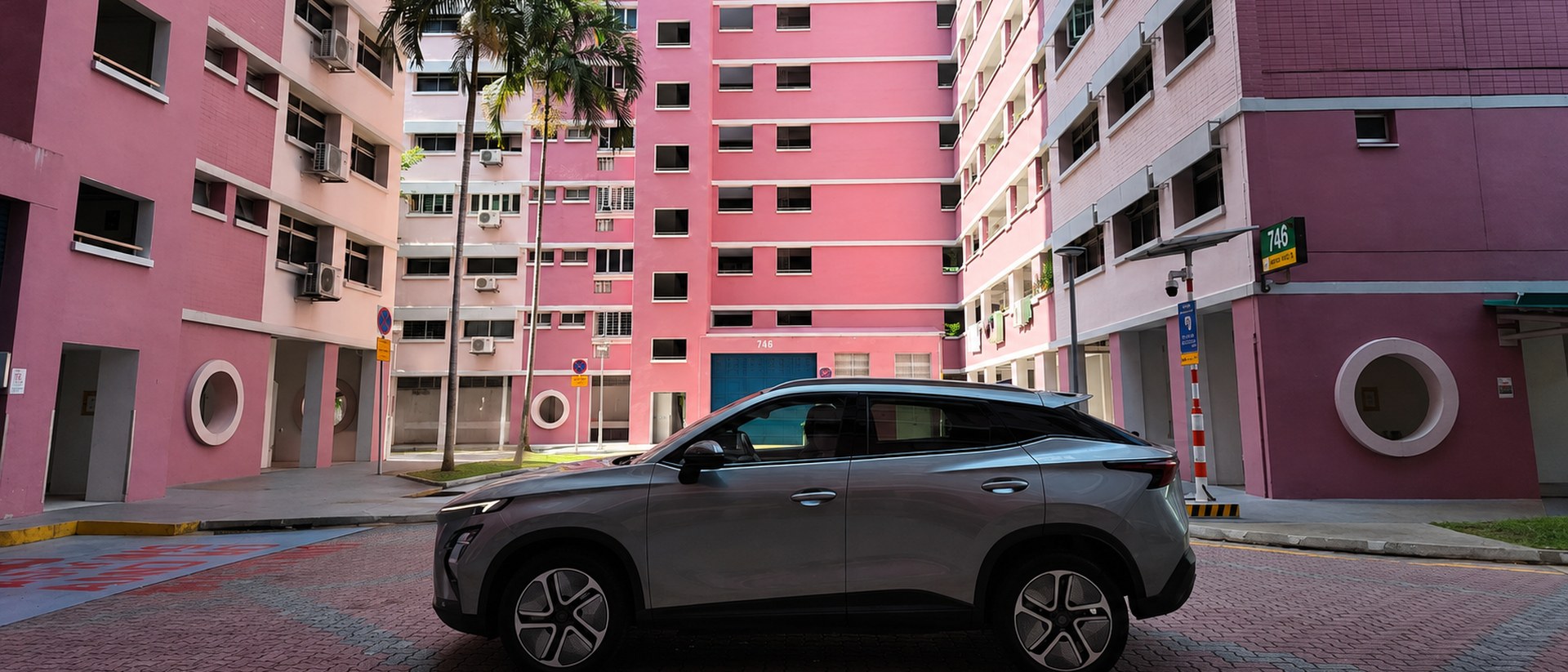
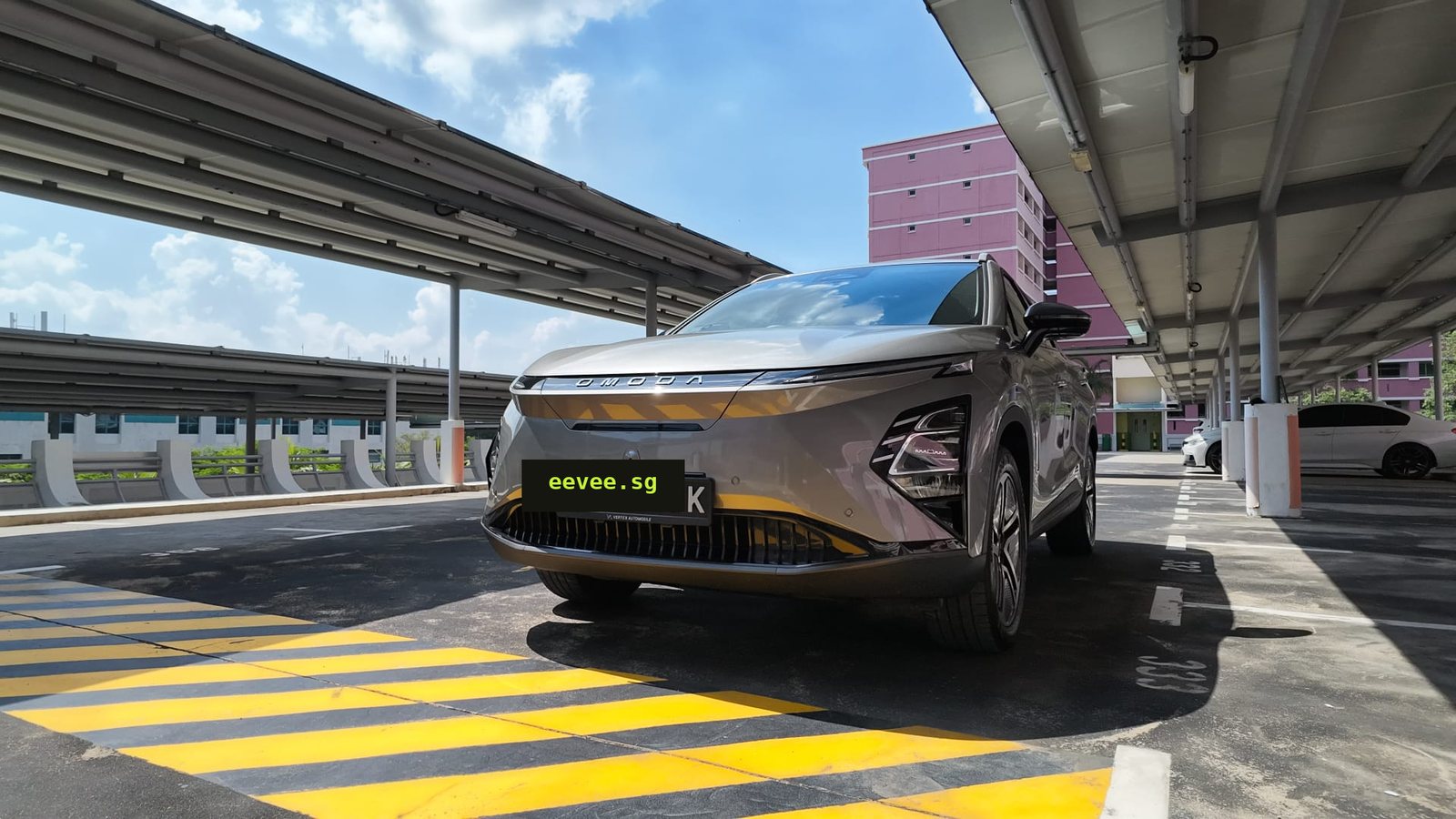
Omoda sells exactly one car in Singapore. Just the one. So the E5 has to carry the entire brand on its back, and it opens the argument the only way a newcomer sensibly can, by not looking like anything else in the school pickup queue.
There are creases everywhere. A full-width lightbar, split headlights stacked into the bumper, a roofline that drops away towards the tail. It is far more interesting to look at than a family SUV needs to be. That matters, because a family SUV is exactly what this is.
Then you open the door, and it gets better.
The cabin is the whole argument
This is where the money went, and it is not subtle about it. Soft-touch panels across the dash, wood-effect trim that does not look like a sticker, Sony speaker grilles in the doors, a 24.6-inch curved screen sweeping across most of the cabin, an electric sunroof overhead, and 64-colour ambient lighting that syncs to whatever is playing. Storage is generous, the console is properly deep, and everything you touch feels a grade better than the price suggests.
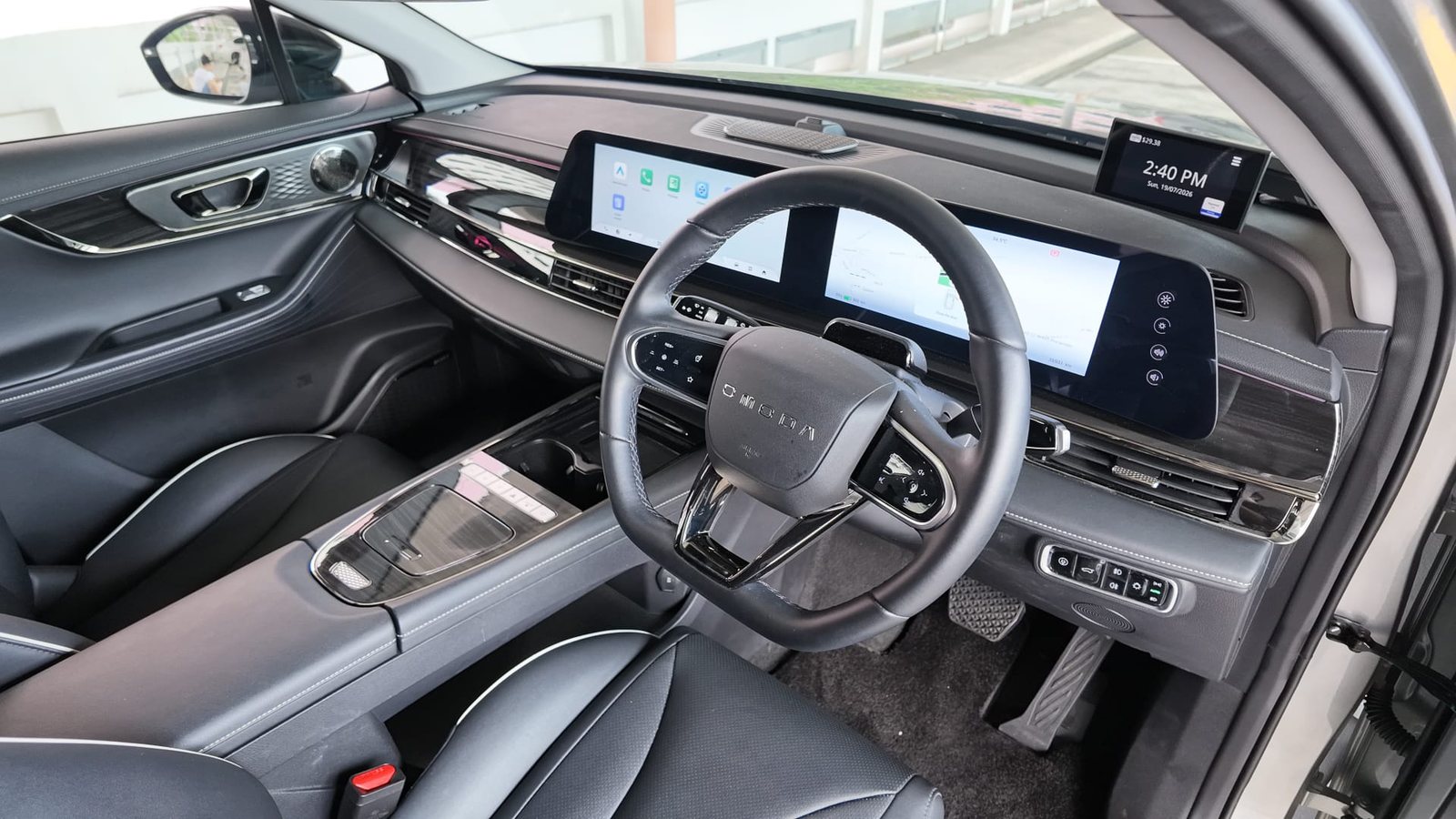
Ventilated seats deserve their own sentence. Both front seats get them, as standard, on the only trim Omoda sells here. In this climate that is worth more than half the numbers on the spec sheet. No options list, no higher trim to climb to. It is just there.
The aircon is good, and paired with those seats the cabin cools down quickly and stays comfortable through the worst of a Singapore afternoon. In this climate that combination does more for how much you enjoy a car than any performance figure on the sheet.
The tech, and the menus
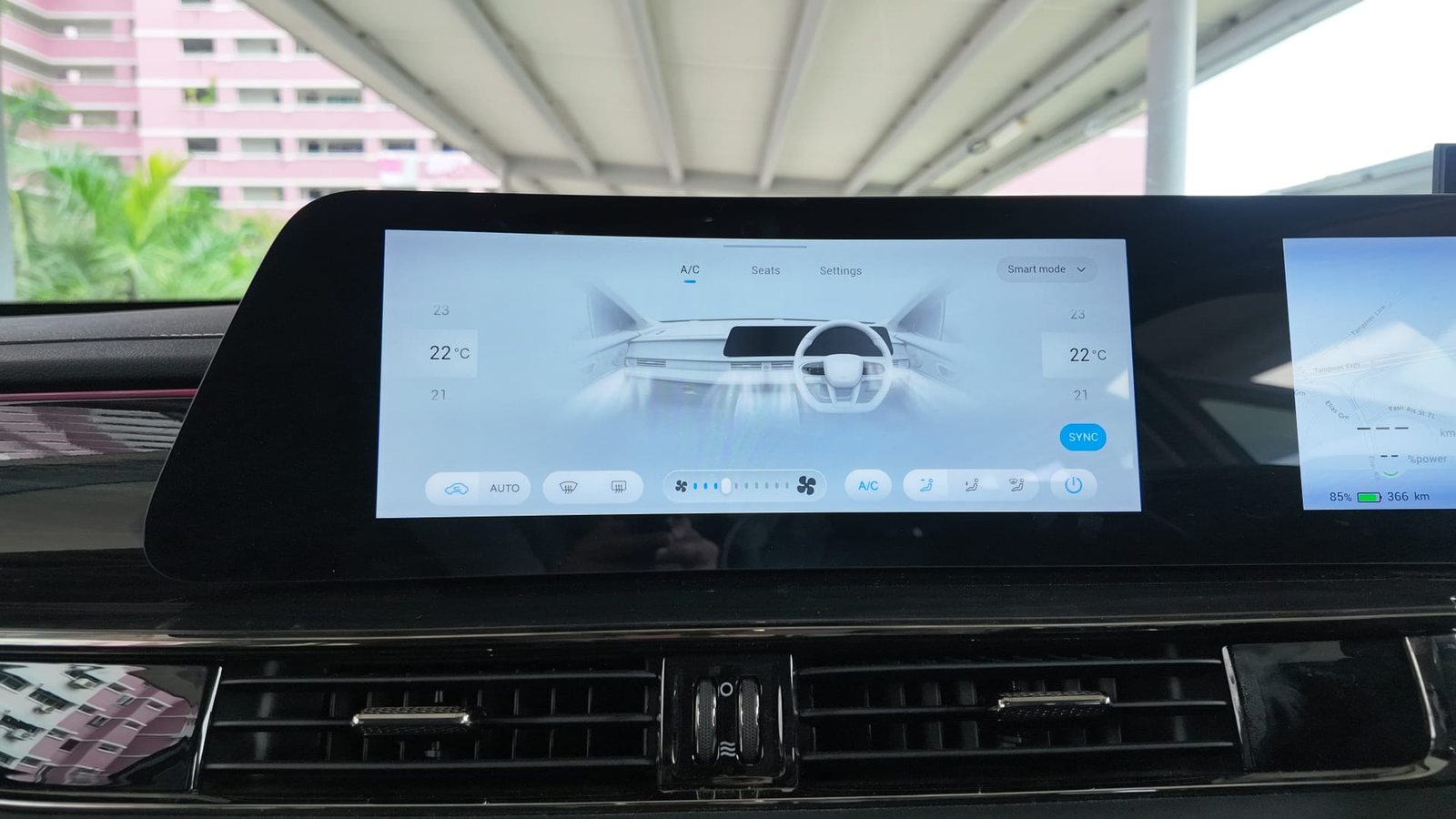
The screen is big, sharp and quick enough. Apple CarPlay and Android Auto are both there, the app grid is legible, and the driver display and the central panel read as one continuous piece of glass rather than two screens bolted together. On first impression it is the most expensive-feeling thing in the car.
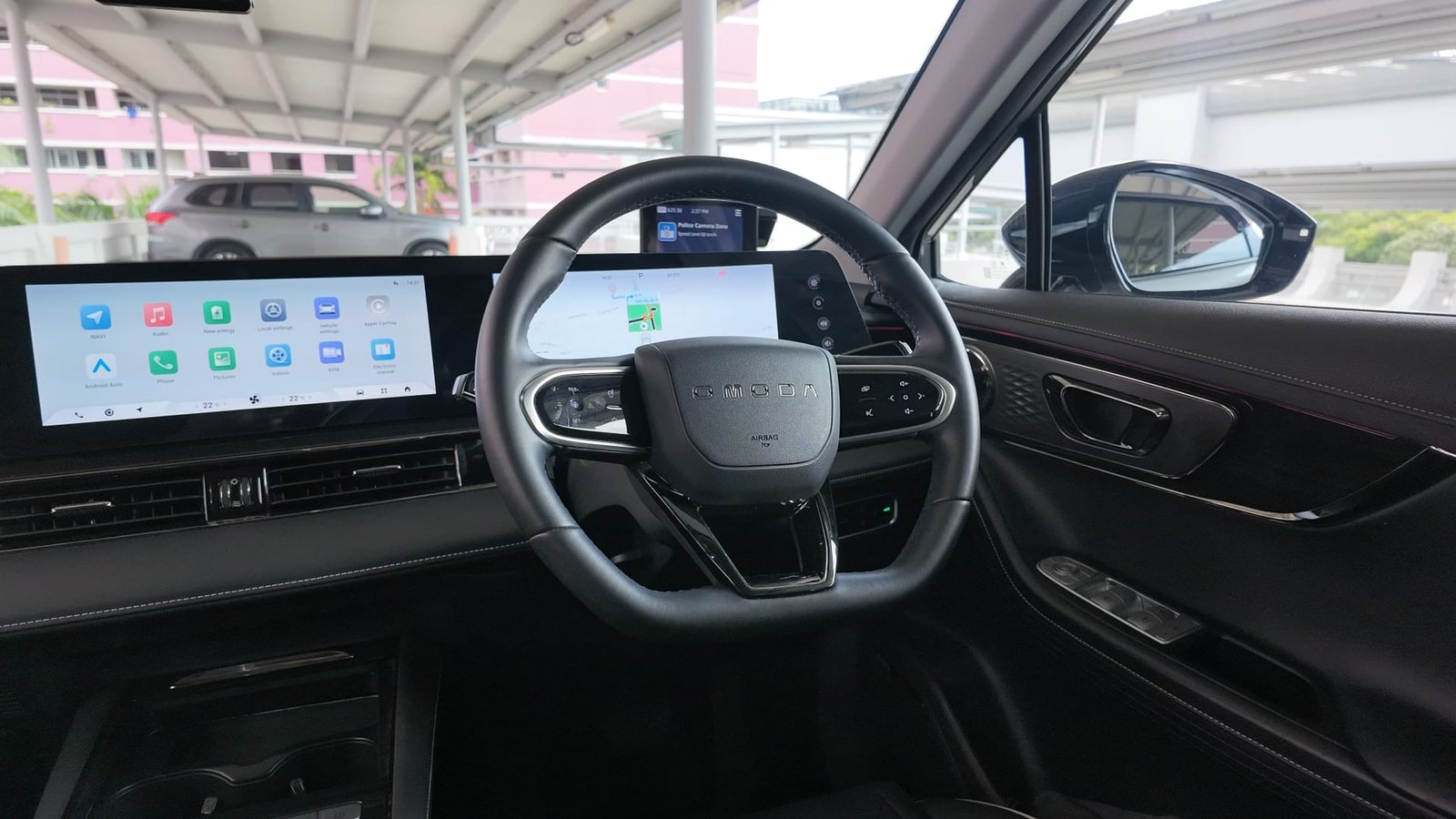
Spend a week with it and the shine dulls. The interface is cluttered and the logic takes real learning: things are grouped by where an engineer thought they belonged, not where you would reach for them. Climate control is the worst of it. Adjusting the aircon means going into the screen, every time, and in a country where you touch those controls constantly I found myself actively missing physical buttons. Not wanting them. Missing them.
The driver aids are the other frustration. They are alert and they are numerous, and several of them intervene harder than they need to, with very little scope to dial any of it back to taste.
It looks and feels like a car from a class above. Then you start driving, and the class reasserts itself.
Then you drive it
Here is where the E5 gives back what the cabin earned. It is heavy, at 1,710 kg, and it has 99 kW to move that around, which means 11.1 seconds to 100 km/h. Worth saying plainly: that is a COE decision, not an engineering failure. Overseas this car is sold with 150 kW and does the same sprint in 7.6 seconds. Singapore gets the Cat A detune, so every overseas review you have read describes a car you cannot buy here.
Slow is survivable. Around town you will genuinely never notice it. The problem is everything else. The suspension is set soft and, over the wrong sequence of bumps, it floats and takes an extra beat to settle. The steering is light and short on precision, so the car never feels keen to change direction and never tells you much about what the front wheels are doing. It is not uncomfortable. It just has no agility at all.
The pedals bother me more than the chassis does. Even at the lowest regen setting the brakes bite abruptly rather than progressively, and pulling away has a lurch to it instead of a smooth build. Both are calibration, not hardware, which means both are fixable in software.
Road noise is higher than I expected too. Not intolerable, but enough that on a longer expressway run it becomes the thing you notice about an otherwise quiet car.
Living with it in Singapore
Range is the good news. I saw about 400 km from a full charge against a 430 km WLTP claim, which is a strong real-world result and better than most cars manage against their own brochure.
Charging is the bad news. DC tops out at 80 kW, which is modest in 2026, and Omoda quotes its 30-minute figure from 30 to 80 percent rather than the 10 to 80 percent almost everyone else uses. Read the small print before you compare it to anything. For daily use in Singapore, where you charge at home or at a mall overnight, none of this will trouble you. For anything longer, it will.
One small joy: the charging port. It pops out with far more theatre than the job requires, and it is the closest the E5 comes to having a sense of humour. Silly. I liked it.
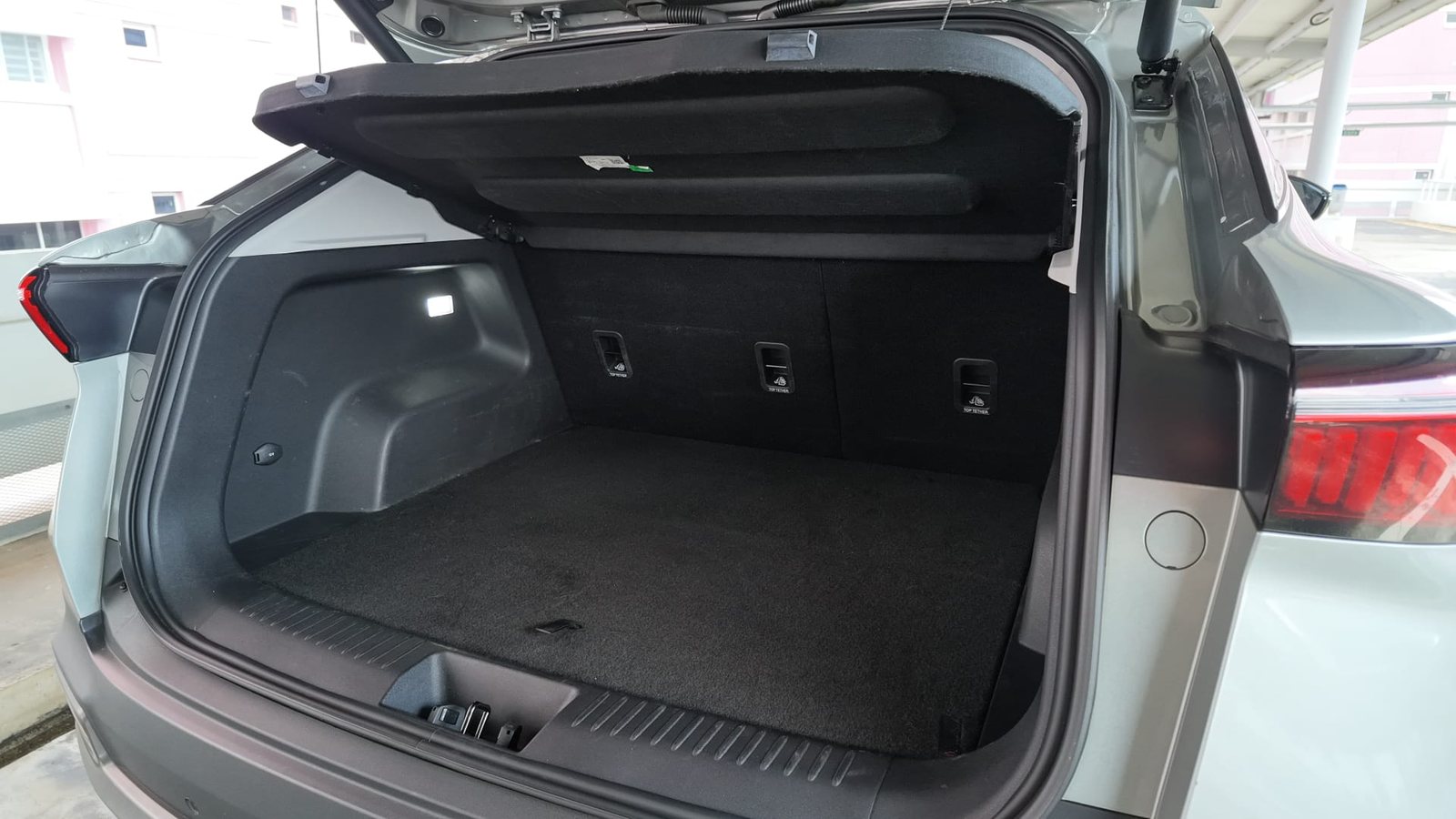
The boot is 380 litres, which is smaller than the car looks and smaller than several obvious rivals. In practice it swallowed a normal week without complaint, so call it sufficient rather than generous.
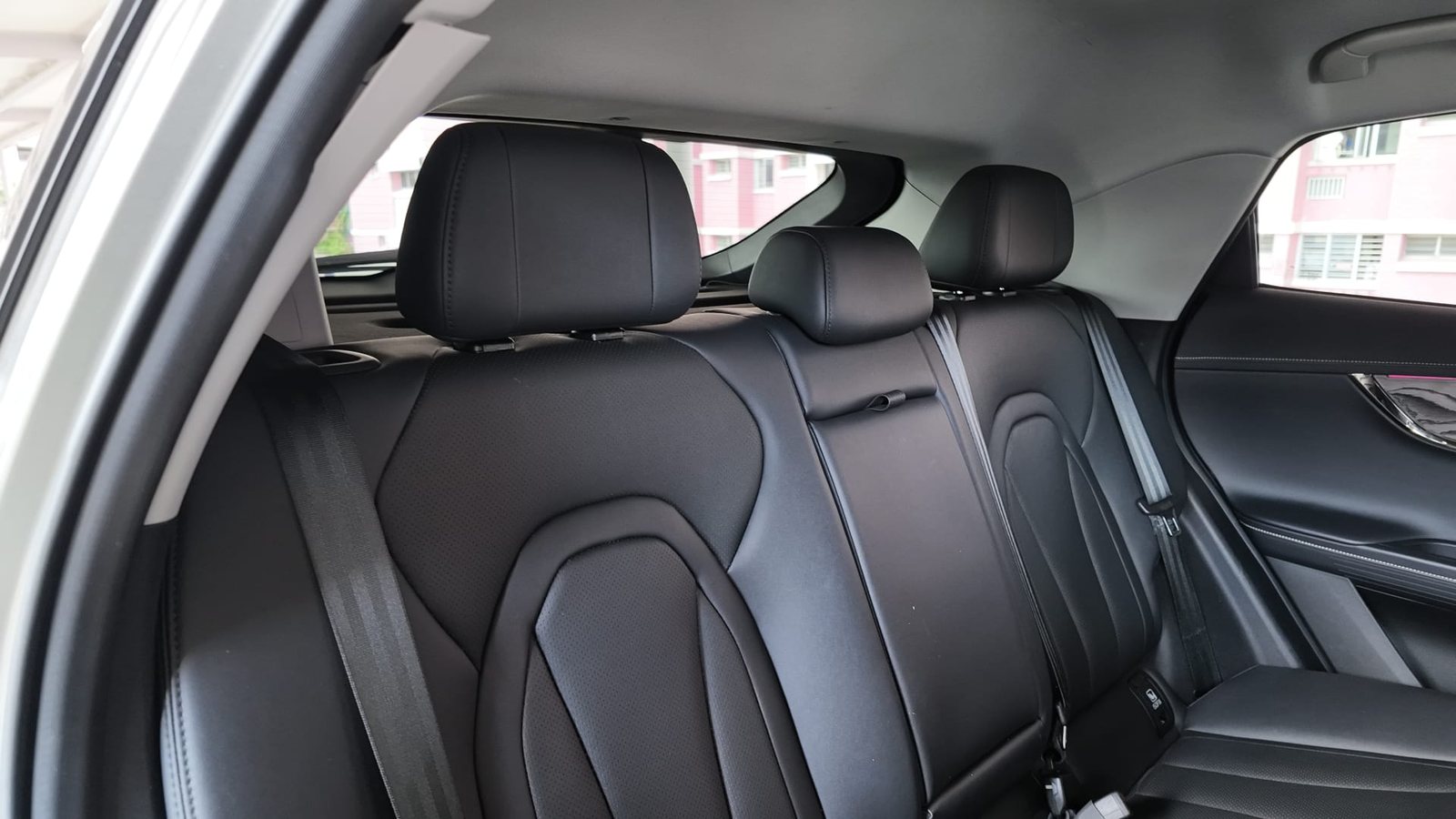
The rear seats are the packaging weak point. That fast roofline costs real headroom, and I knocked my head getting in more than once. Adults will sit back there fine once they are in. Getting in is the awkward part.
The verdict
At around S$169,000 with COE, with VES A1, seven years of vehicle warranty and ten on the battery, the E5 is a lot of family SUV for the money. It does the actual job well: school runs, the supermarket, a full boot and four people in air-conditioned comfort. The cabin is genuinely lovely and would not embarrass a car costing considerably more.
What it will not do is entertain you. The chassis, the steering and the pedals are all a step behind the interior, and no amount of ambient lighting covers that up on the drive home. If you want a comfortable, well-equipped, sensibly priced electric family SUV and you have no interest in how it corners, the E5 is an easy recommendation.