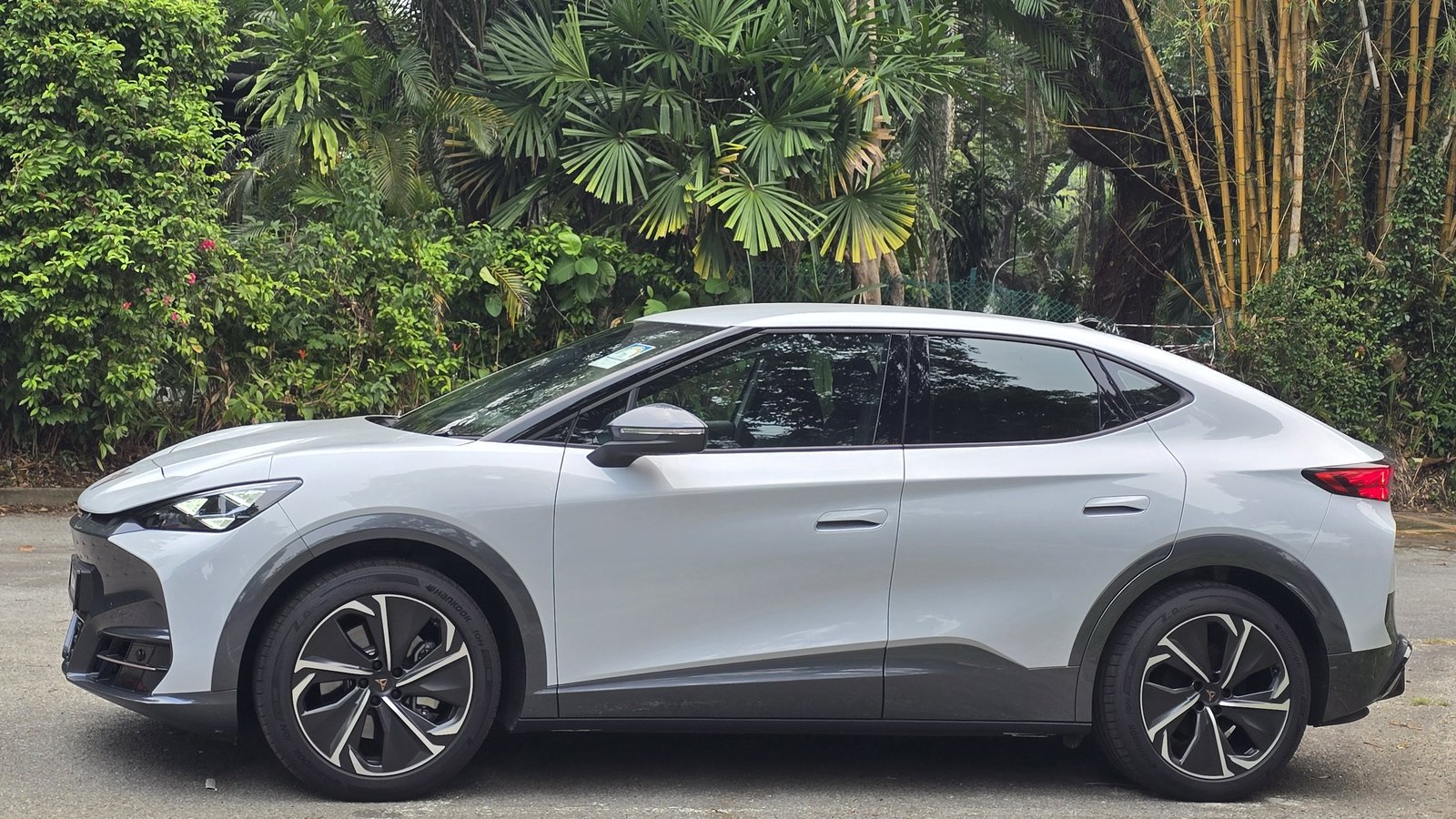
Every family with a few kids has one. The sensible one, the one you pin your hopes on, who does their homework and gets a steady job. Then there is the other one.
I drove the Skoda Enyaq the week before this car. Same Volkswagen Group platform, same wheelbase to the millimetre, same basic battery. The Enyaq is the sensible sibling. The Tavascan is the one who turned up to the family dinner on a motorbike.
A word on Cupra
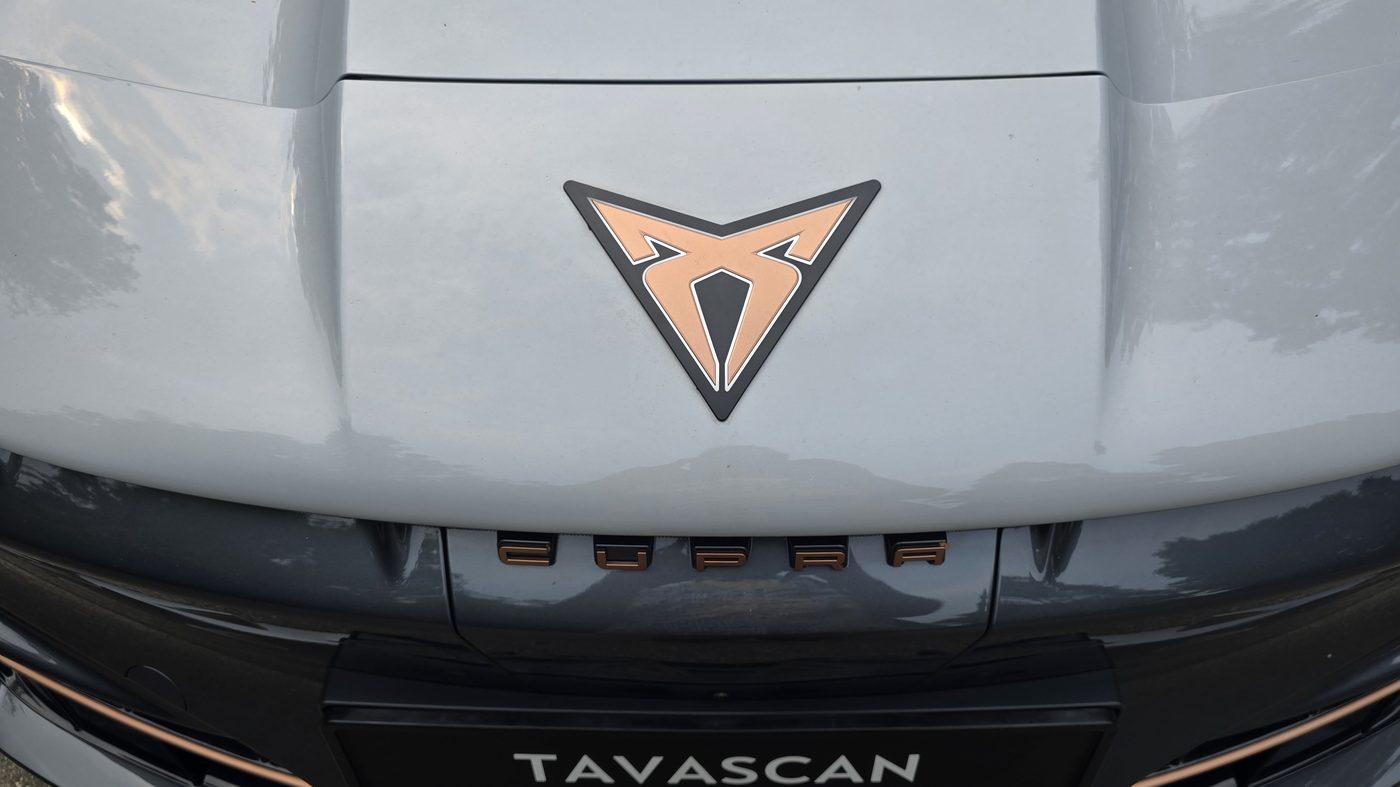
Cupra was SEAT's go-faster badge for years, the Spanish Volkswagen brand's answer to GTI. In 2018 Volkswagen spun it off as a brand of its own, based near Barcelona, with the copper-coloured tribal logo and a brief to be the loud one in the group. The Tavascan is its first electric SUV, named after a village in the Pyrenees. It is built in Hefei, China, at a Volkswagen plant, which is how it gets here.
In Singapore it is sold by Cupra Singapore, part of Volkswagen Group Singapore, from the Cupra Centre at 247 Alexandra Road. The brand arrived here in March 2025 with two electric cars, the Born hatch and this one. First Cupra on eevee.
The brief
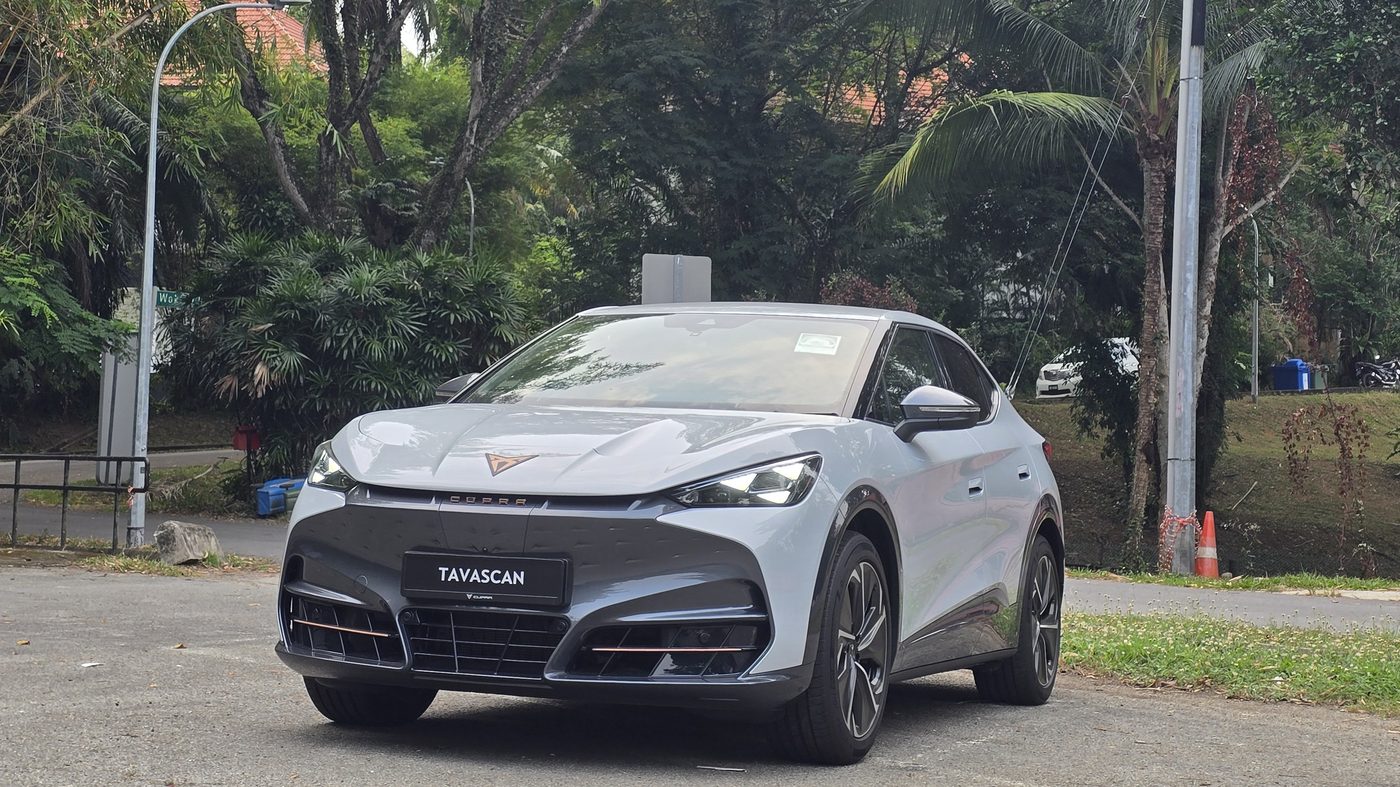
I am convinced a version of that list exists. Somewhere in Volkswagen there is a room where a few designers were left alone for too long and kept saying more sharp, more pointy, more lights. Nobody stopped them. Good.
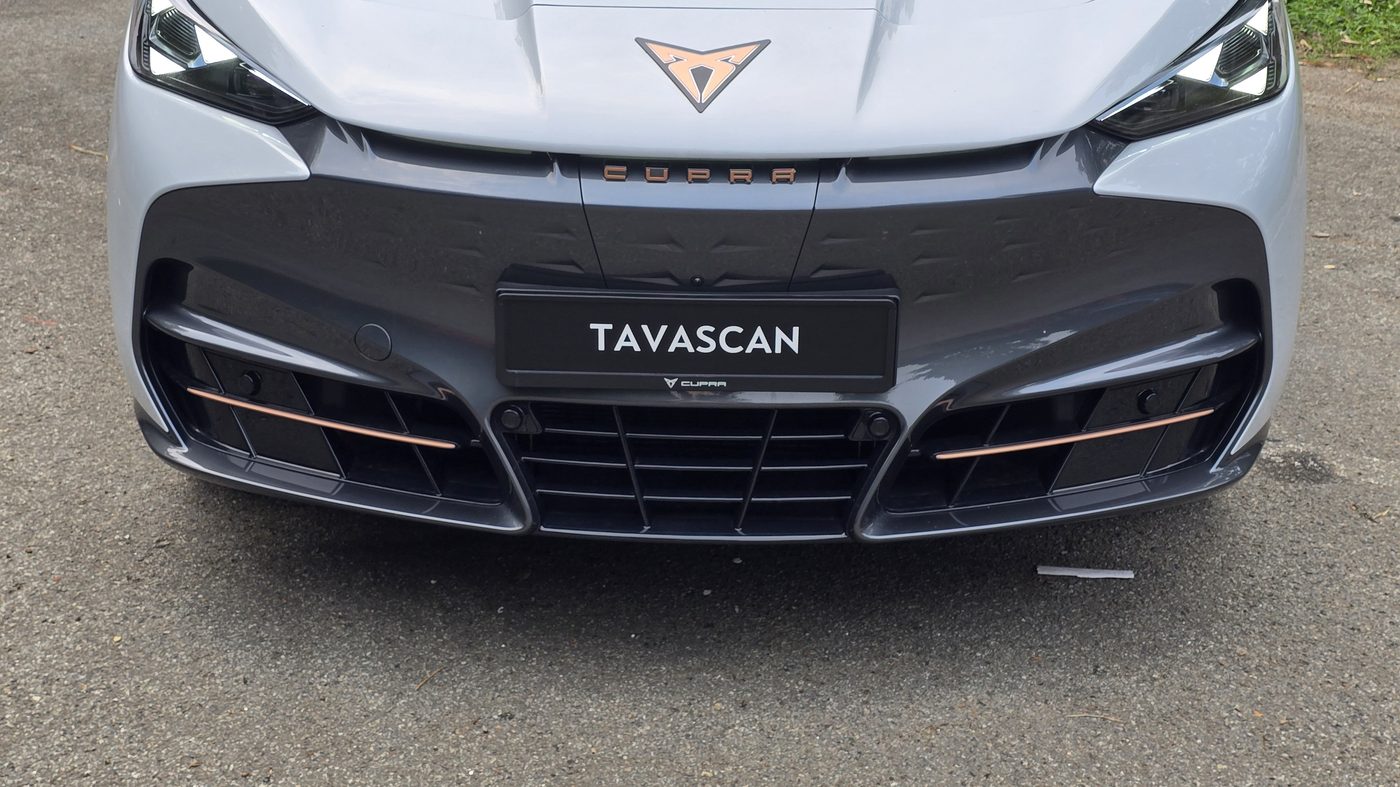
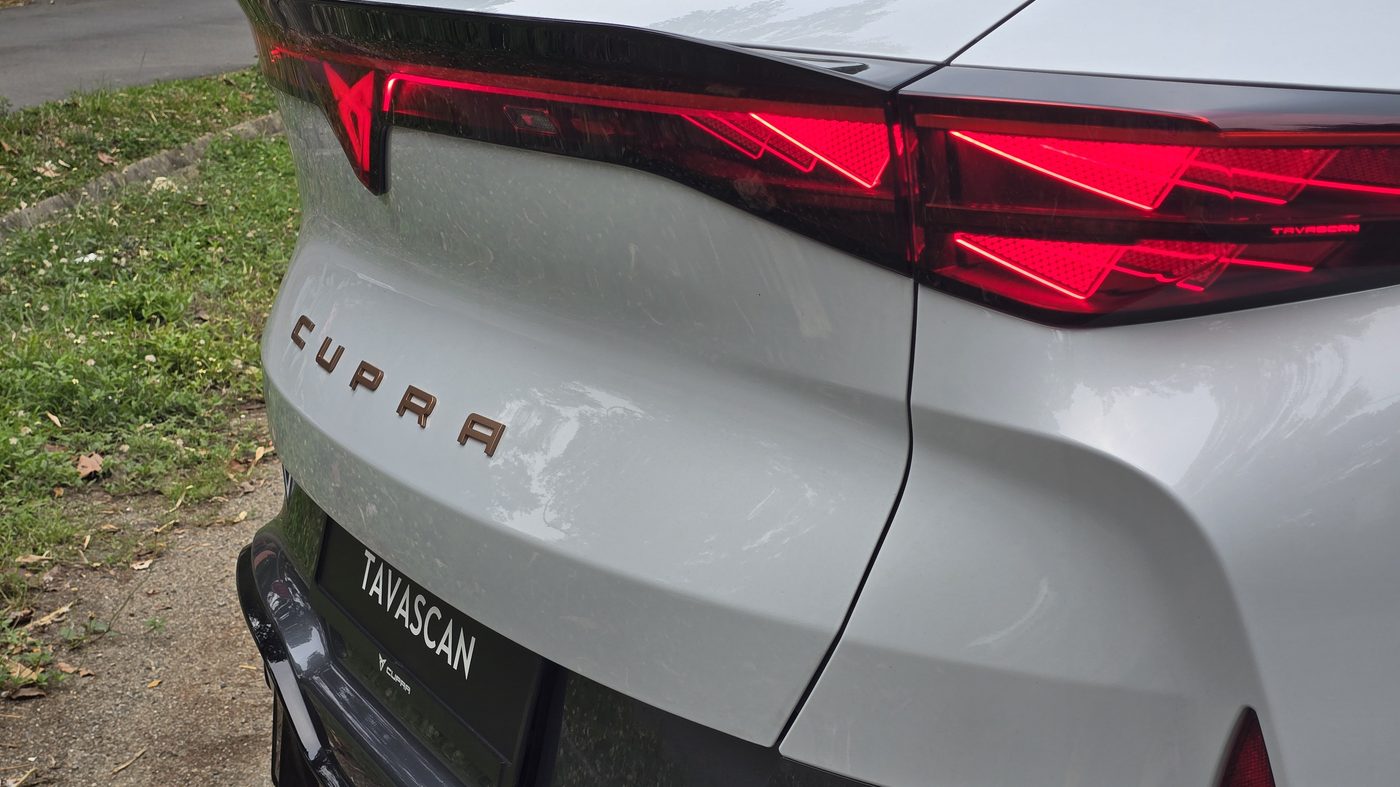
Look at the front. The headlights are three triangles each. The vents in the bumper look like they are snarling, or smiling, depending on the angle. A Venus flytrap with number plates. Every crease on the body is sharper than it needs to be, and the car looks cool for the sake of looking cool. I think that is a perfectly good reason.
Inside
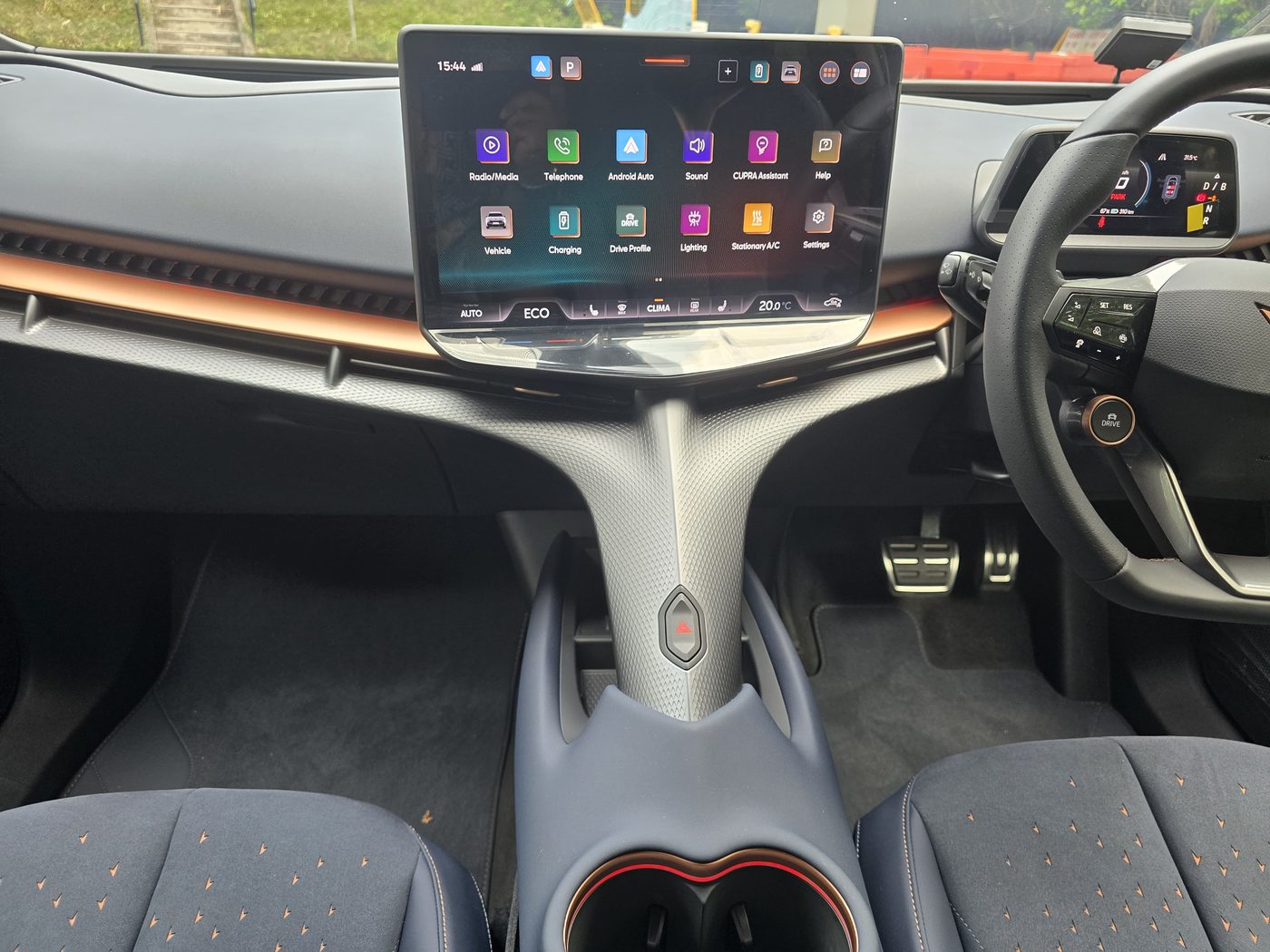
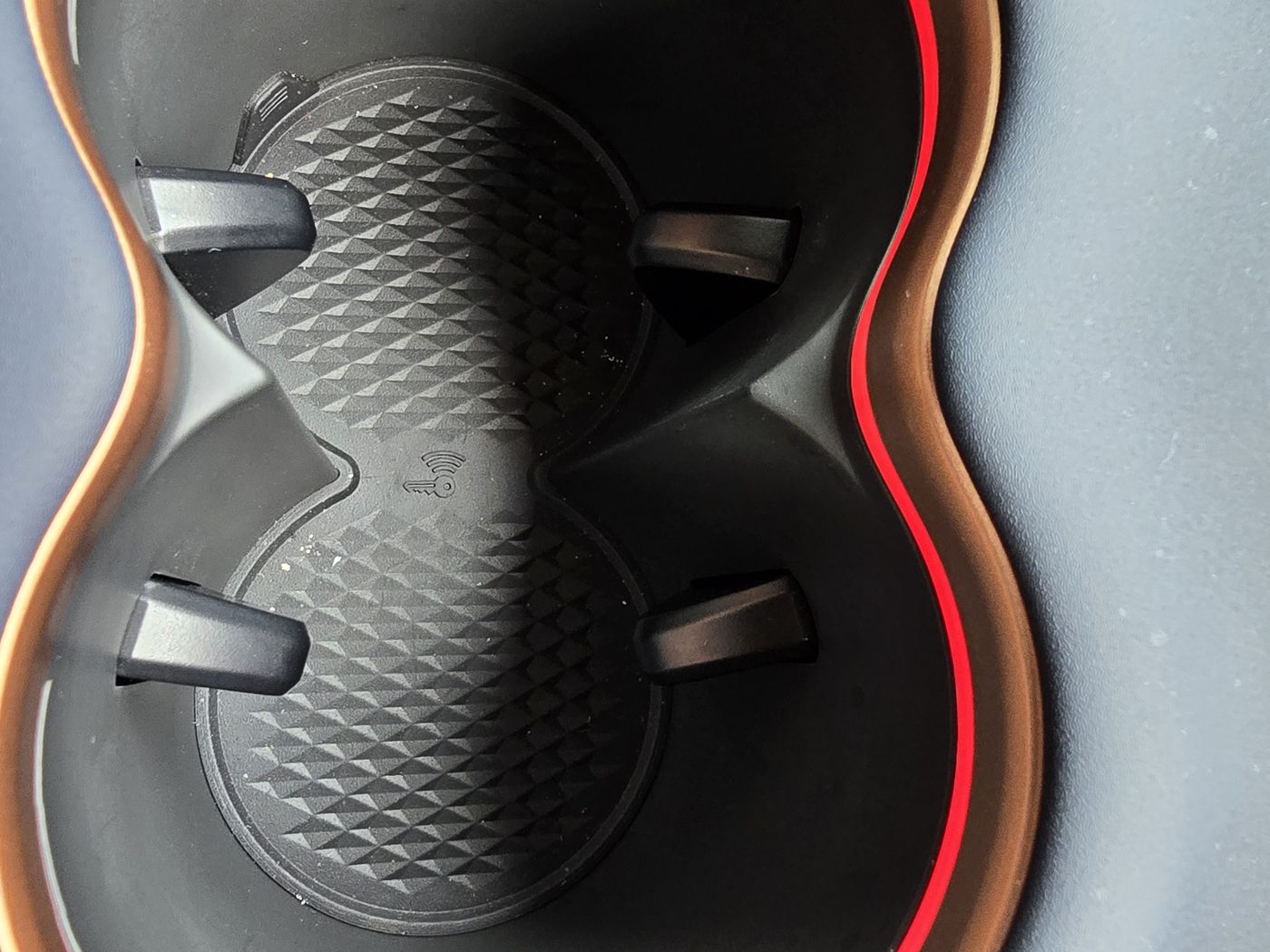
The madness continues. There is a huge bridge running from the dashboard down to the centre console, lit along its edges, and as far as I can tell it exists to look like a fighter jet cockpit. The cup holder has a light in it. Why does a cup holder need a light? No idea. The triangle logo is stamped into the seats and the door cards, and the Cupra badge is everywhere you look. Copper accents run along the dash and the steering wheel.
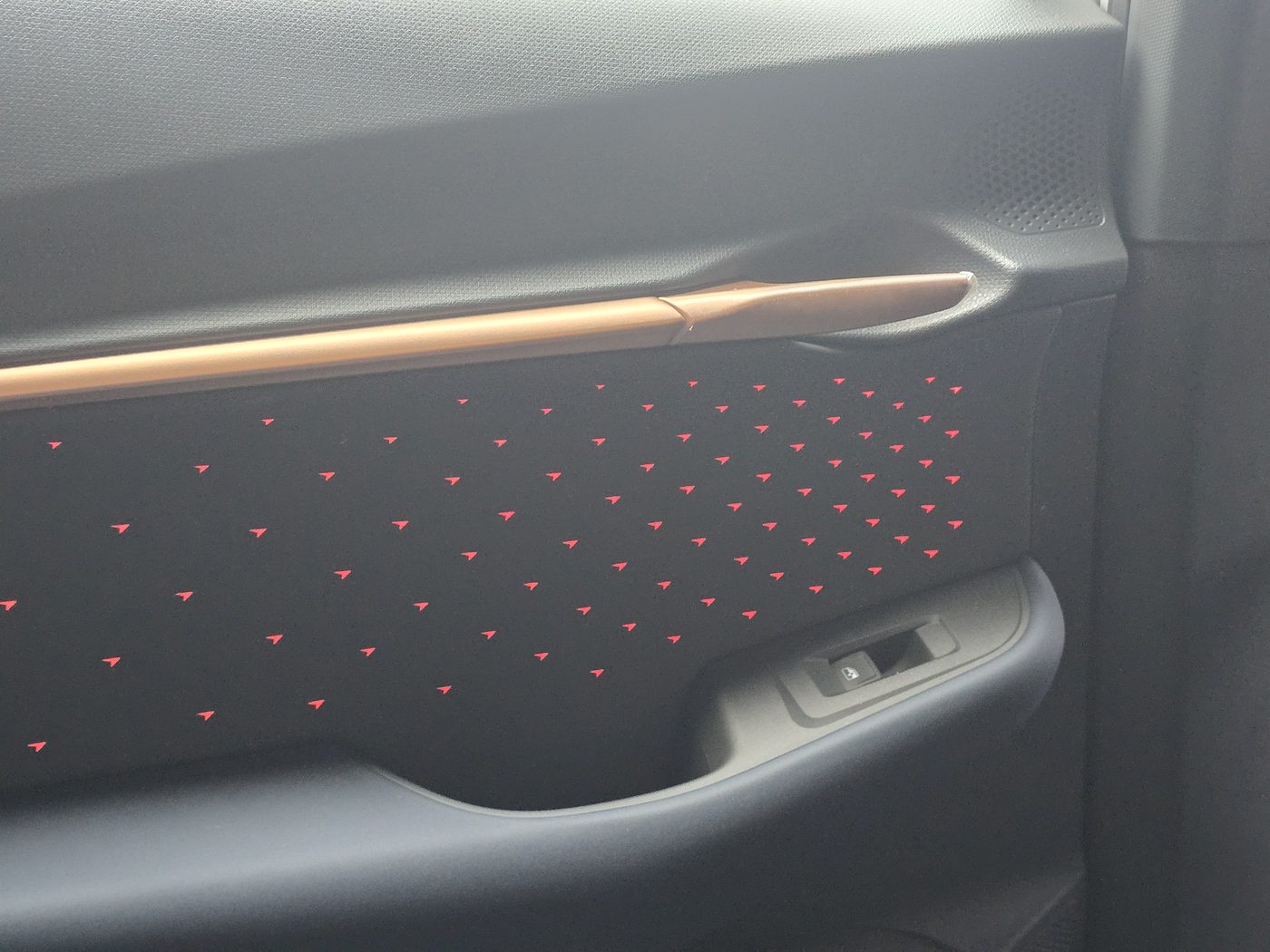
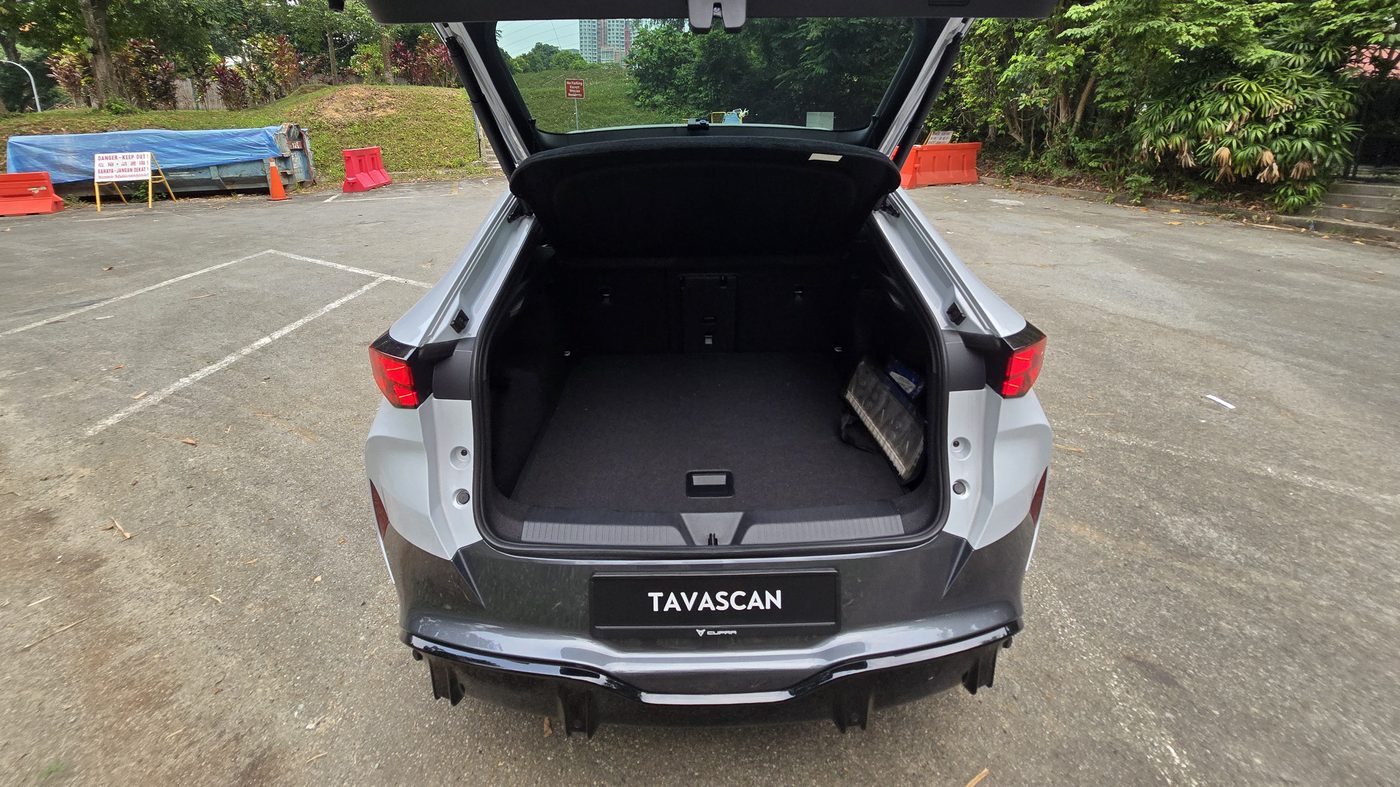
The seats are the Dark Night bucket seats, 12-way electric, and they are comfortable over a long day. There is plenty of space front and back, the cabin is quiet and well put together, and the boot is a good square 540 litres.
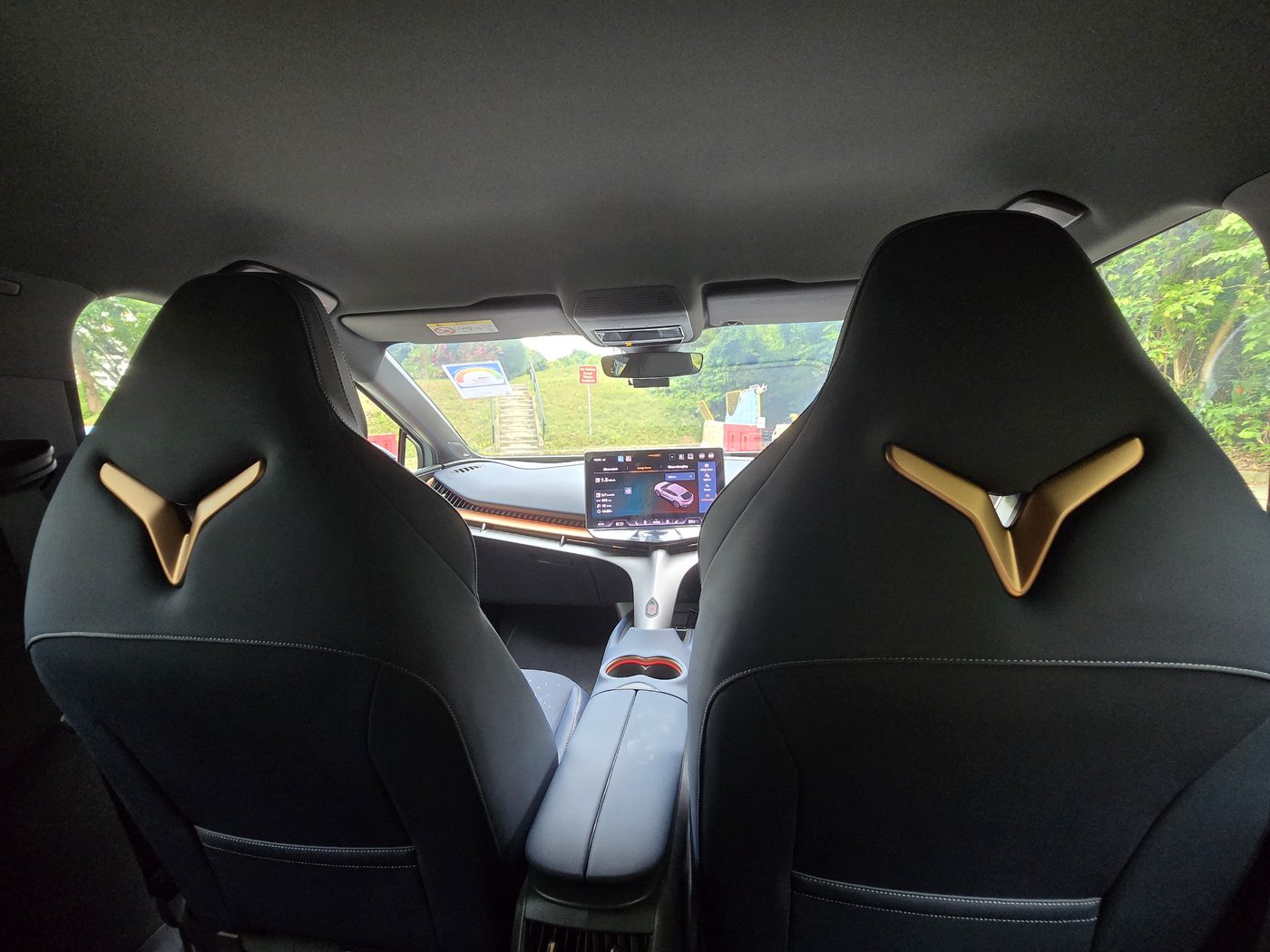
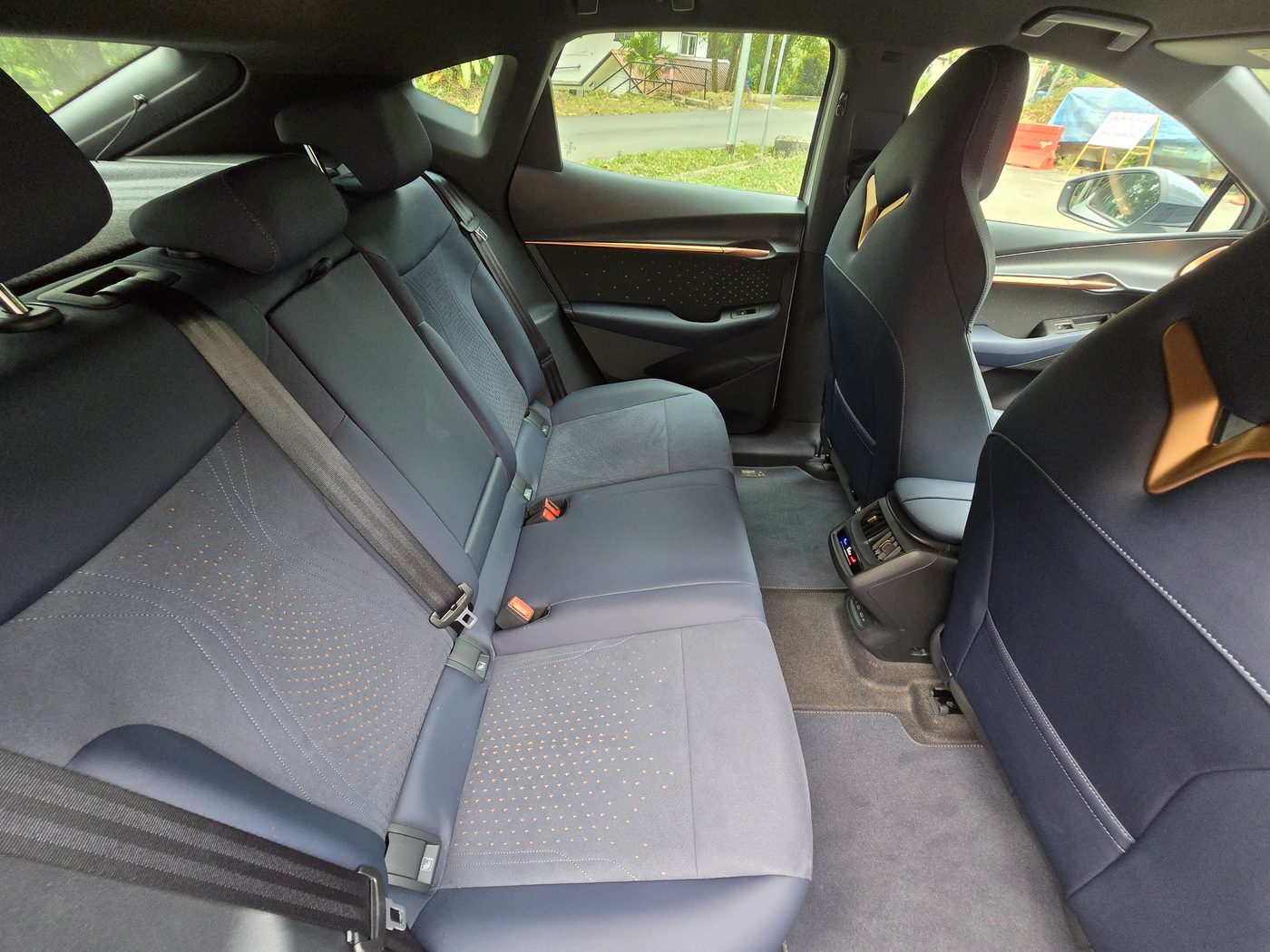
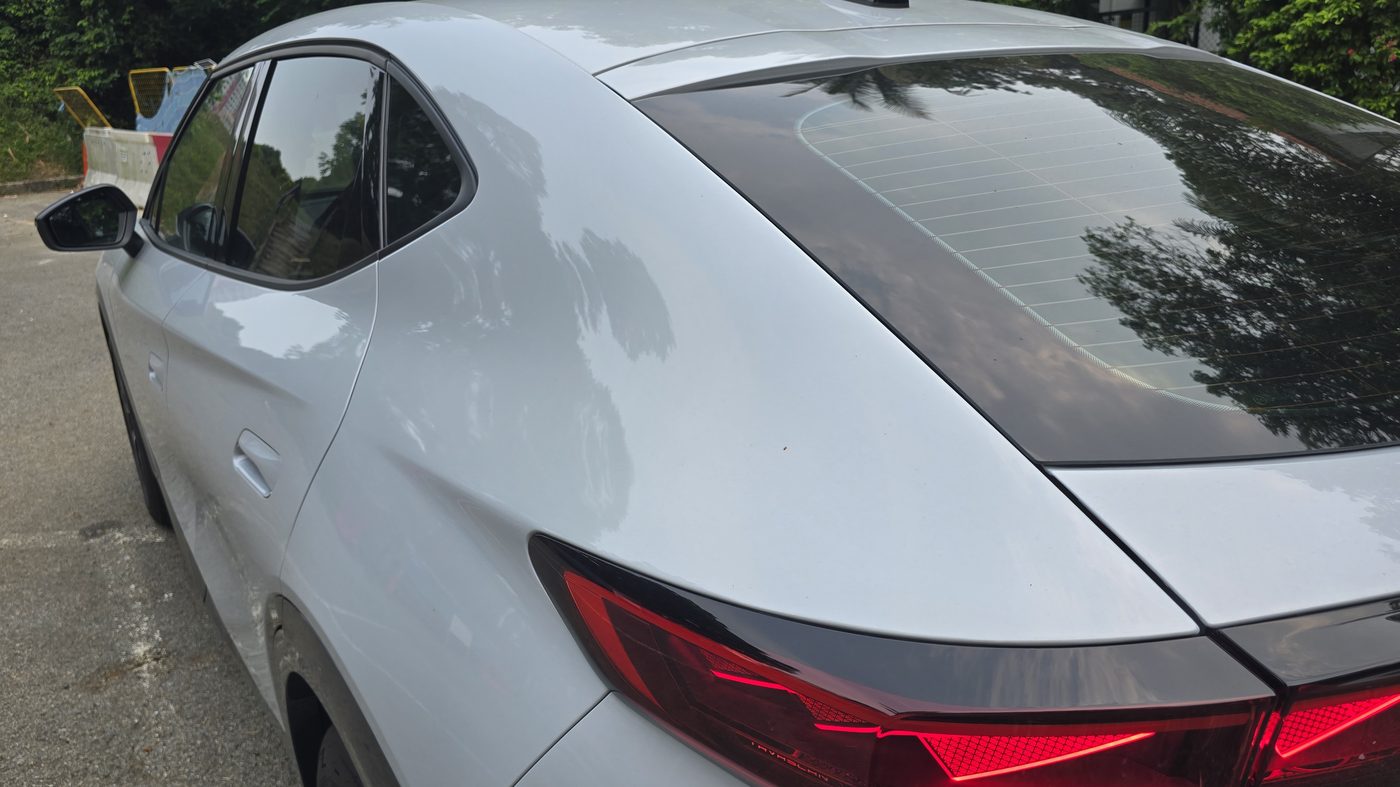
Two catches. The roofline is low at the back, so if you are tall the rear seat will brush your head. And that bridge costs you storage. The wireless phone charger sits under it, between the dash and the console, and getting a phone in and out is a fiddle. Cabin storage overall is decent for a car this size, no more.
Then there is the plastic. There is soft trim where your elbow lands, but a lot of the cabin is hard plastic, more than the price and the theatre suggest. It is well screwed together, it just does not feel expensive to the touch. The Enyaq makes the same trade and hides it better.
The speakers do not make any trade. The 12-speaker Sennheiser system is wonderful, crisp and full, and it was my favourite thing about the cabin by the end of the loan.
Tech and screens
The 15-inch centre screen is angled towards the driver, bright, and runs big fonts and big colours. Everything pops. It is a lot friendlier than the Volkswagen Group screens of a couple of years ago, and the car reads as fun before you have moved an inch.
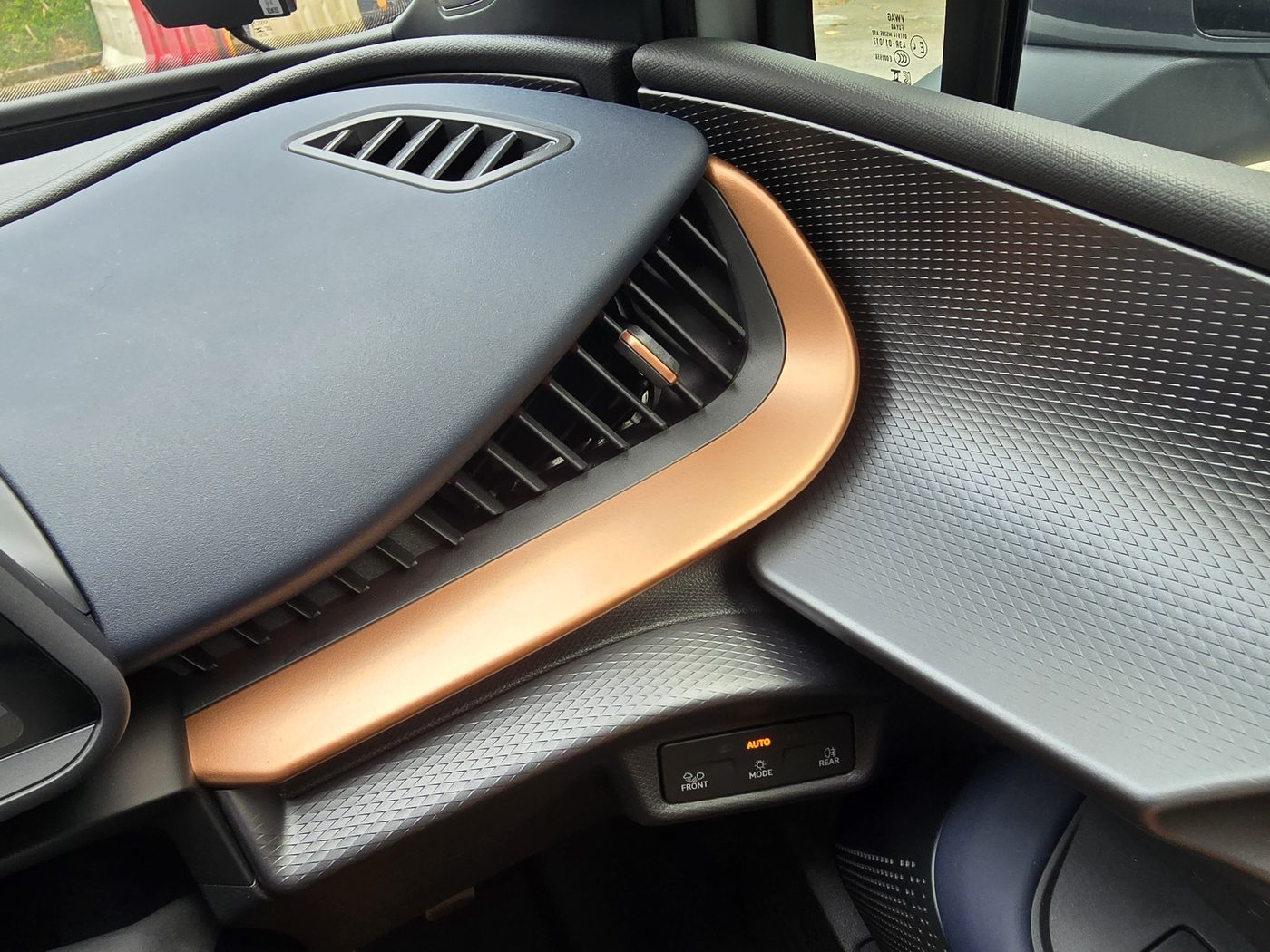
Below it there is a row of controls for volume and temperature, part physical, part touch, and the air vents are manual. You point them with your hand, which after a run of cars that bury the vents in a menu feels like a gift.
The driver display is small and does the basics: speed, gear, direction. Everything else is handled by the centre screen. There is no head-up display. The Enyaq has a good one and I missed it here.
The steering wheel is the best bit. There is a big Cupra button on it, and a drive mode selector built straight in, as if the car is saying let's go. Press it and the whole car tightens up. More on that below.
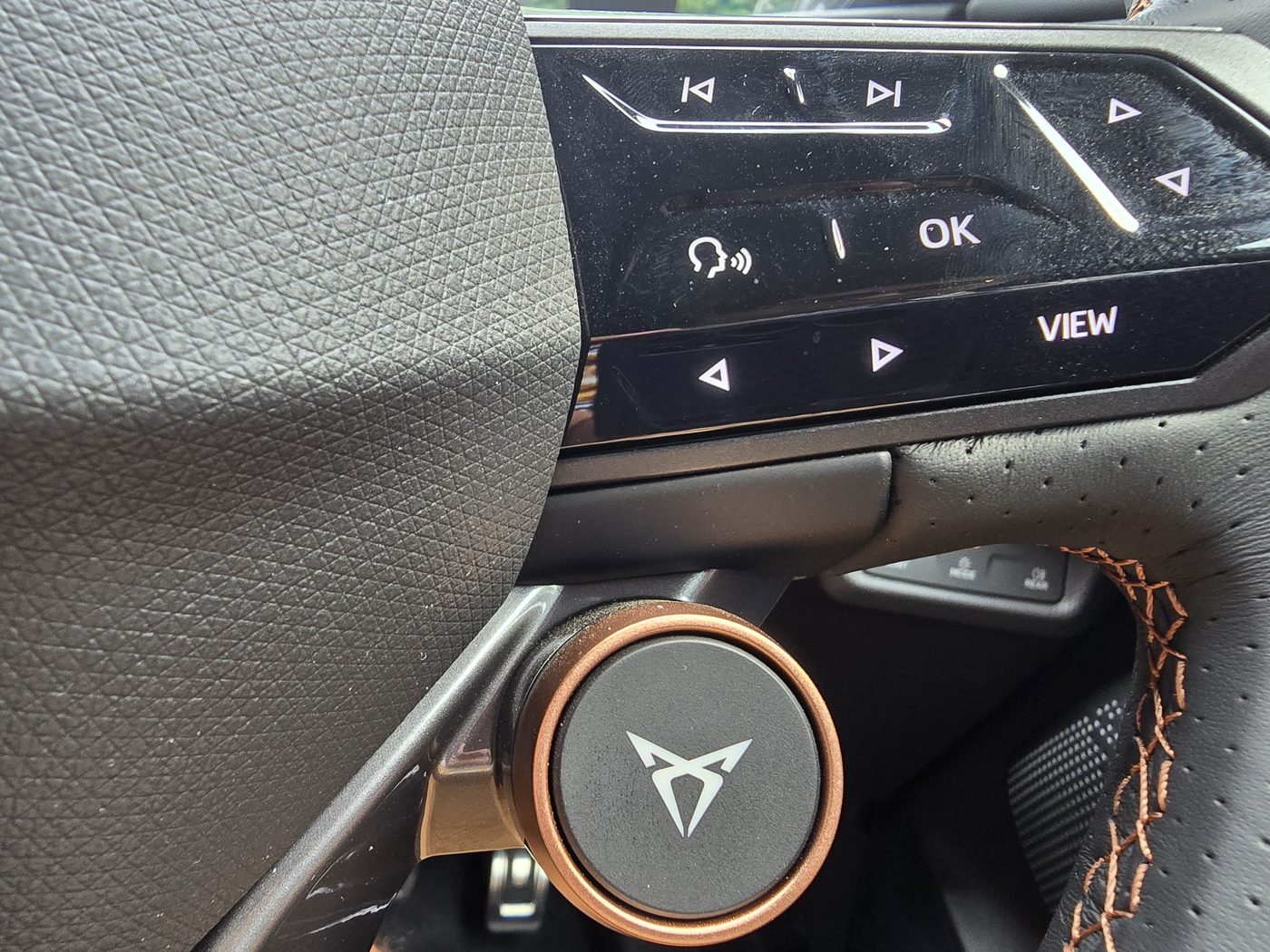
The gear selector is a twist knob. You rotate it to go between drive and reverse. I do not know why it could not just go up and down like everything else, but I suspect the answer is the same as the cup holder.
Driver assistance is decent, not amazing. Adaptive cruise, lane keeping and traffic jam assist all work quietly, and it feels safe. One detail I loved: the blind spot warning is a big orange light on the inside edge of each mirror, and you cannot miss it. More cars should copy it.
How it drives
This is the point of the car.
In its normal setting the Tavascan drives like the Enyaq, which is to say a little soft and a little floaty, comfortable over broken road, nothing you would call sharp. Then you press the Cupra button. The steering gains weight, the throttle sharpens, and the car gets up on its toes. You feel the extra grunt, the body stays flat through corners, and you start taking the long way round the car park.
286 hp through the rear wheels and 6.8 seconds to 100 km/h is quick rather than brutal, and that is the right call for this car. It is fun without trying to frighten you. The brakes felt fine to me, nothing odd.
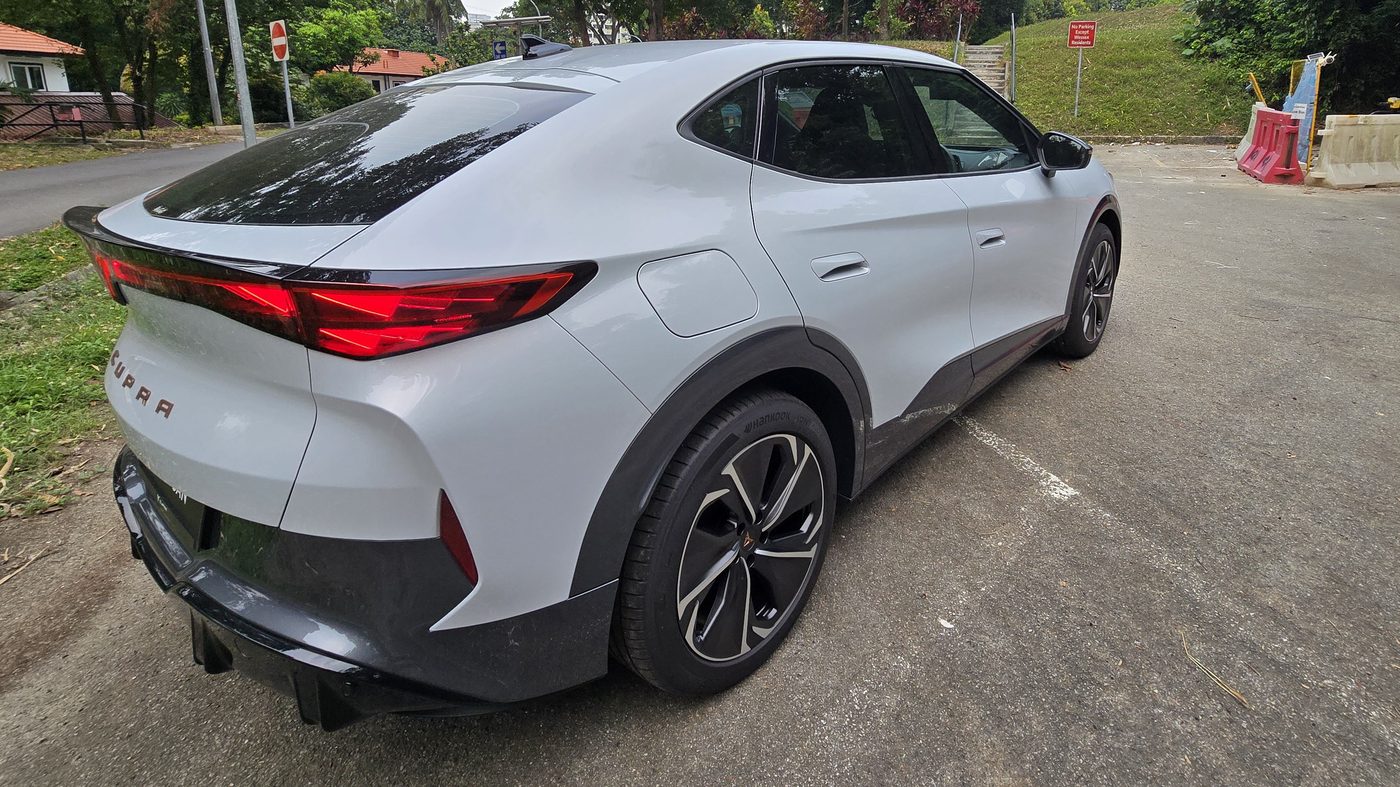
The Singapore Endurance does not get the adaptive dampers or the sports suspension that the twin-motor VZ gets, so the Cupra button is doing its work through the steering and the throttle map. It does enough.
For drama and fun in an electric SUV at this money, the only car I have driven that gets close is the Tesla Model Y, and the Tesla is a far more serious car about it.
The cup holder has a light in it. Why does a cup holder need a light? No idea.
Living with it in Singapore
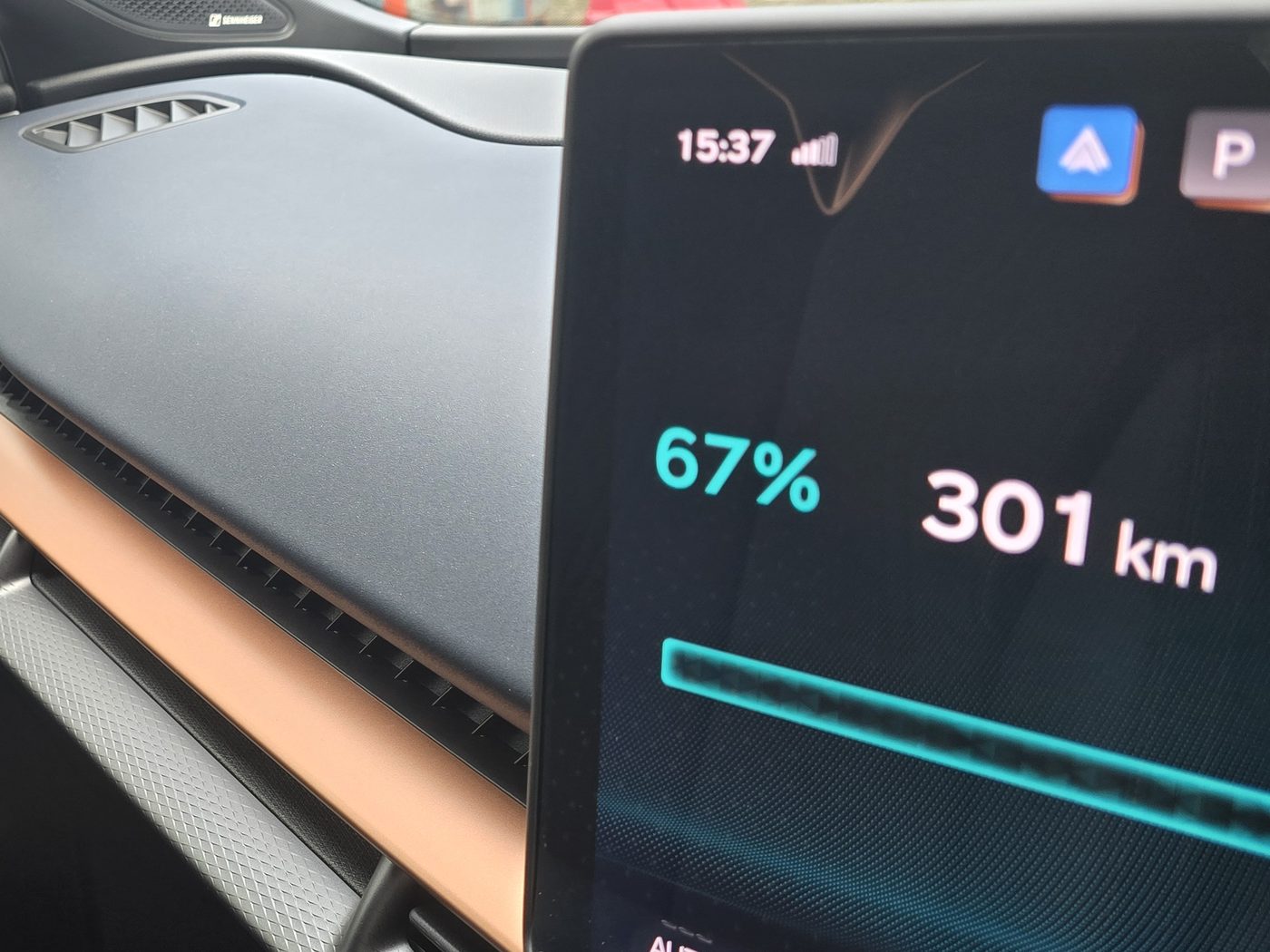
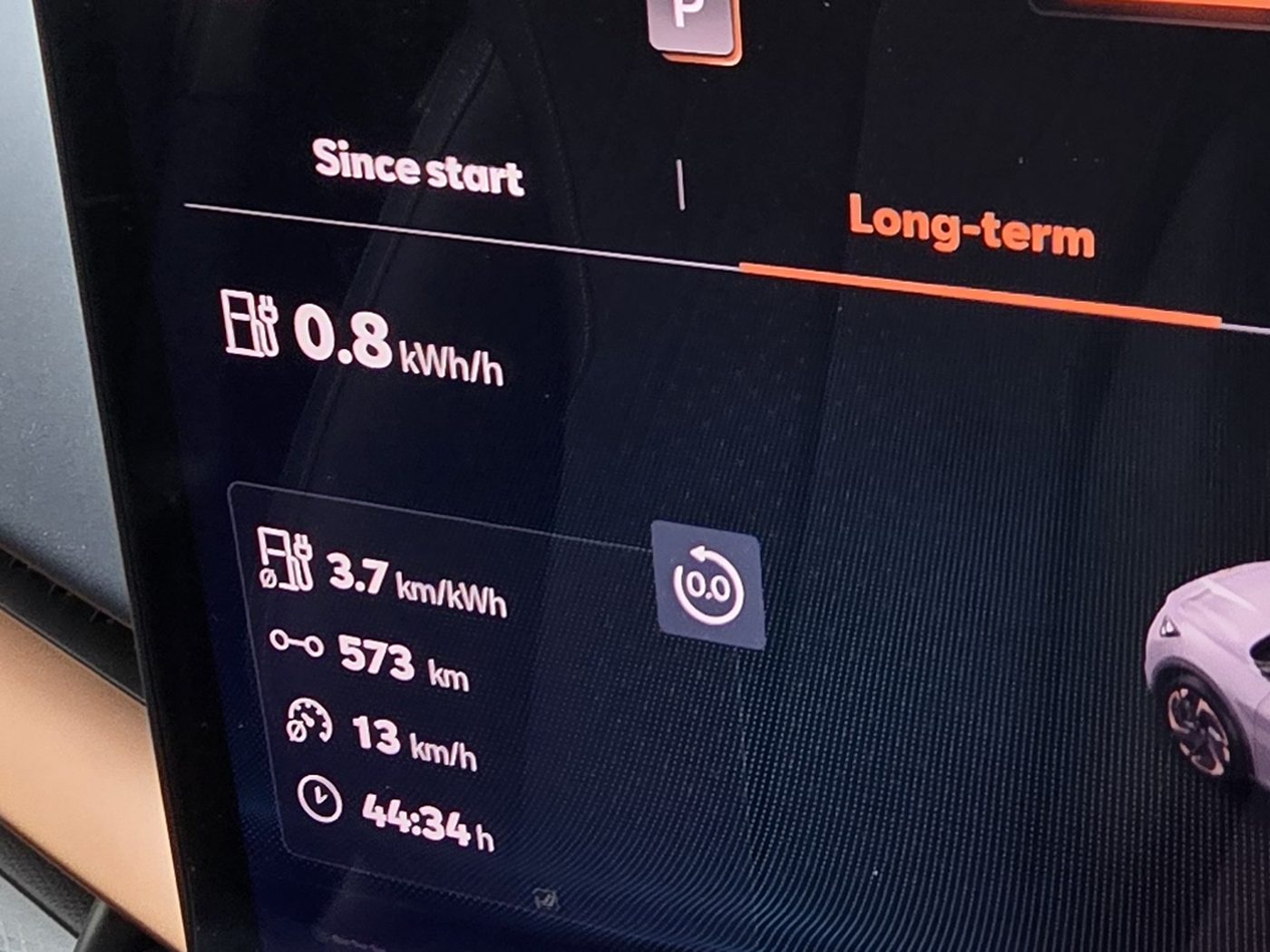
The display was showing 301 km of range with 67 per cent left, so call it about 450 km on a full charge by the car's own estimate. The long-term counter read 3.7 km/kWh over 573 km, which is 27 kWh/100 km against an official 17.2. The same counter showed an average speed of 13 km/h, so that is a press car's life of traffic, carparks and aircon rather than a steady-state number.
DC charging peaks at 135 kW and Cupra claims 10 to 80 per cent in about 28 minutes. AC is 11 kW three-phase, roughly eight hours from empty. I did not charge the car on the loan, so those are Cupra's numbers.
Day to day it is a quiet, comfortable, easy car. It is only mental to look at.
Buying one
On the Cupra Singapore price list valid to 21 October 2026, the Tavascan Endurance is S$215,900 with COE, Cat B. I had it in my head as a S$240,000 car. It is S$24,000 less than that.
It is S$15,000 cheaper than the Skoda Enyaq 60 Sportline it shares its platform with, and under the BYD Sealion 7 Premium, which was S$219,388 with COE on BYD's September list. The Sealion still gives you a bigger battery and more screen, but the gap is small, and nothing at this price looks or drives like the Cupra. The Volkswagen ID.4 and ID.5 in the same showroom group cost more too.
Cupra sweetens it with ten years of free servicing, a ten-year battery warranty, five years on the car and eight years of roadside assistance, all with terms attached. Line it up against everything else on sale here in our compare tool.
The verdict
The Tavascan is a quiet, roomy Volkswagen Group EV dressed up as a fighter jet. The looks, the lit cabin, the Cupra button and the Sennheiser speakers give it more personality than anything else at this price, and S$215,900 is a good price.
Underneath that it is quiet, roomy, well built and easy to live with. The plastics let it down, the bridge eats your storage, and tall people will not love the back seat.
If you want an electric SUV that makes you grin every time you walk up to it, this is the one. If you want the sensible sibling, the Skoda is in the same showroom group for more money.