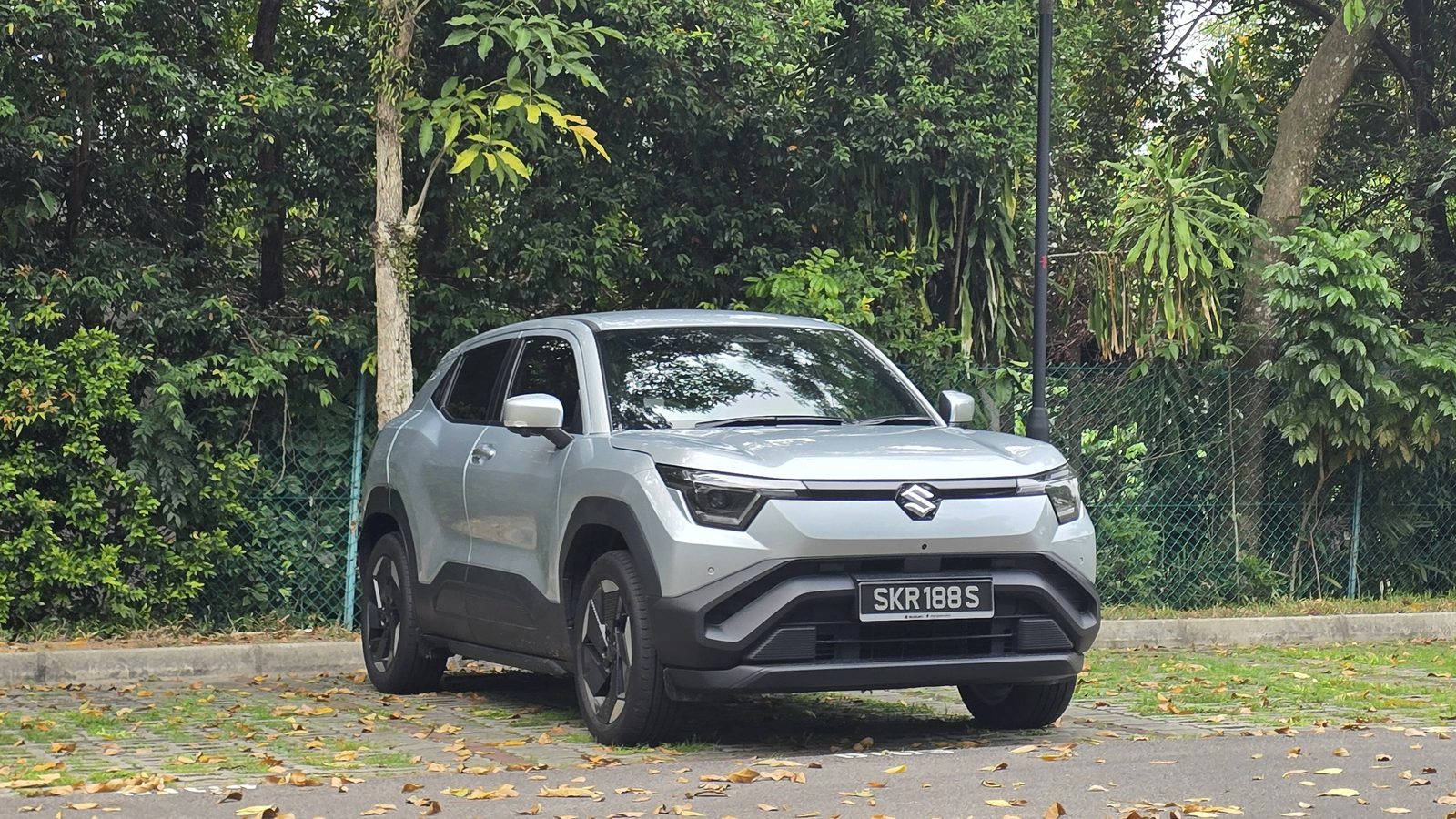
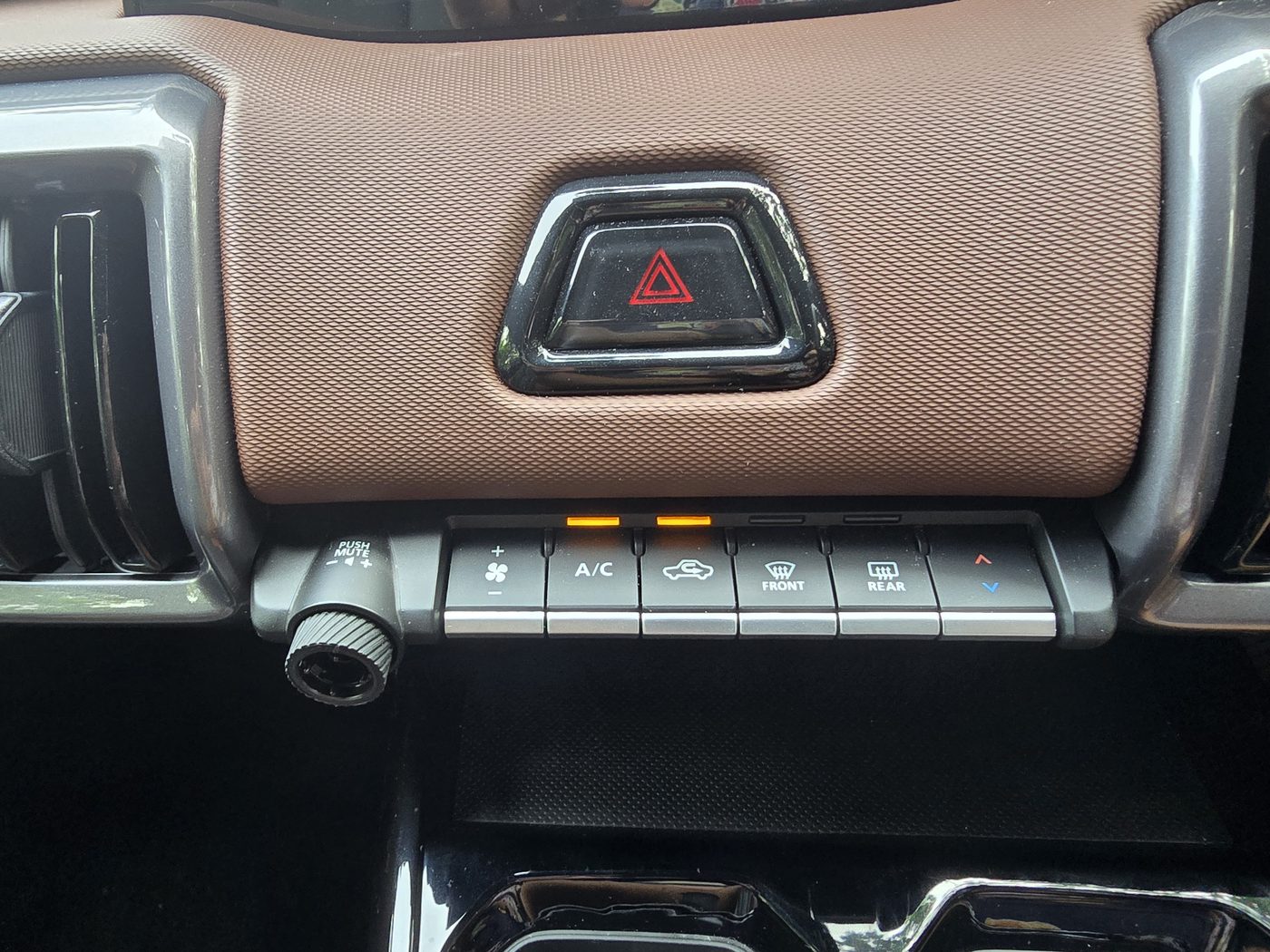
This is Suzuki's first electric car, and the first thing I noticed was what I did not have to do. I never touched a screen to change the temperature, the volume or the mirrors.
The e Vitara is a get in and go car. If you are coming out of a petrol car and the big-screen EVs put you off, this is the easiest switch I have driven.
You do pay for that simplicity, though. For the money, this is a pretty bare bones car.
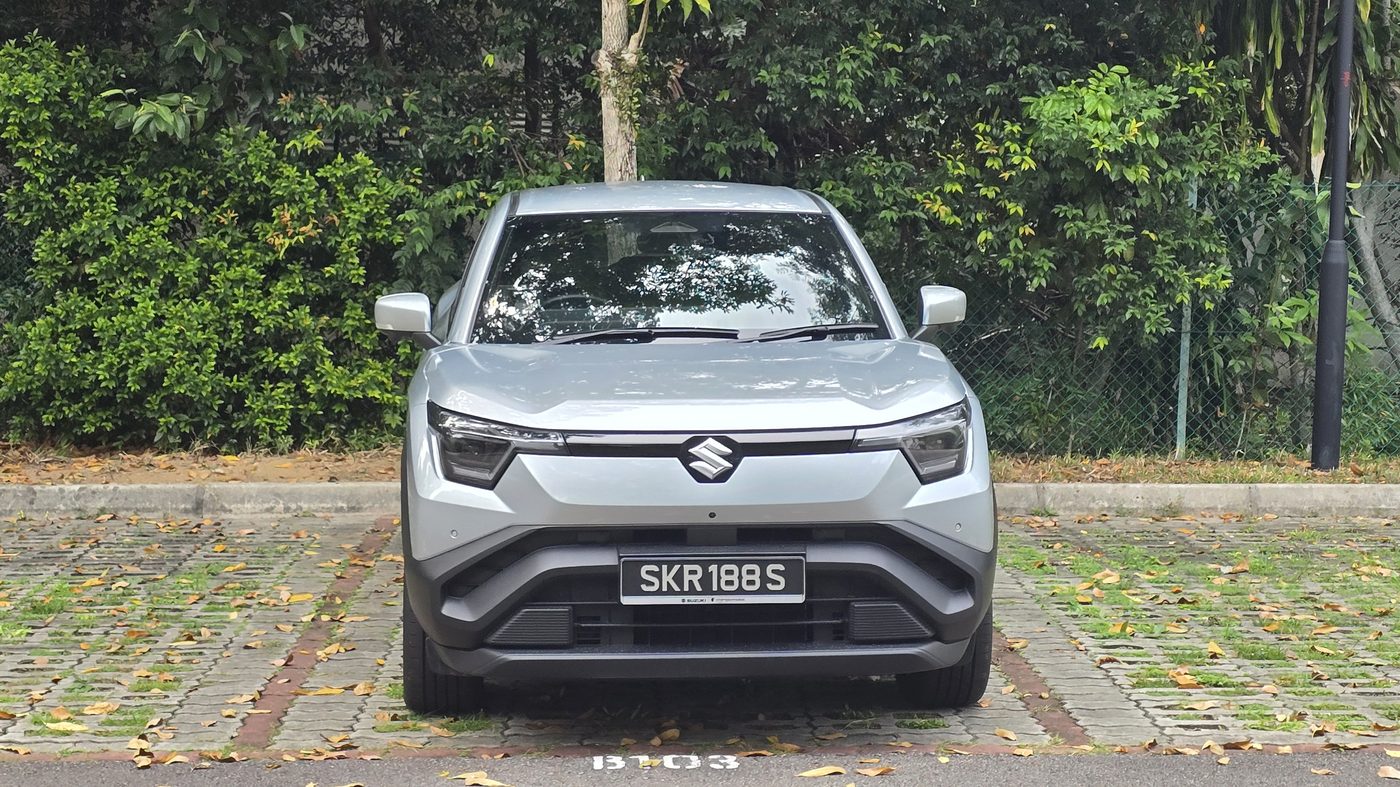
Who is Suzuki?
Suzuki started in 1909 as a loom maker in Hamamatsu, Japan, and built its first car in 1955. It made its name on small, light, simple cars that last. Champion Motors, part of Inchcape, has sold them in Singapore since 1976.
The Vitara arrived in 1988 as a small off-roader, one step up from the Jimny. The Jimny kept the off-road job. The Vitara turned into Suzuki's comfortable family SUV, and this one, built in India, is the first to go electric. Toyota sells its own version of the same car overseas as the Urban Cruiser, and you can see the family link in the cabin: the gear selector is the one from the Toyota bZ4X.
Inside
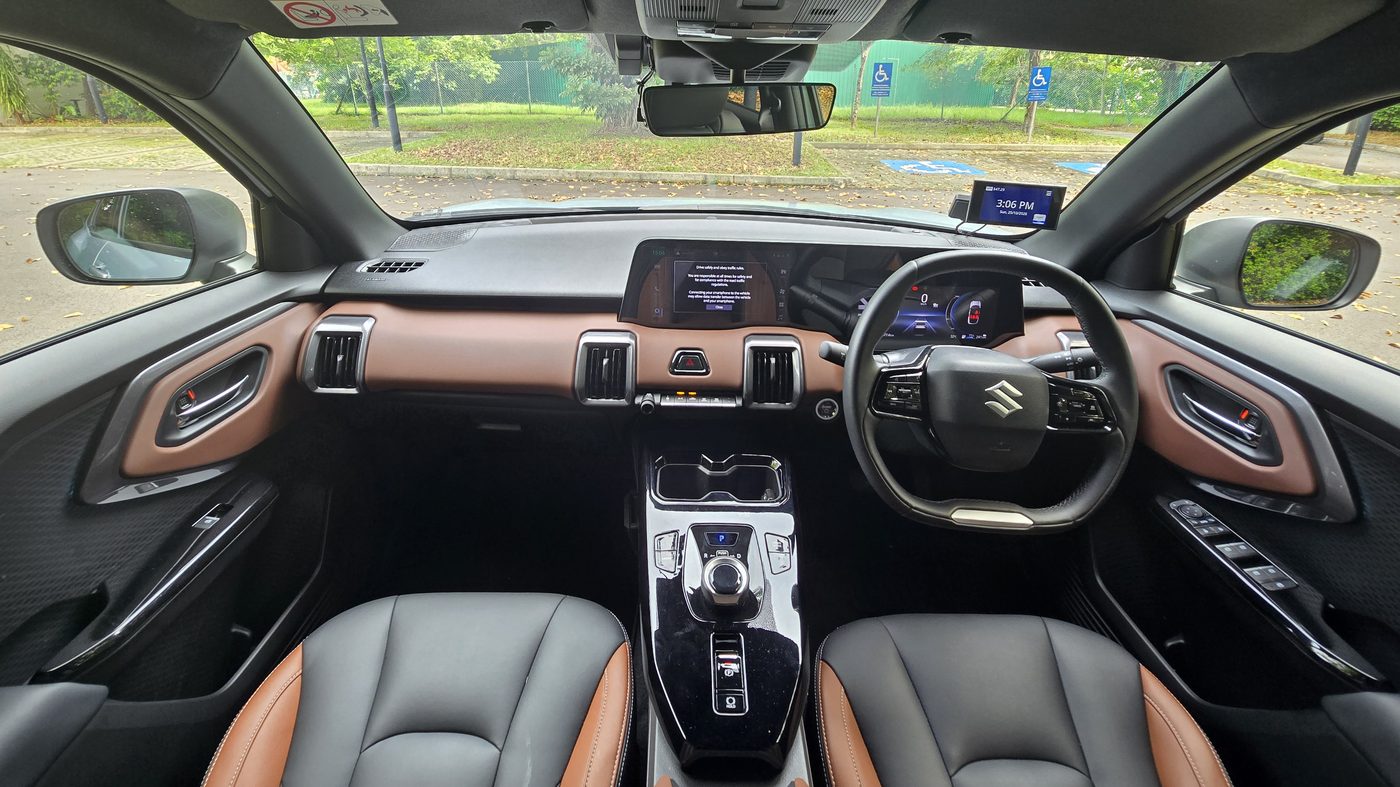
When I reviewed the bZ4X, it felt as though the engineers and the designers had never been in the same room. There is some of that here too, but a lot less.
The two-tone cabin looks good. Black with tan on the seats, the doors and across the dash. I have no issues with the way it looks, and that was my main complaint about the Toyota.
The seats are comfortable, with good support. There is a surprising amount of legroom in the back. The aircon is really good. It is a very nice cabin to sit in.
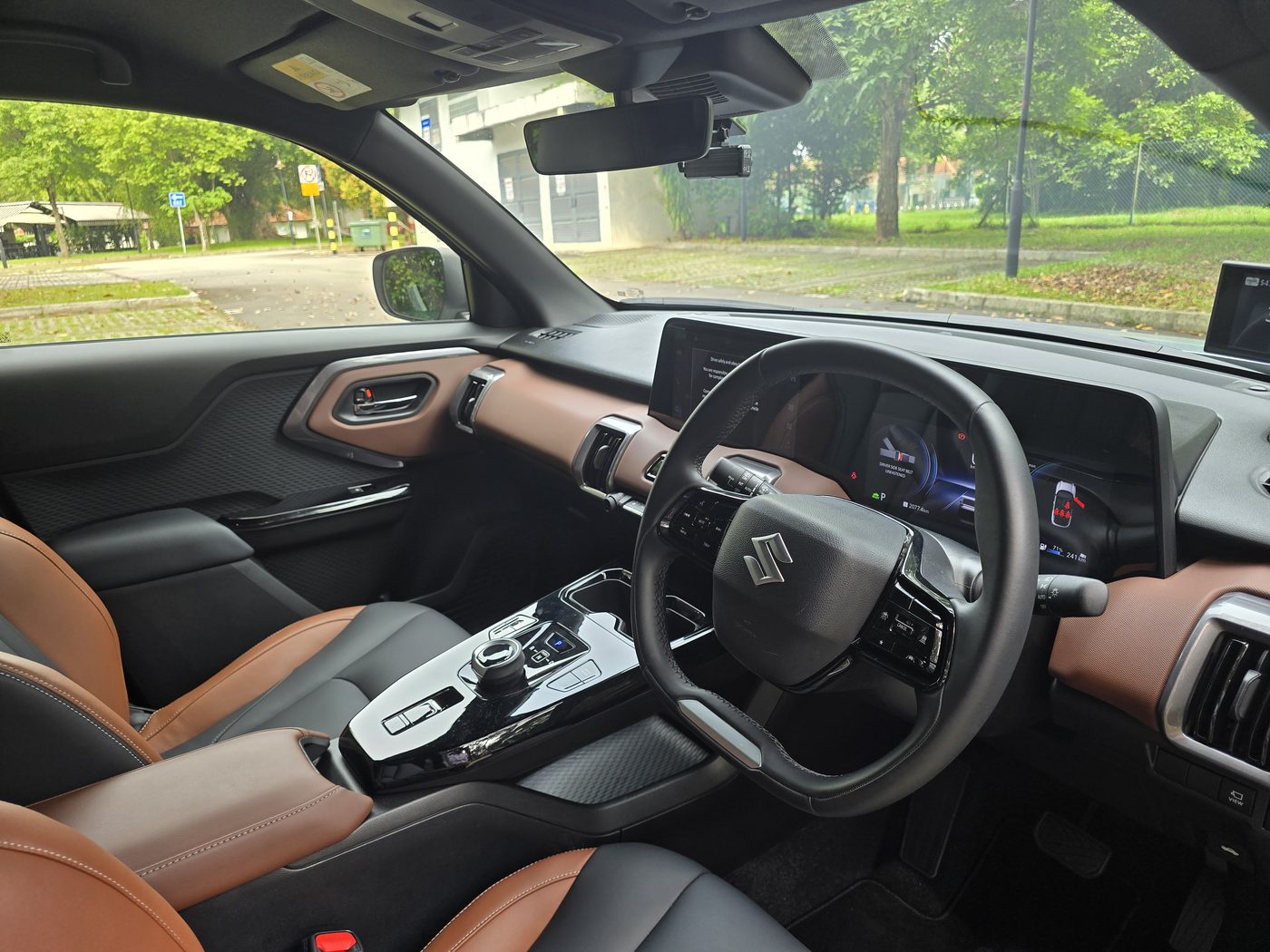
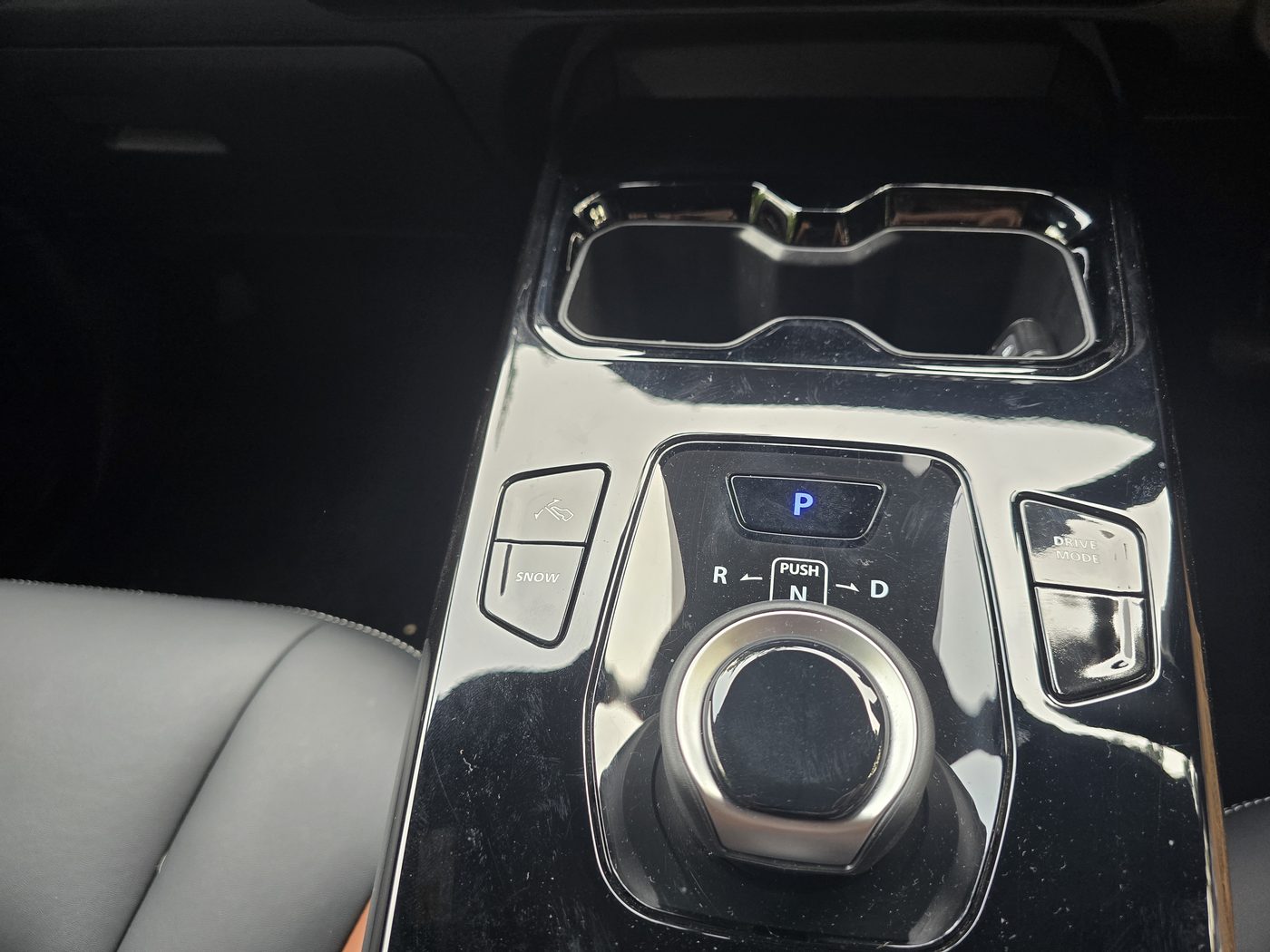
Then you start touching things. Apart from the steering wheel, the cabin is hard plastic from top to bottom. The tan panel across the dash is an interesting material, soft when you press it but still plasticky.
That is a little disappointing. A Dongfeng Box costs less than this and feels more plush inside.
Both front seats adjust by hand, and the tailgate is manual.
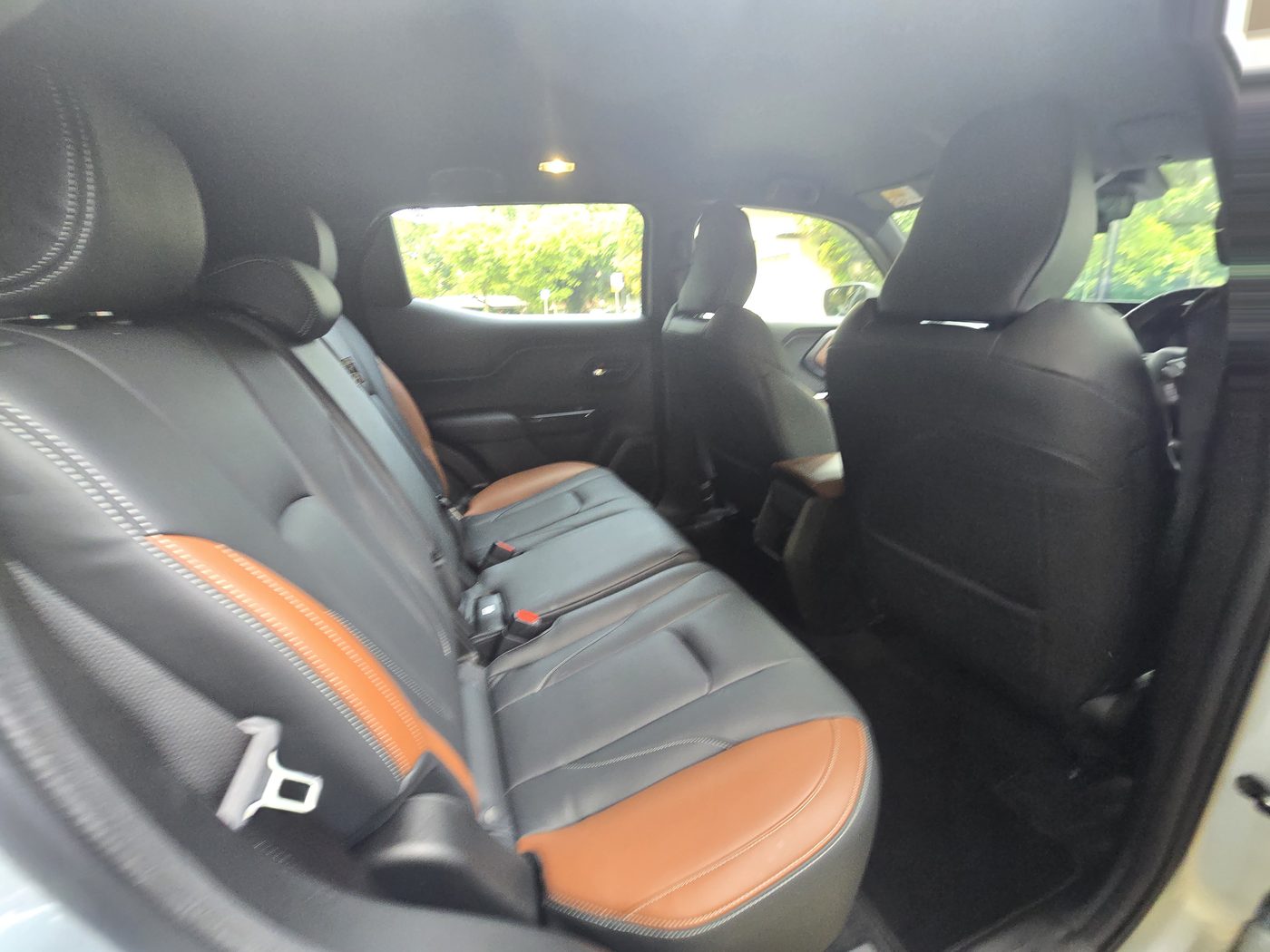
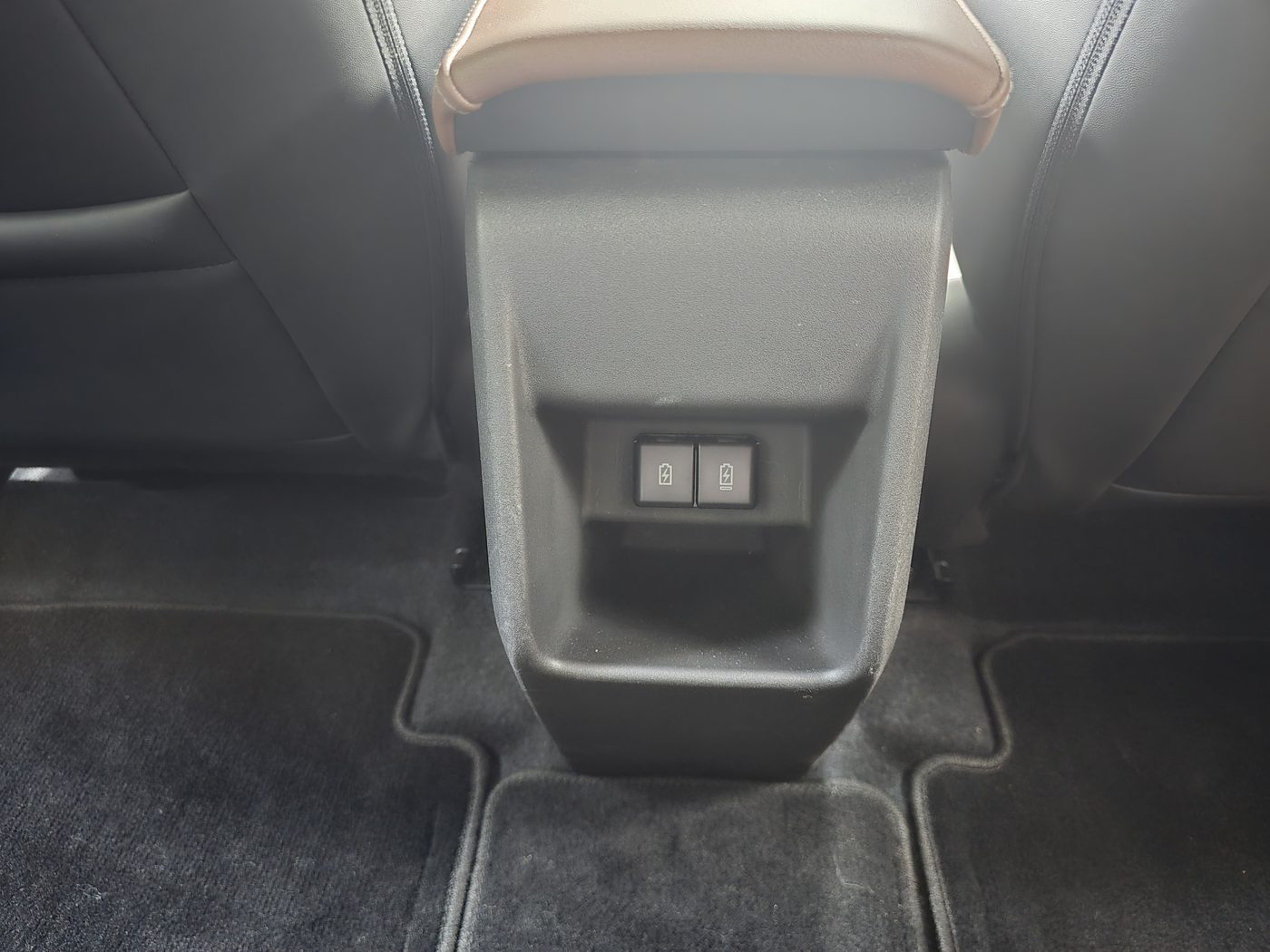
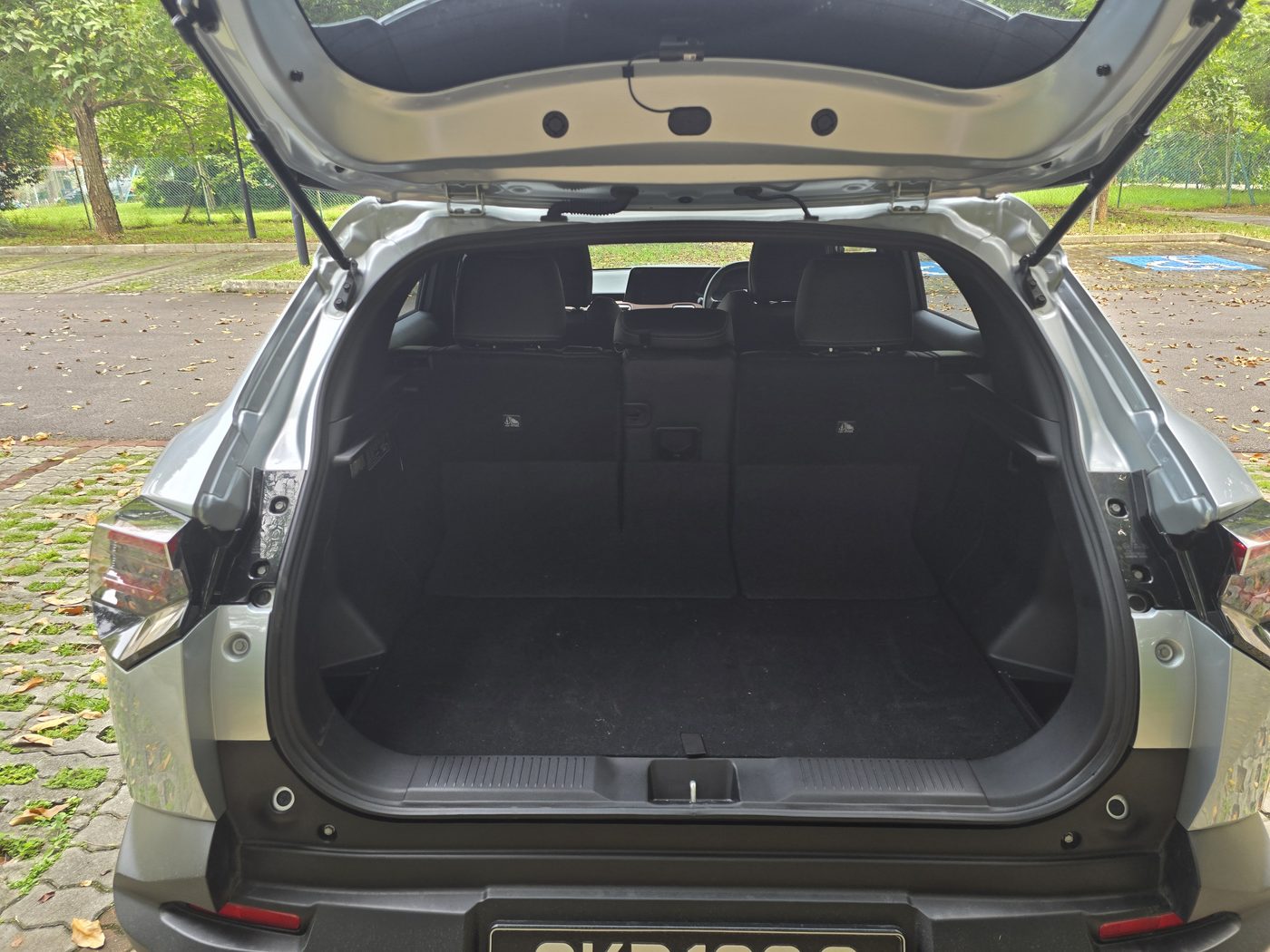
The boot is not the biggest, but it is not small either. Suzuki quotes 238 to 310 litres depending on where you slide the back seat, and 562 litres with it folded.
Screens and buttons
My single favourite thing about this car is the physical controls. The mirrors, the volume and the aircon all have real switches. They are easy to use, easy to reach and well laid out.
So many of the EVs I test put the climate controls in the screen that I had started to think I was used to it. I am not. This car shows that manual controls are still the best way to do these things.
I never touched a screen to change the temperature, the volume or the mirrors.
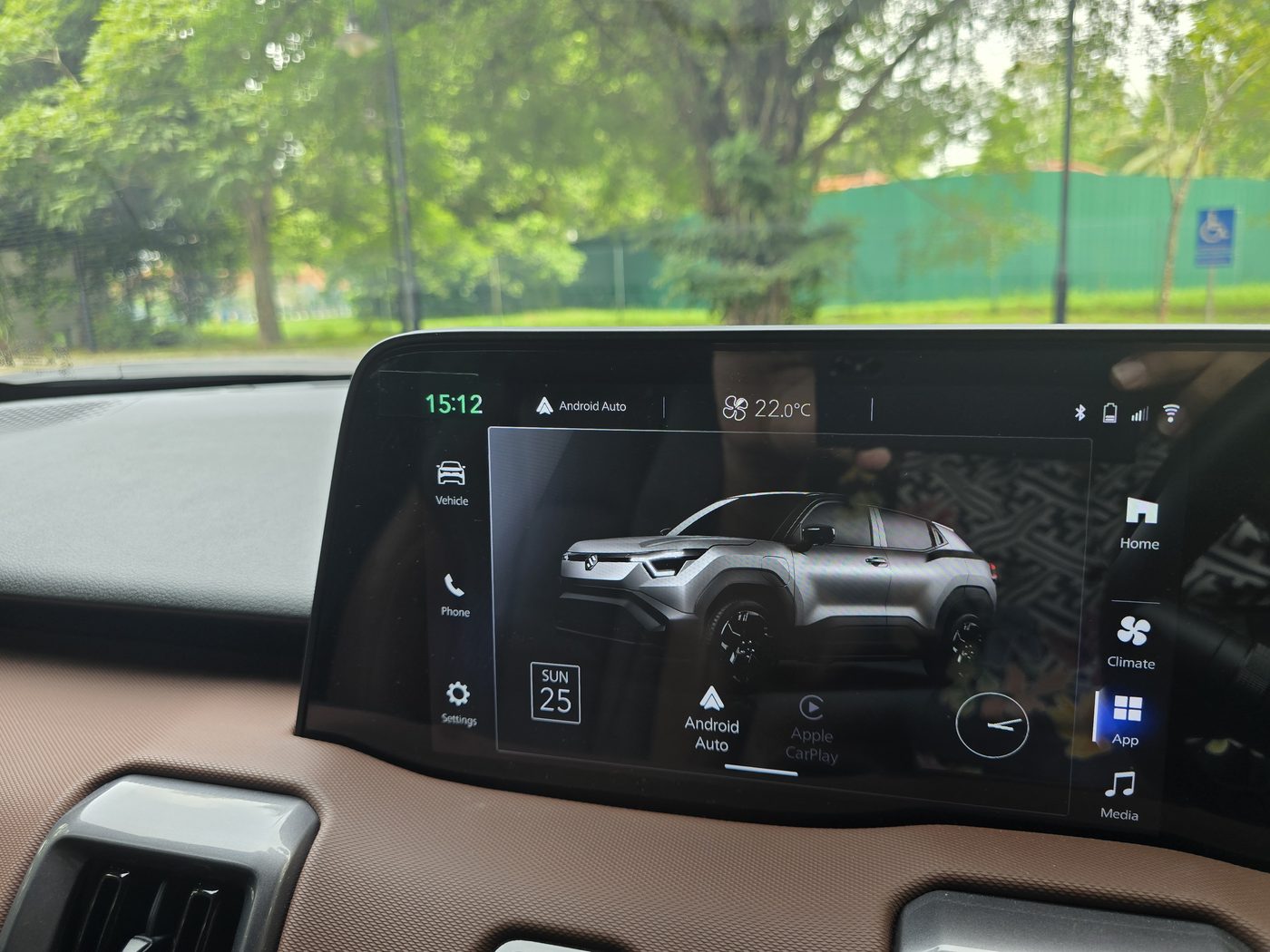
You get two screens. The 10.25-inch driver display is intelligently set up. Speed sits in the centre, and on either side is an area you can set to show your maps, your music or the car's stats.
The 10.1-inch centre screen supports wireless Android Auto and Apple CarPlay. There is no app store. In the menus you get a few options for regen, the lighting and the audio, and that is about it.
The sound system is okay.
The driver aids are good. Adaptive cruise and lane keeping do their job without being intrusive, which I quite like about this car.
Now the list of what is missing. There are no blind spot monitors. There is no auto parking. I also could not find a setting to lock the doors once the car is moving, so I pressed the lock button myself on every drive. Not a big deal, but strange.
How it drives
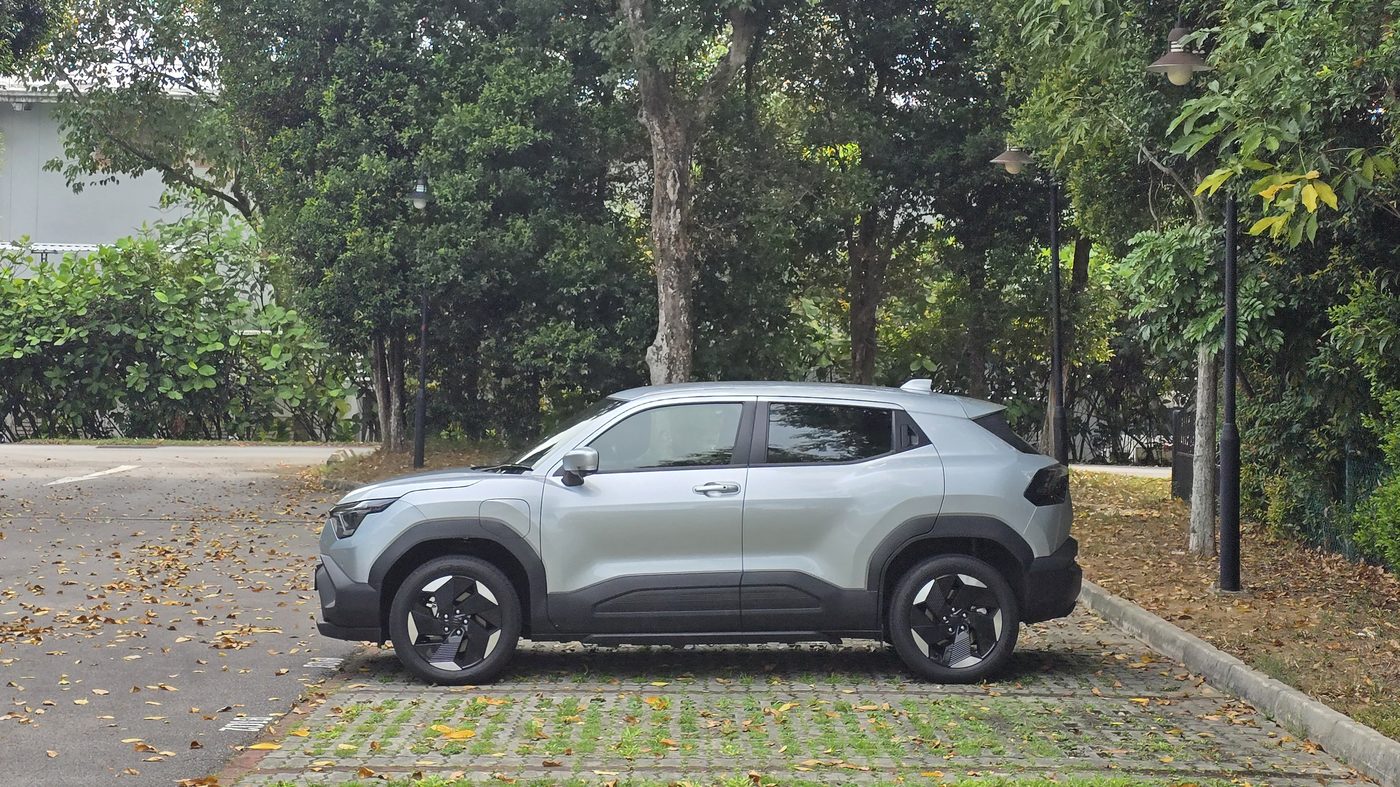
This is the part Suzuki got right. The car is very well engineered, and you feel it straight away.
The chassis is really good. The suspension is well tuned and a bit on the harder side, which is no bad thing in a tallish small SUV.
It is also faster than I thought it would be. This is a Cat A car with 106 kW, and it never felt slow or short of pep. Fast by Cat A standards, anyway. It helps that the car is light, about 1.7 tonnes when most electric SUVs are closer to two.
It is quiet on the road and comfortable. Nothing rattled and nothing shook. You can feel the Japanese engineering through and through, and the car feels built to last.
Living with it in Singapore
Suzuki claims 345 km on the WLTP cycle from the 49 kWh battery. With 71 per cent showing, the car said 241 km, which works out to about 340 km on a full charge. The trip average was 6.1 km/kWh, or 16.4 kWh/100 km, against an official 14.8.
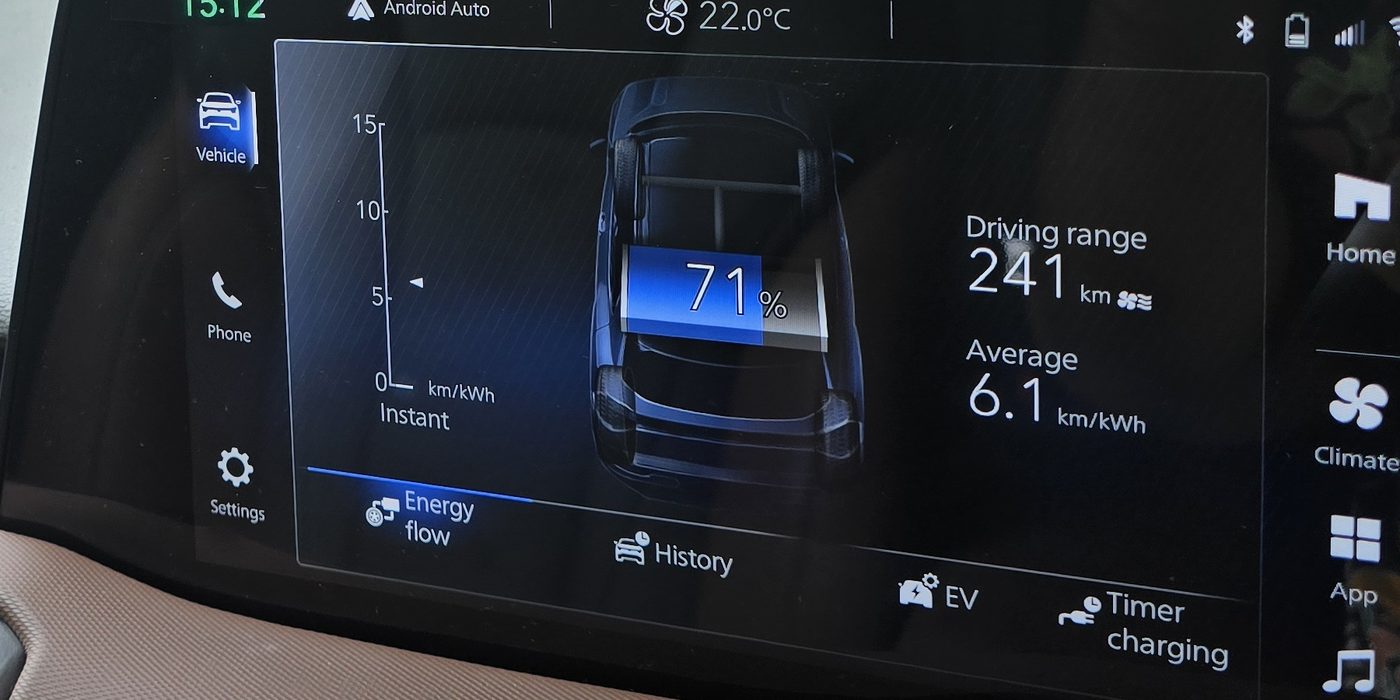
That is on the low side for the money. Several cars at this price claim more than 400 km. Charging is 7 kW on AC through a Type 2 port, and CCS2 for DC.
So who is it for? Someone who wants simple. If heavy screen interfaces turn you off, and you do not want to open a menu or talk to a voice assistant to move a vent, this car gets it right.
If you are coming from a traditional petrol car, this is the easy one. The other is the bZ4X, and the Suzuki is a lot cheaper.
Buying one
Champion Motors sells one version, the 49 kWh. It is S$183,888 with COE on the Super Savers package, S$188,888 on Savers and S$191,888 on Classic.
All three come with a five-year, unlimited-mileage warranty. Super Savers and Savers cover the battery for eight years or 160,000 km and include one year of servicing. Classic covers the battery for ten years or 200,000 km and includes ten years or 200,000 km of free servicing, for S$8,000 more than the cheapest package.
For the price, you are not getting the best value. The Omoda E5, the Dongfeng Vigo and the AION UT all cost about the same or less on October lists, and all three give you more kit. Line them up in our compare tool.
The verdict
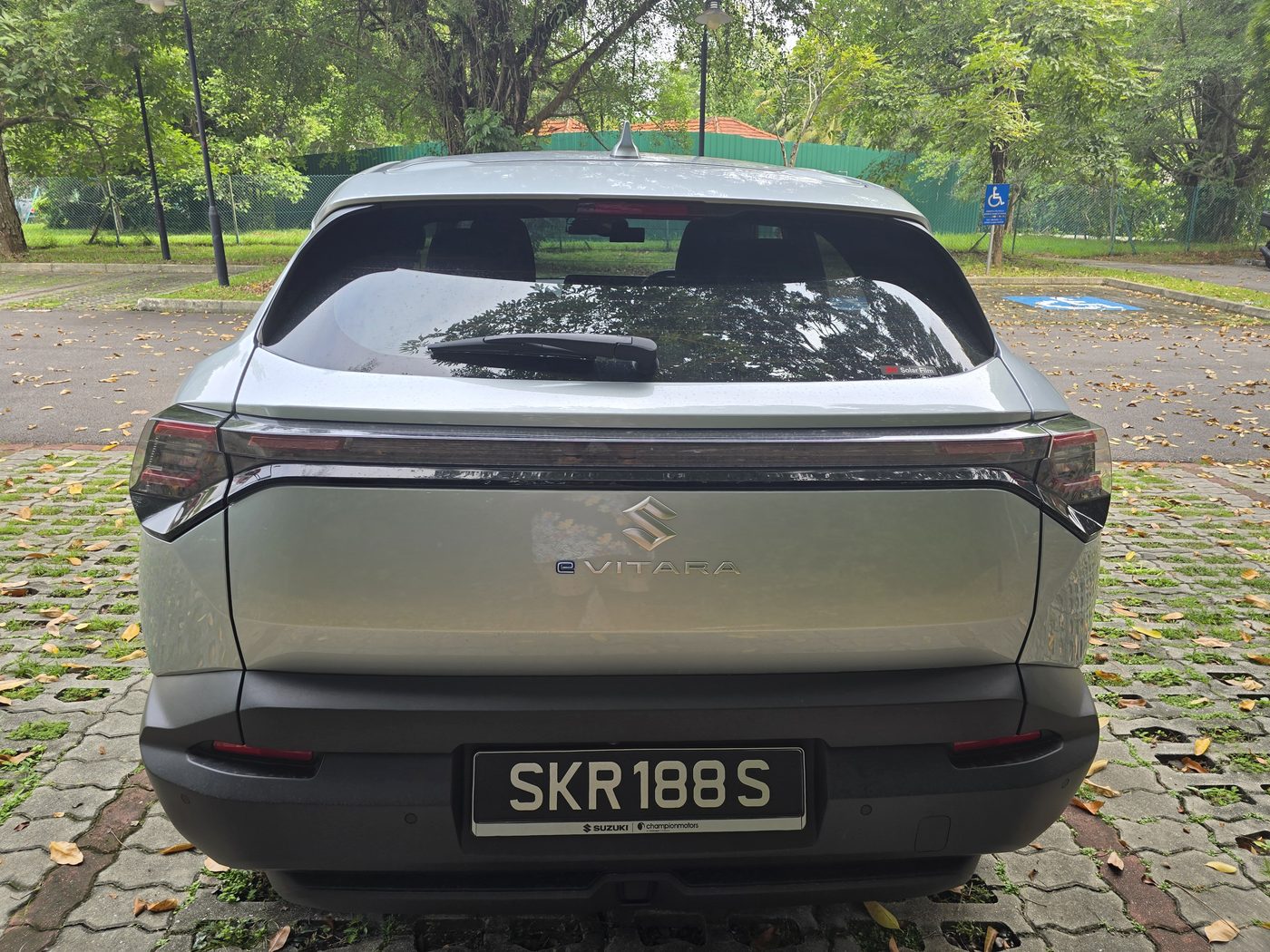
The e Vitara is well engineered, looks good and is easy to live with. You get in and you go. If you want simple and you are coming from a petrol car, this could be the best way into an EV.
If you want something more dynamic, flashier or more techy, this is not the car for you.
And for the price, it is a bit of a hard sell. It is solidly built and it will have that Suzuki engineering that has made the brand so endearing to so many people. It is also missing a lot of what other cars at this money include.