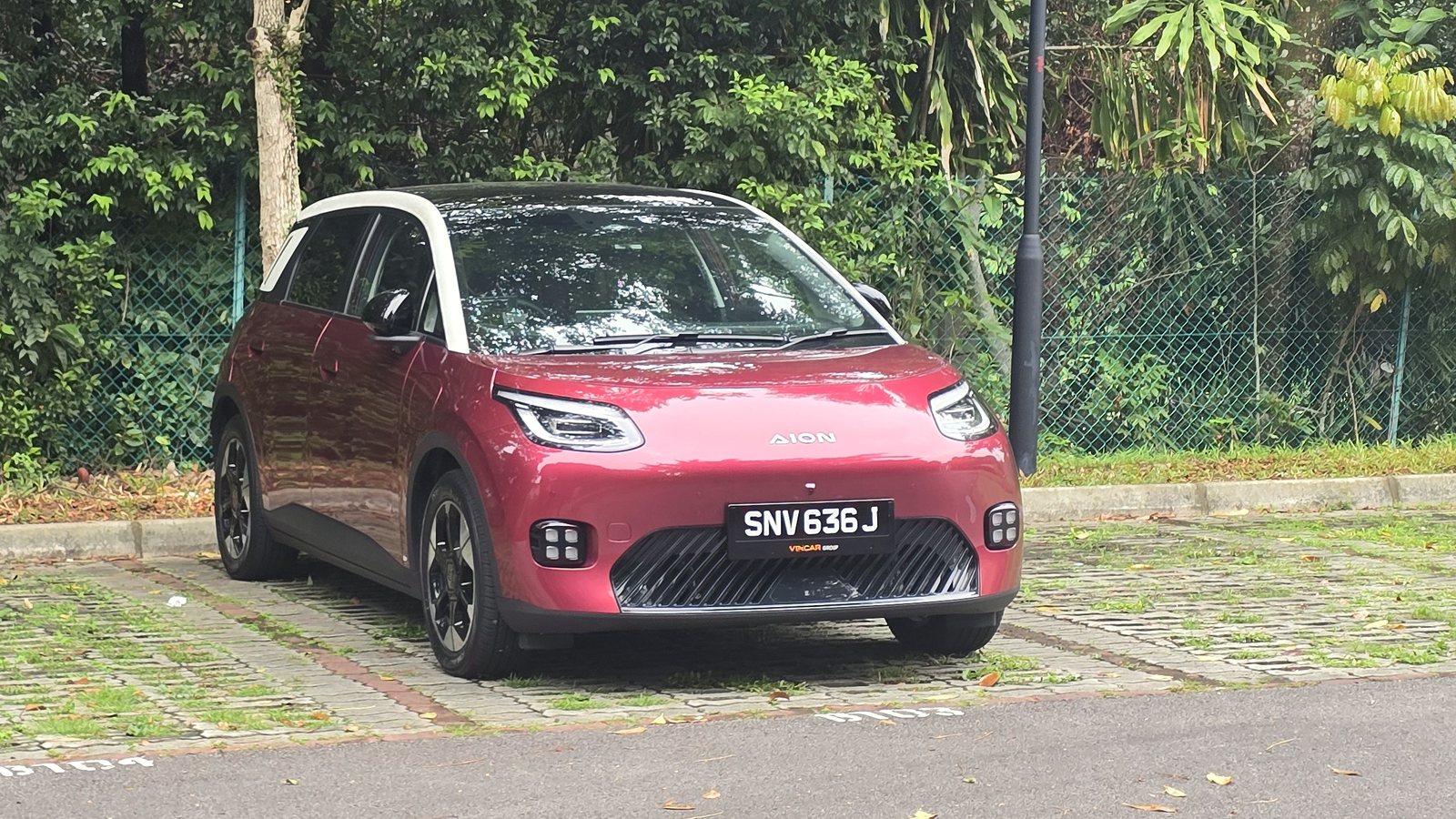
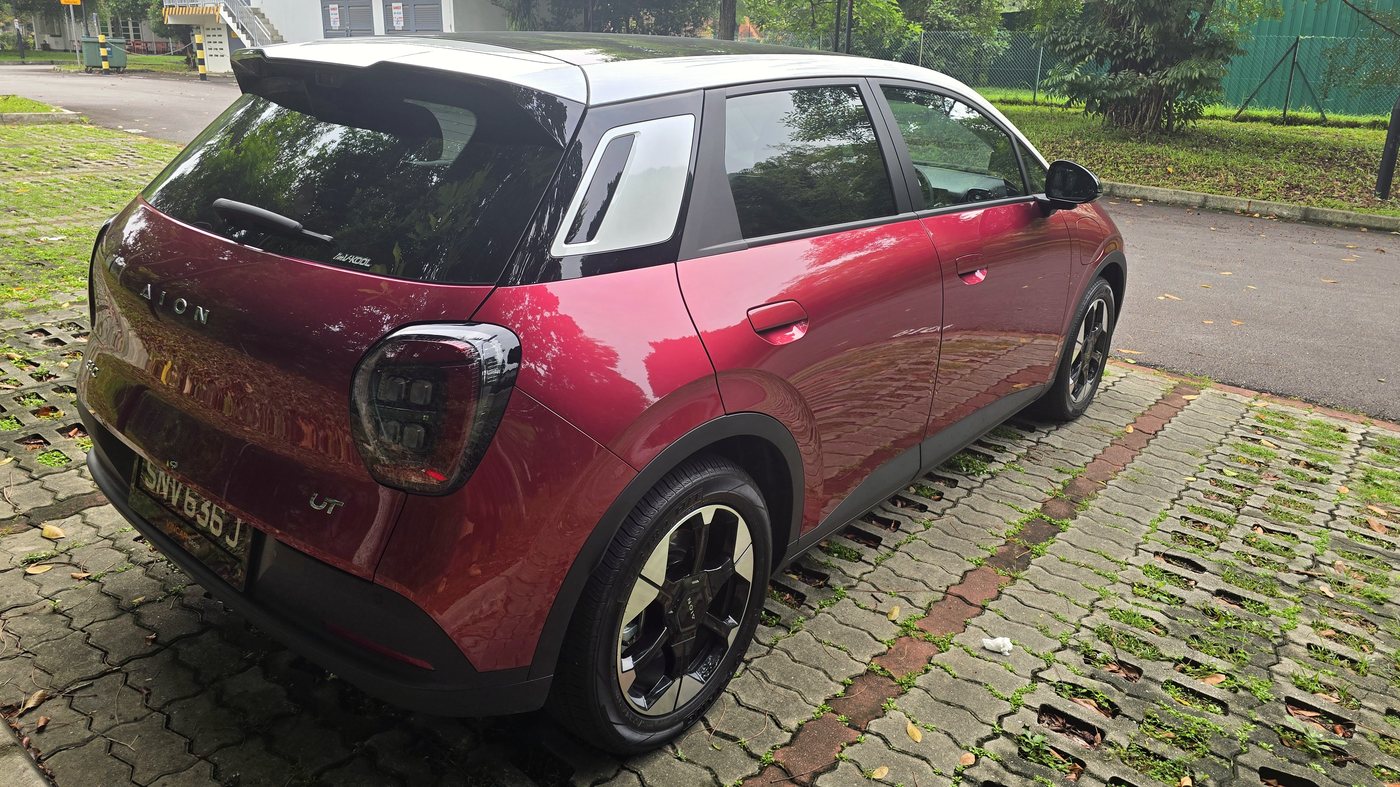
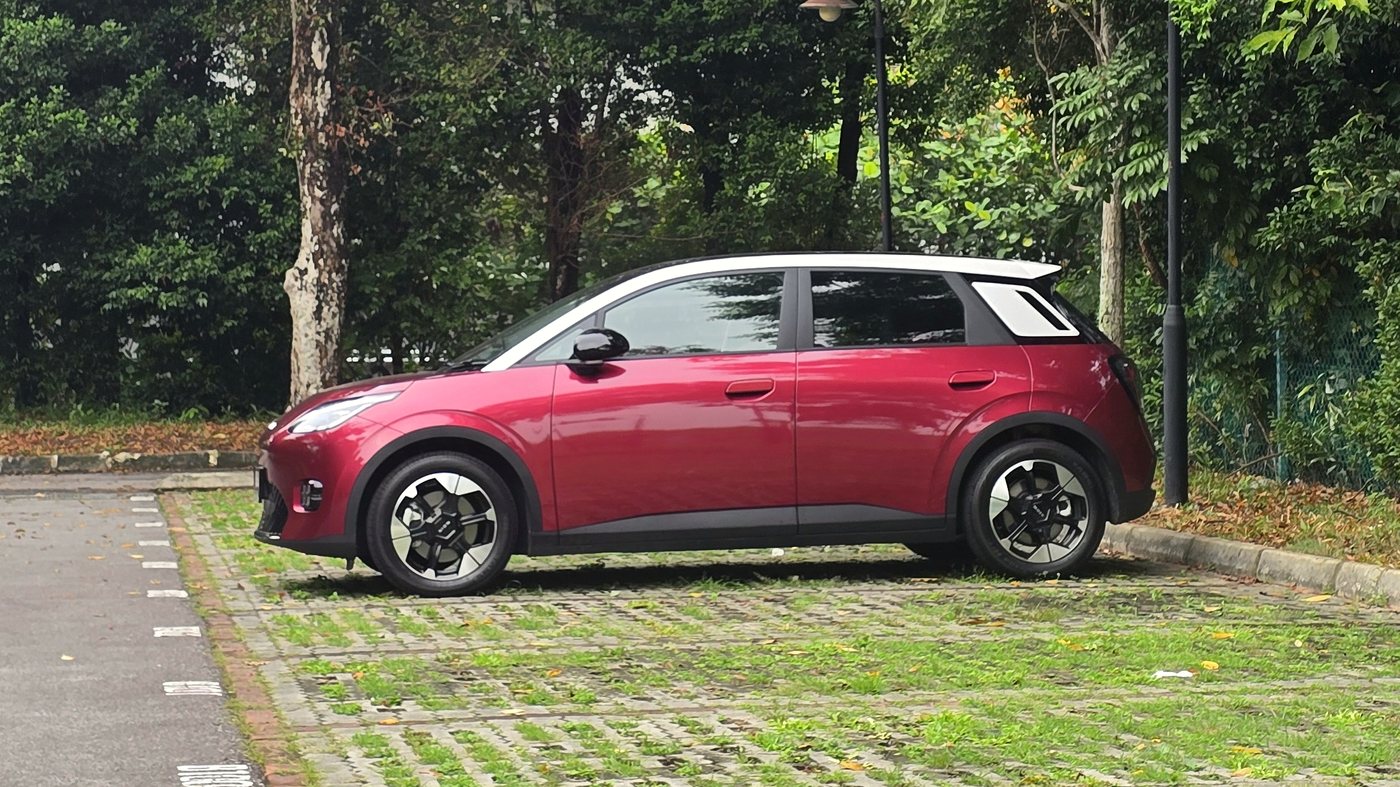
Some cars are designed to look fast. Some are designed to look expensive. The UT was designed to make you say "oh, that's a cute car," and it works every single time.
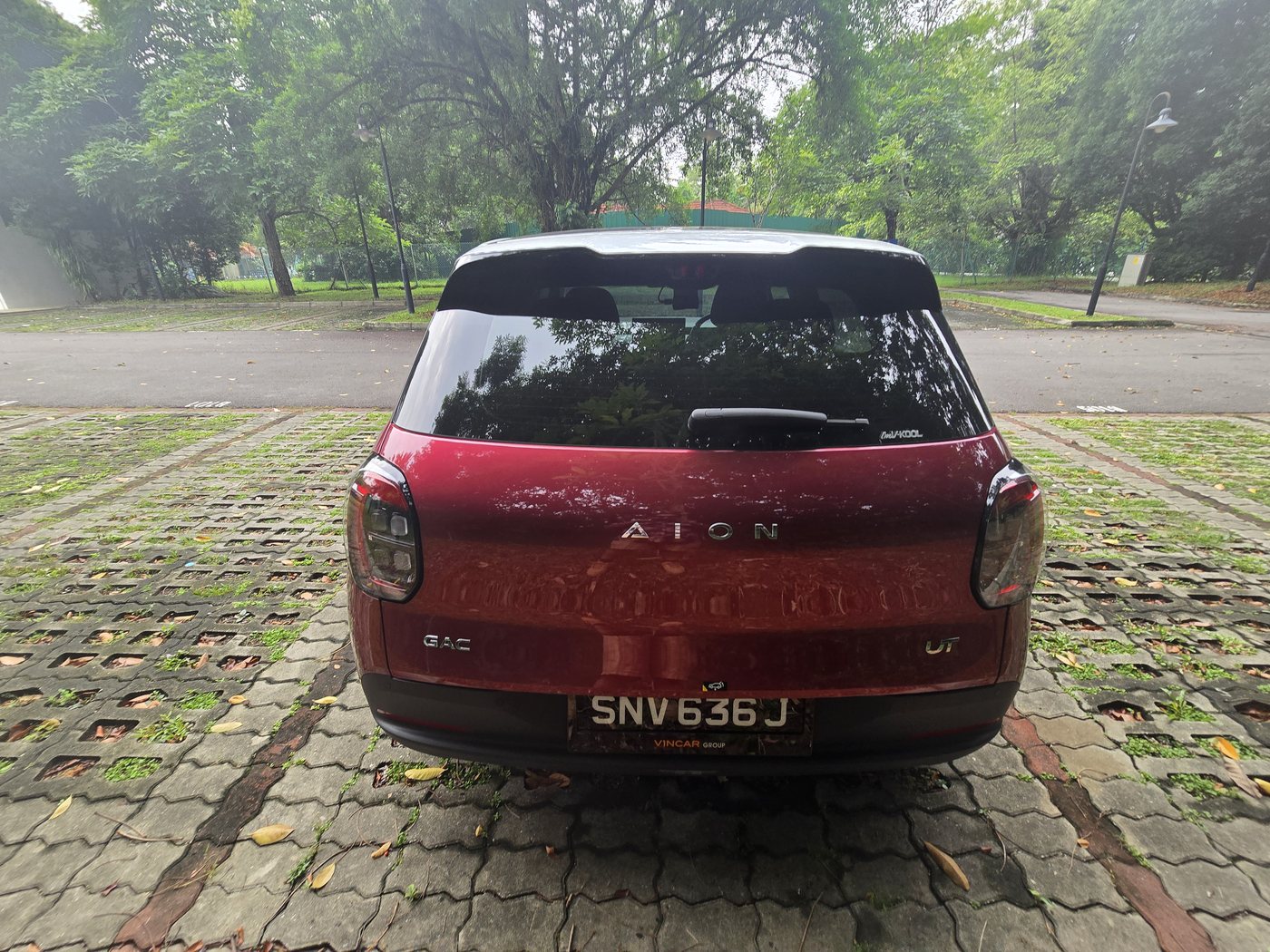
It is all curves and rounded corners. The paint pops, and the car we had, a deep red with a white roof, is the one to get. There is a little roof spoiler at the back that adds a bit of flair it did not strictly need. The front lights are the best bit. They give the car a face.
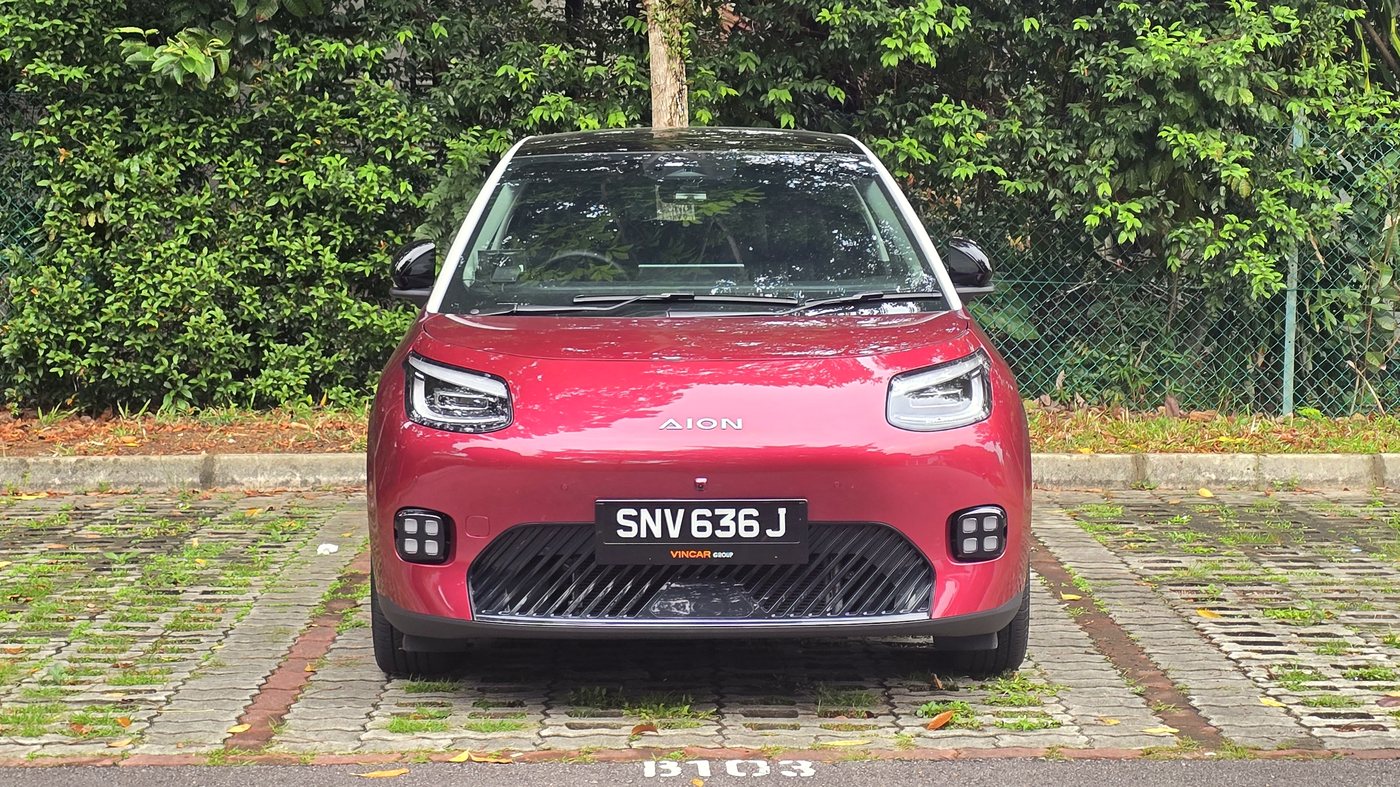
It sits in the small-and-cheerful corner of the market with the Dongfeng Box and the BYD Atto 1. Against those, the UT is the one that looks most like it has been finished. There is a polish to the way it is put together outside, and to the software inside, that says somebody was aiming this at buyers outside China from day one.
Who is AION?
Say it "AY-on". AION is the electric brand of GAC, the Guangzhou Automobile Group, one of China's big state-owned carmakers and the local partner behind Toyota and Honda's joint ventures there. GAC set up its electric arm in 2017 and gave it the AION badge, and the UT was styled at the group's design studio in Milan, which is where the soft European surfacing comes from.
In Singapore, AION is sold by VINCAR, the group that also brings in the AION V and the gull-winged HYPTEC HT. The UT is the smallest and cheapest car it sells, and it comes in two versions, Standard and Premium. We drove the Premium.
Inside
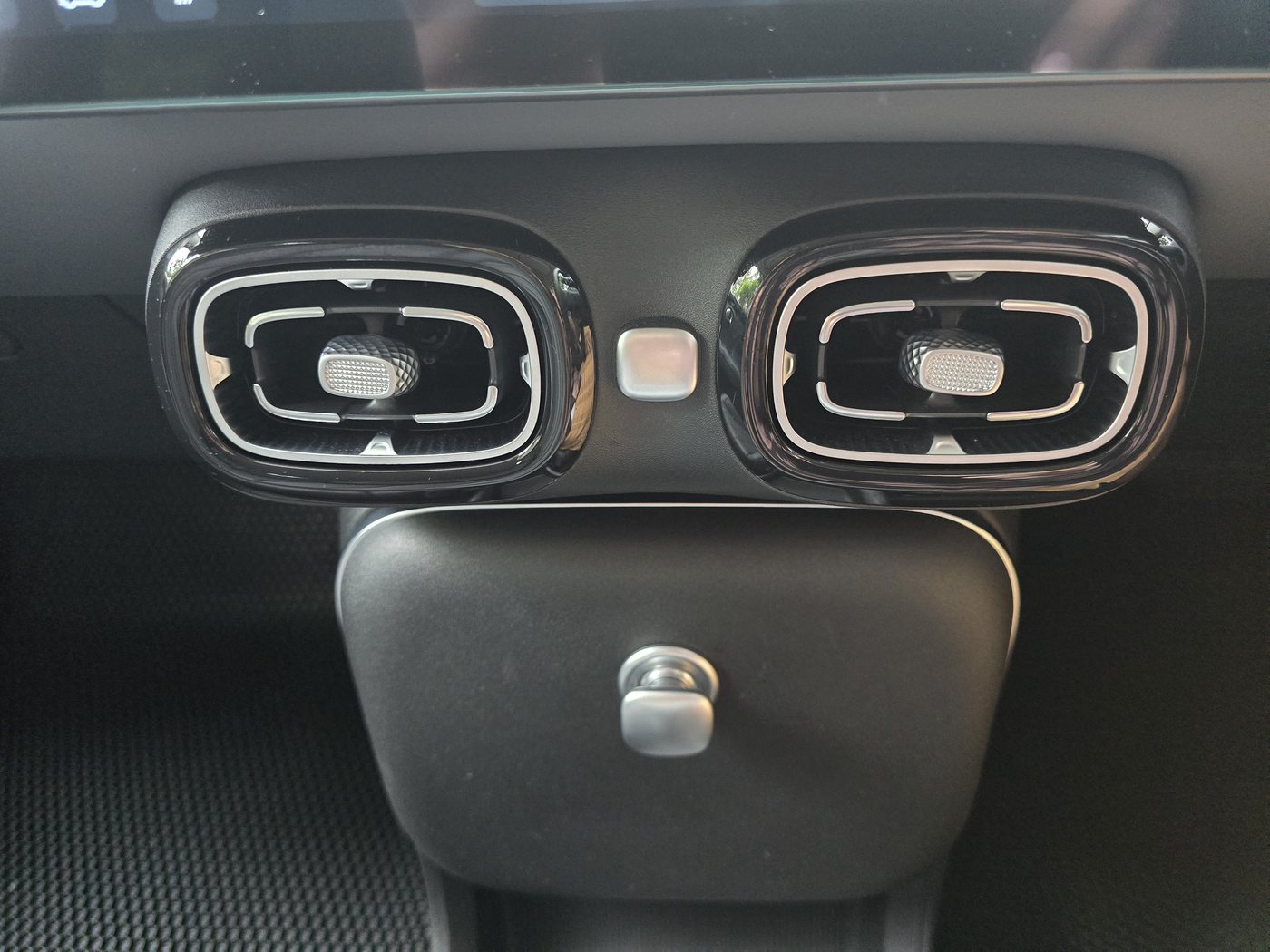
Inside, the cheerful theme carries on. Under the front vents there is a twist-knob storage compartment, and above it sits a small piece of plastic that does nothing at all except make the dash look like it has a nose. I kept looking at it. I still do not know if I like it.
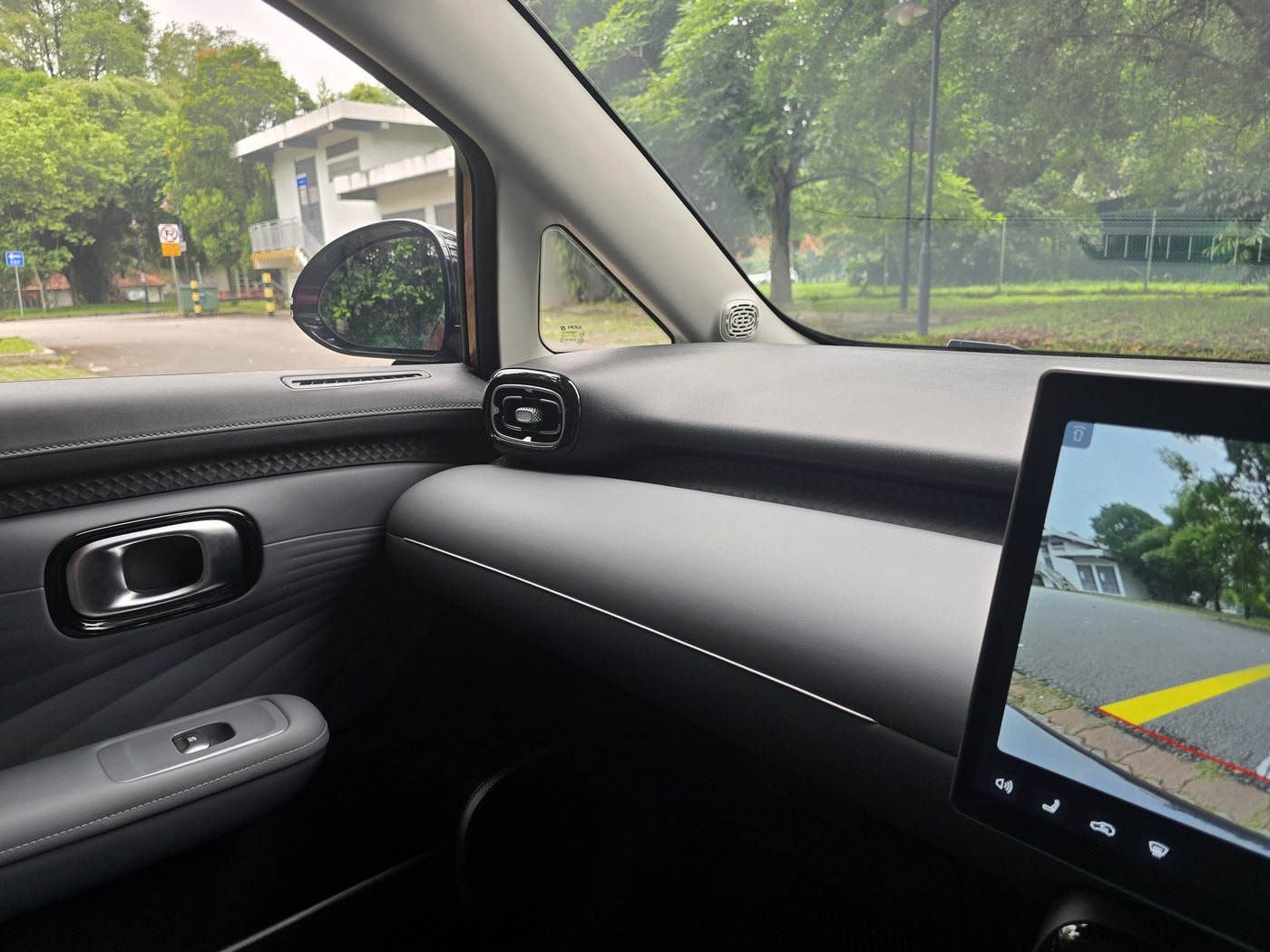
The problem is what everything is made of. The door cards look like the plush leather-ish stuff you get in the Dongfeng Box. Touch them and it is hard, scratchy plastic. That is the story of most of the cabin. It looks the part from the driver's seat and gives it away the moment you rest an elbow on anything.
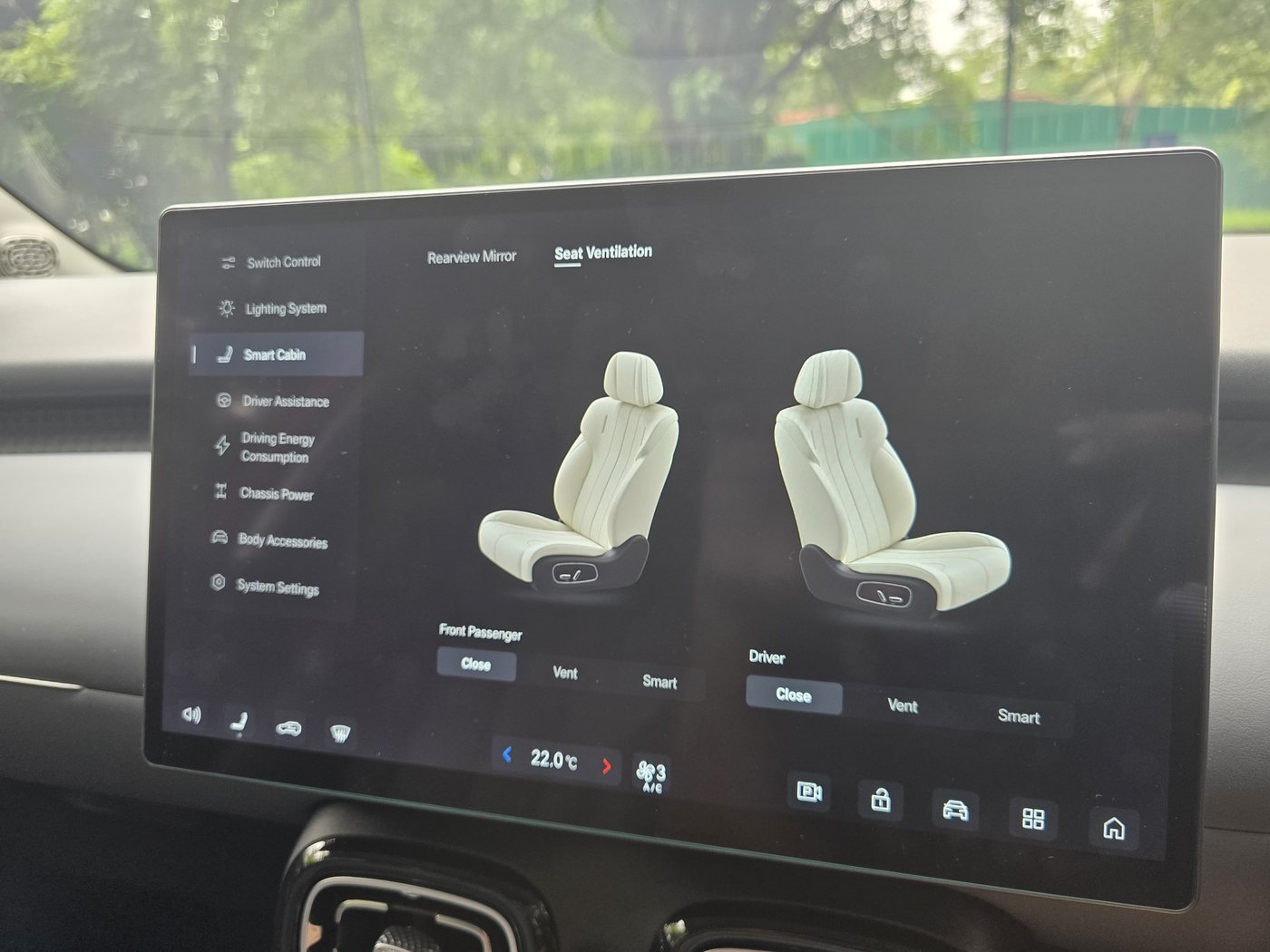
The seats are the exception. Driver and passenger get ventilated seats on a car this cheap, and the aircon behind them is properly powerful. This is one of the few small EVs that had me turning the fan down in a Singapore afternoon.
You also get physical vents with physical knobs. Point them where you want. Turn them off if you do not. Why has this become a luxury feature?
This is one of the few small EVs that had me turning the fan down in a Singapore afternoon.
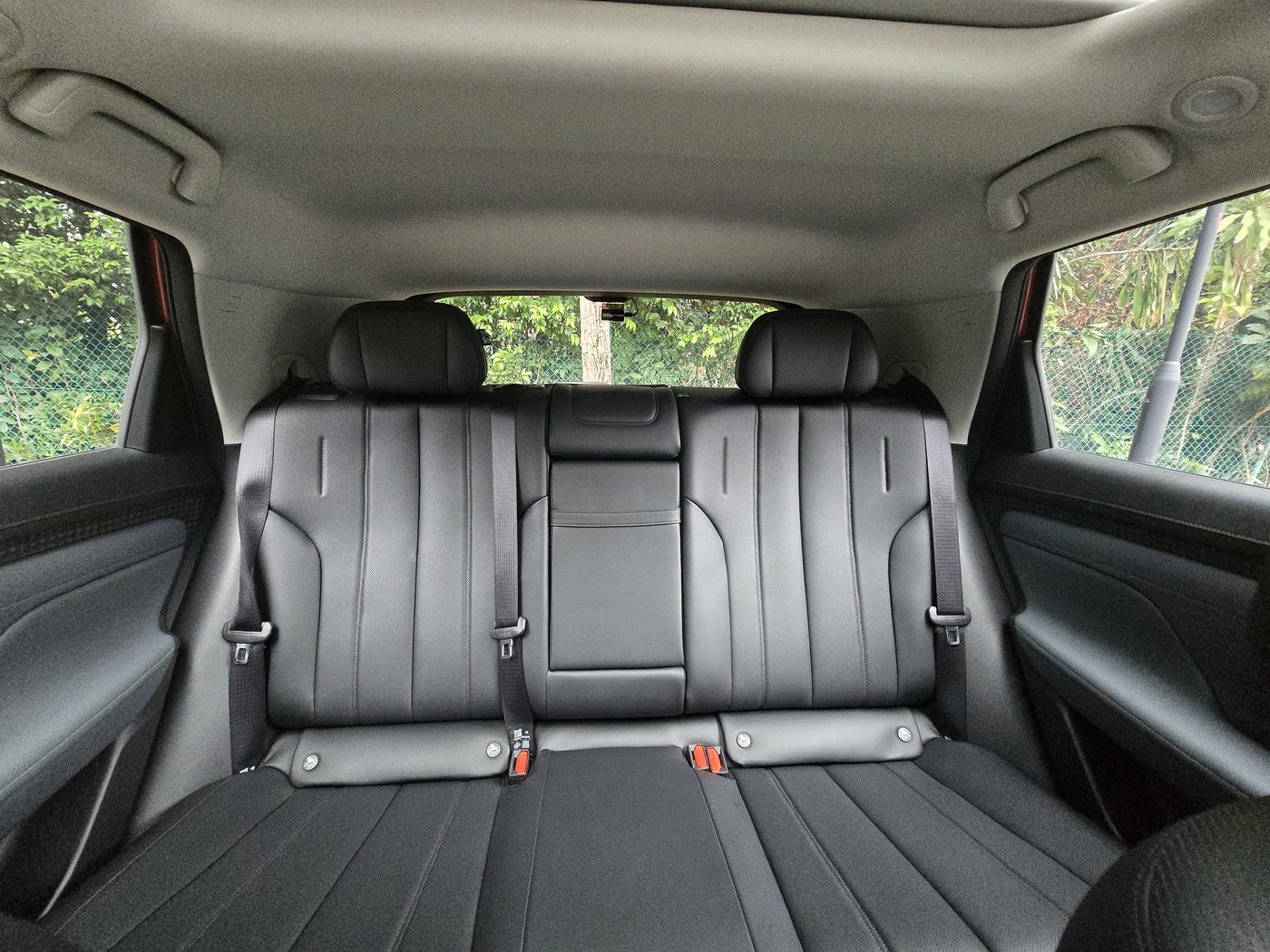
Then you get in the back and the car makes no sense. It is far bigger than the outside suggests. The wheelbase is long for something this short, so legroom is generous and the seat is comfortable. Headroom is the one limit, so tall passengers will notice the roofline. The floor is completely flat, which makes sliding in and out easy and is the kind of thing you only appreciate once you have done a school run in a car without it.
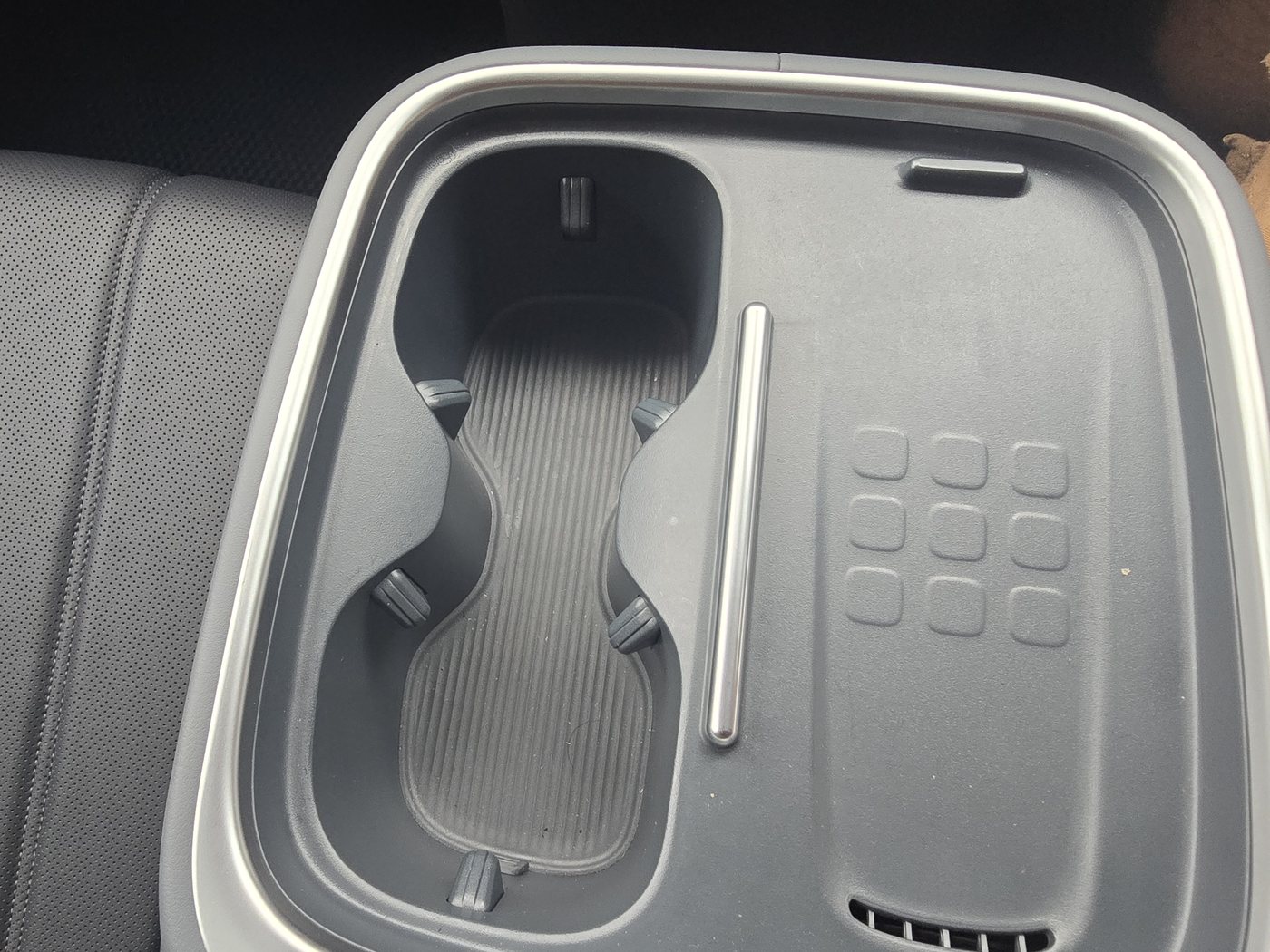
The storage tells the same story. There is a hidden tray behind the centre screen that fits a tissue box, and I mean exactly a tissue box, which is either an accident or somebody at GAC has sat in Singapore traffic. Every spare inch in this cabin has been turned into a cubby. For a car this size, that is the right priority.
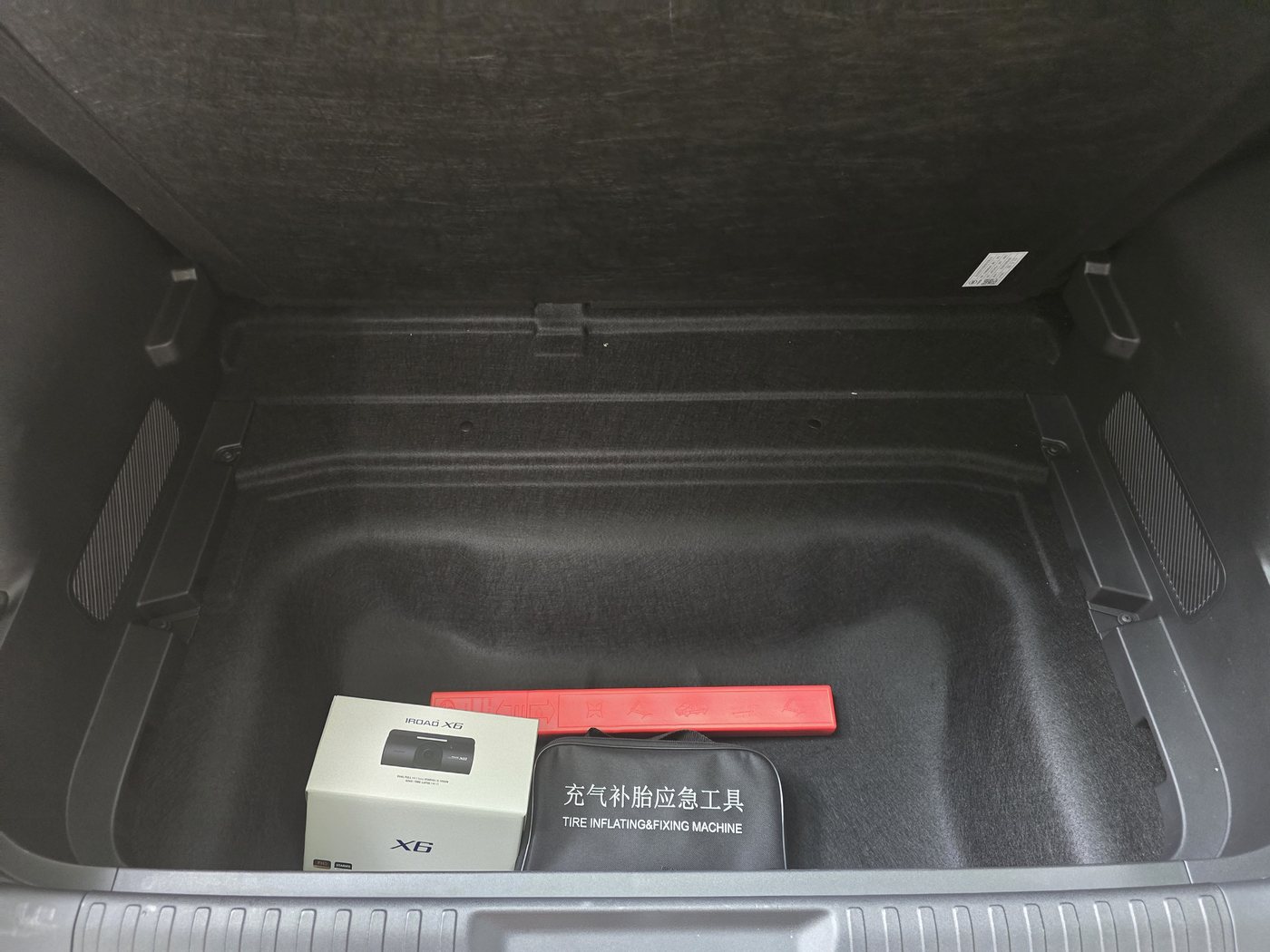
Mirrors are wide and easy to see out of. The boot is 440 litres and bigger than I expected from the outside, with a proper storage well under the floor. There is no frunk.
Screens and buttons
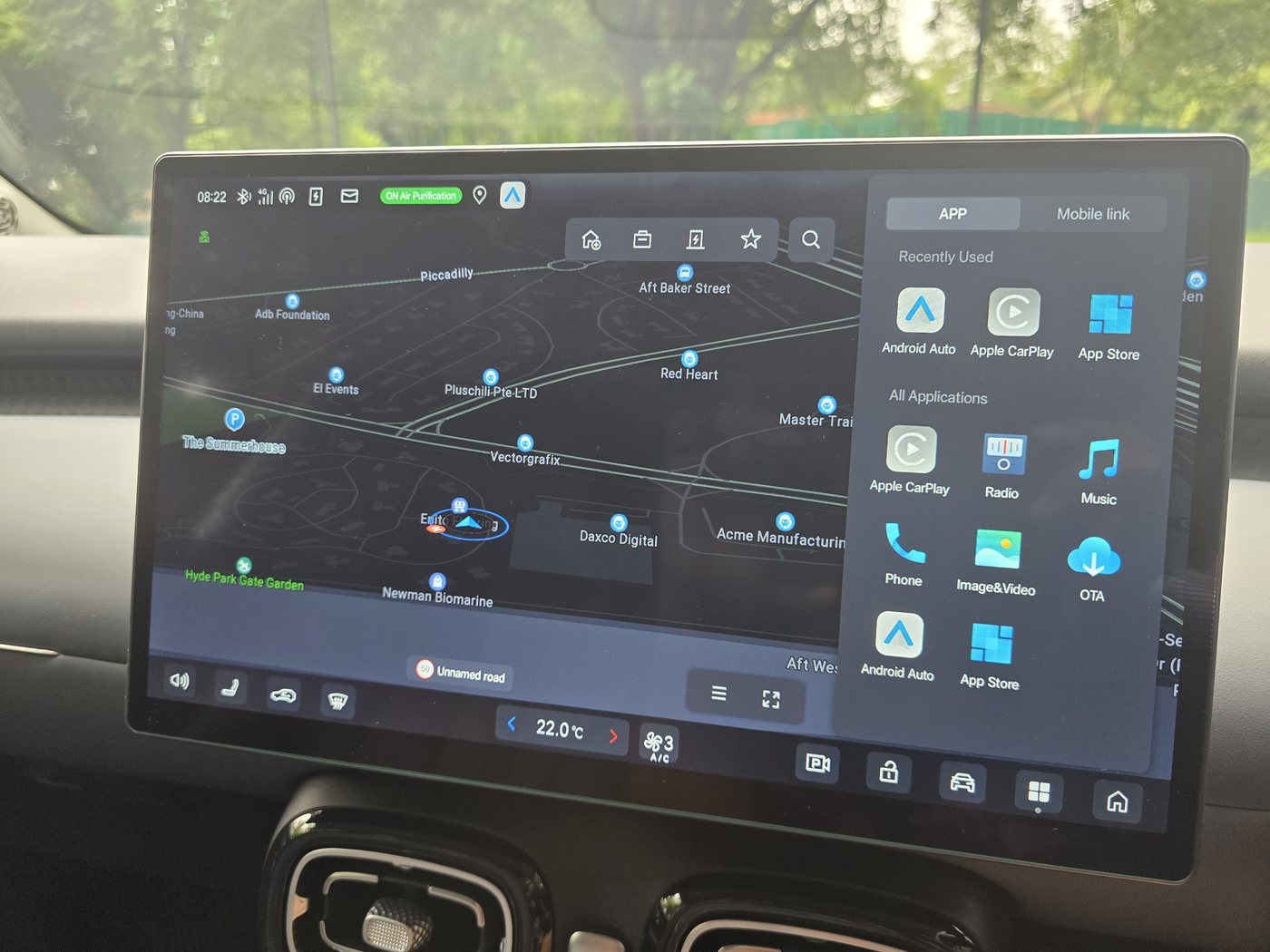
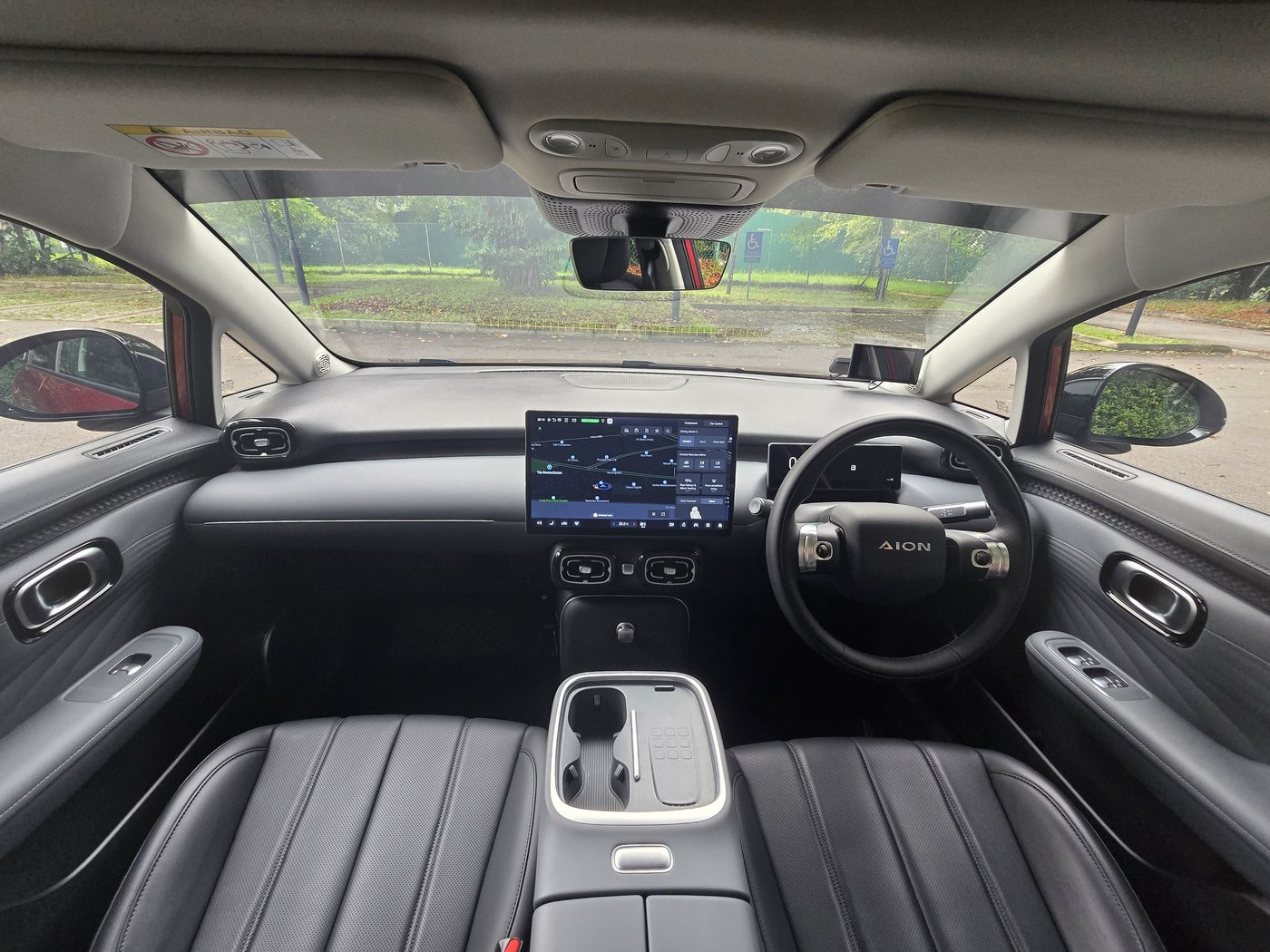
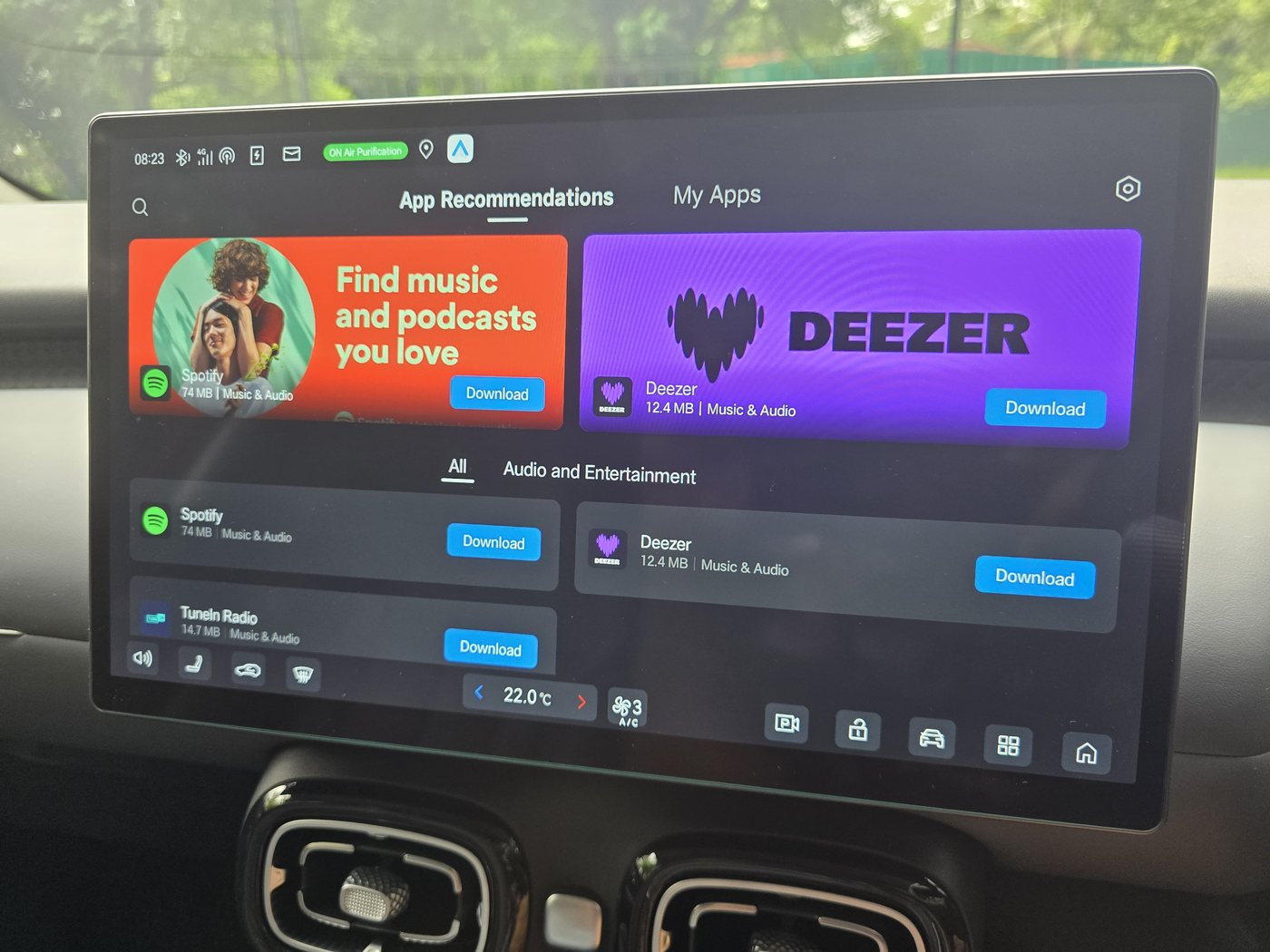
The centre screen is big, crisp and vibrant, and it does everything you actually need without making you dig for it. Wireless Apple CarPlay and Android Auto both work. There is an app store, which in Singapore has about four apps in it. Ignore that. The rest of the system is good, and better than good for the money.
The voice assistant is the surprise. You wake it with "hello baby," which I will let you form your own opinion on. The point is that it responds fast. A lot of cars at this price make you say the wake word, wait, and say it again. This one just goes.
The driver's display is excellent. Clear, sharp, and set up a bit like a Zeekr's. One button on the wheel toggles between maps, music, car stats and a "smart drive" view, which is a fancy way of showing where the car thinks it is in the lane.
Now the annoying one. Every time I indicated with a car in my blind spot, the warning fired and the music cut out. Not ducked. Stopped. I could not find a setting to turn it off. After a few days it becomes the thing you remember about the car, which is a shame, because the rest of the software does not deserve it.
The sound system is weak. It is one of the poorer ones we have tested, and that stings because smaller, cheaper cars have shown it can be done properly.
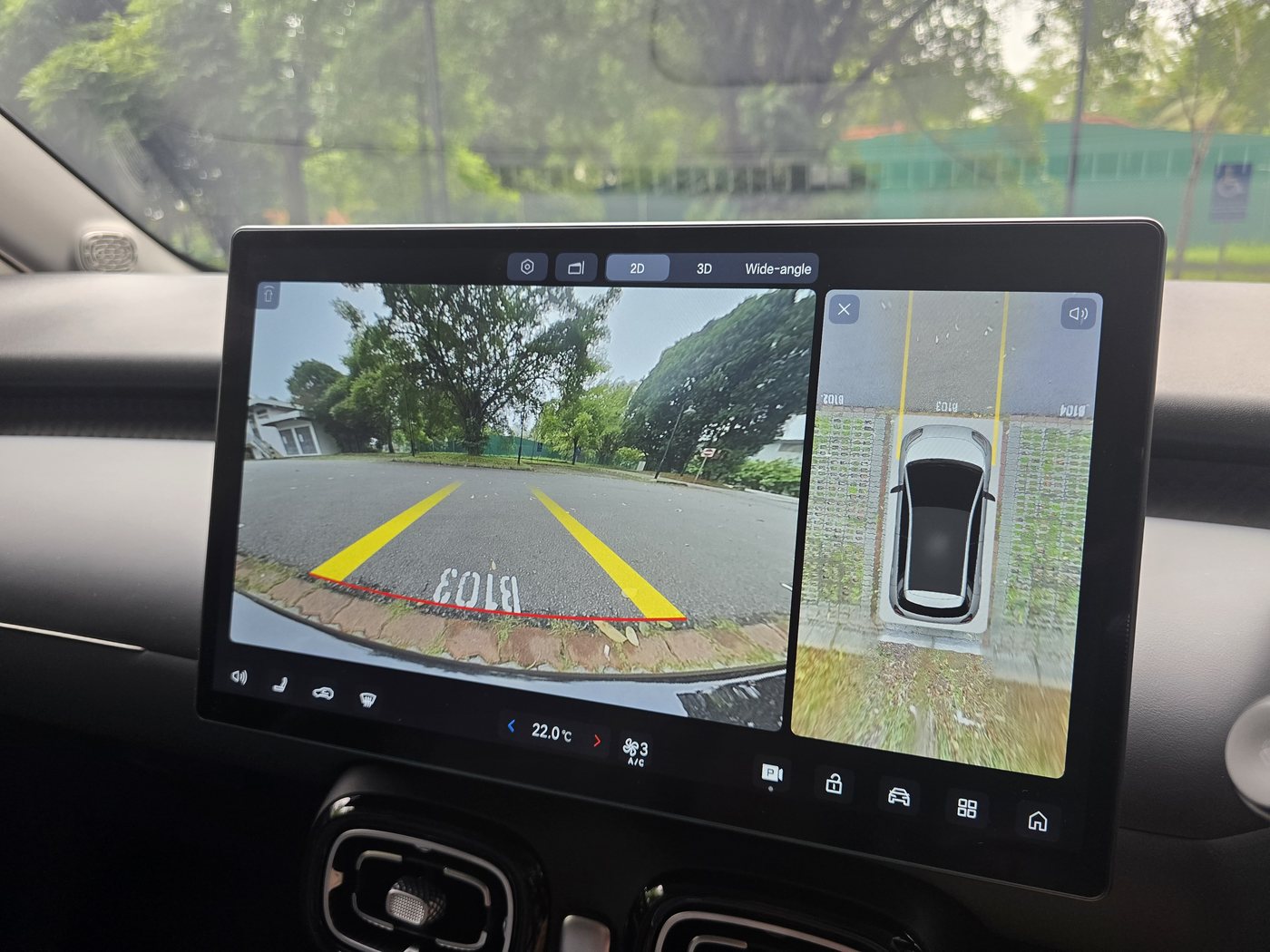
The cameras are fine. There is a 360 view and a reversing view, both there when you need them and neither sharp enough to enjoy. After the high-definition cameras on cars this price and cheaper, you find yourself squinting. There is no auto parking.
How it drives
This is not a driver's car and it does not pretend to be. It is not fast, but the power comes in smoothly and builds the way you ask for it, so a new driver will never lurch it off a line. It is soft. Lean on it in a corner and it rolls.
The steering is light, which suits the car and the car parks. I would take a little more feel through the rim.
But here is where I came round to it. The suspension is better tuned for our roads than I expected. Speed humps and car park ramps just disappear under it. The turning circle is tiny, which in a multi-storey car park is worth more than another 50 horsepower.
The brakes need more of a push than most cars. It might be a setting. Regen and the other energy recovery features are good, and I found myself leaning on those instead.
There is also a mode called Motion Sickness Relief, which dials the regen right down and smooths everything out. I have driven enough EVs to have stopped noticing the lurch, so I used a better test. Mrs Eevee gets queasy in some electric cars. She rode in this one and said nothing.
Driver aids are sensible. Adaptive cruise control, lane keeping, blind spot warning, the usual set. The lane keep was fine most of the time, with a few moments where it stepped in when it had no business to. Nothing that made me switch it off.
Living with it in Singapore
Efficiency worked out at 13.4 kWh/100 km on the car's own counter over our time with it, comfortably under the official 17.4. AION claims 410 km WLTP from the 60 kWh battery.
DC charging peaks at 80 kW, with AION quoting 24 minutes from 30 to 80 per cent. AC is 7 kW, so an overnight top-up at a condo charger is the realistic routine. I did not charge the car on the loan, so those are AION's numbers.
If you are a first-time driver, or a first-time EV owner, this is a lovely place to start. The controls are light, the car is small enough to never worry about, and the software does not need a manual.
The aircon and the ventilated seats are the two things I would miss. The stopped music and the scratchy doors are the two things I would learn to live with.
Buying one
GAC's price list valid until 4 November 2026 has the UT Premium at S$183,100 with COE and the Standard at S$179,100. Those are the Assure Plus promotional prices, which need in-house finance on a 60 per cent, seven-year loan and include a S$5,000 trade-in rebate, so the number on your contract may differ. The list price before any of that is S$259,988. The warranty is eight years, with ten years of free servicing.
The S$4,000 between them buys the bigger 60 kWh battery and 410 km claimed instead of 44.12 kWh and 335 km, 210 Nm instead of 145, the ventilated electric seats, the glass roof, the wireless charger and a powered tailgate. For the battery alone, get the Premium.
Against the Dongfeng Box R, which was S$177,888 on Dongfeng's October list, the UT is the more polished car. Better software, more grown-up looks, a clearer sense that it was built to sell outside China. The Box has a bit more charm, a bit more of that thing the French have a word for. The UT is the one I would recommend to a friend who does not care about cars.
The wider cross-shop is the BYD Dolphin at S$187,888 on October lists, the NIO firefly at S$187,999, the MG4 Urban at S$194,888, the BYD Atto 1 at S$169,888, plus the Ora Good Cat and the Proton e.MAS 5. We have not driven those yet, so that is paper only. Line them all up in our compare tool.
The verdict
For the price, the UT is a good buy. It is well built outside, smart inside, and easy to drive. It also has cheap plastics, weak speakers and a habit of killing your playlist at the worst moment.
I did not fall for it. I did keep thinking, every time I got in, that if this were my first car I would be very happy.