Before there was a smart, there was a cheap Swiss watch.
The name is not an adjective. It is an acronym, more or less: Swatch Mercedes ART. The watch company came first, the car company second, and the story of why a two-seat plastic city car ended up in a Mercedes-Benz partnership starts in a Swiss industry that was, by 1980, close to being wiped out.12
The watch that saved an industry
By the late 1970s, cheap quartz watches from Japan and Hong Kong had done to Swiss watchmaking what digital would later do to film. An accurate watch no longer needed a mechanical movement or a craftsman. The Swiss were losing the mass market, fast.1
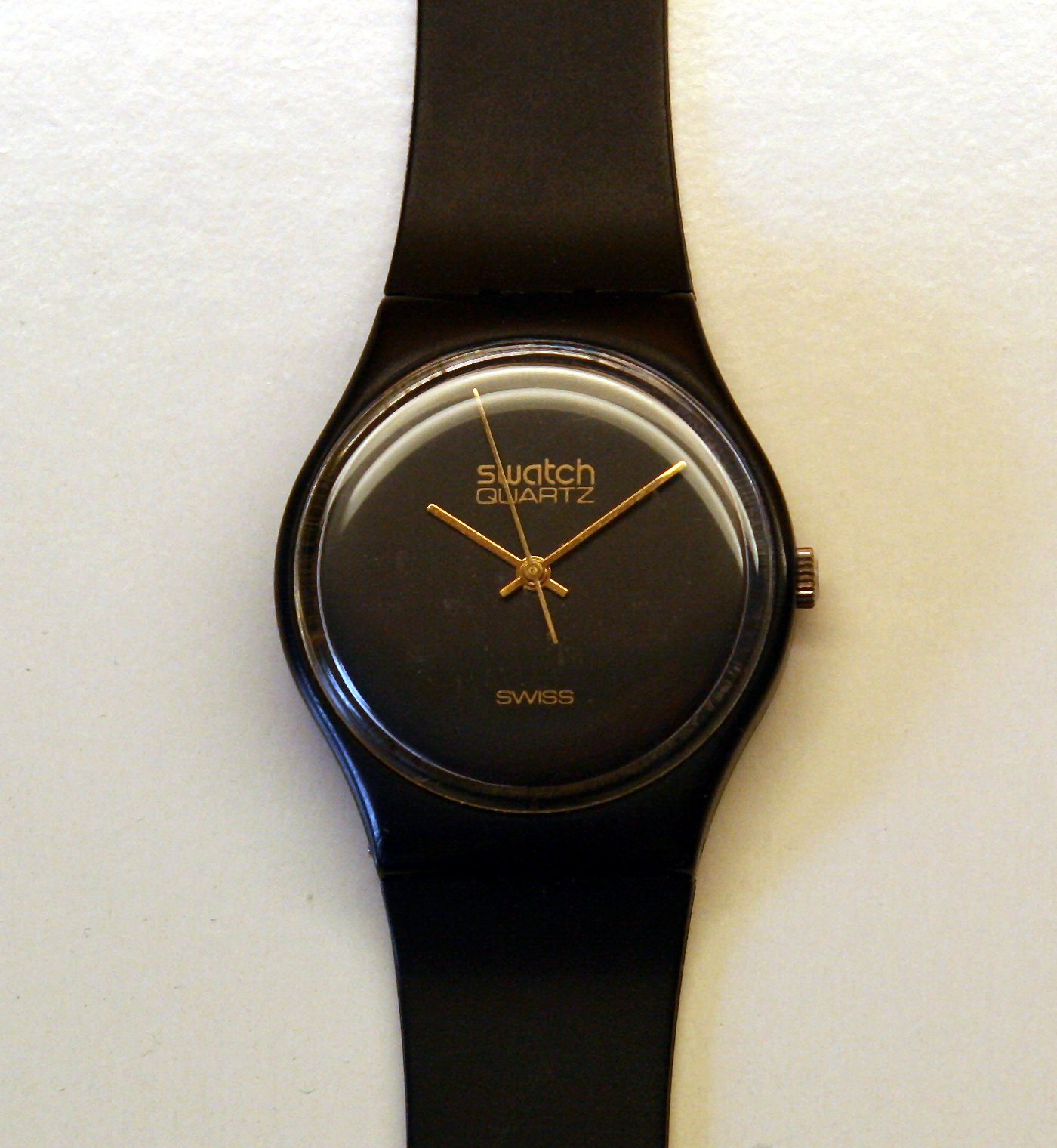
The answer, launched in 1983, was a plastic watch with 51 parts that a machine could assemble. It was cheap, it was Swiss, and it was fun. Nicolas Hayek, the industrialist who reorganised the whole industry around it, turned Swatch into something you bought for the colour. You owned several. You matched one to your shirt. Nobody had thought about a watch that way before.1
Hayek's next idea was obvious to him and slightly mad to everyone else: do the same thing to a car. Small, personal, colourful, cheap to make, ideally electric. He just needed a car company to build it.
The Volkswagen that wasn't
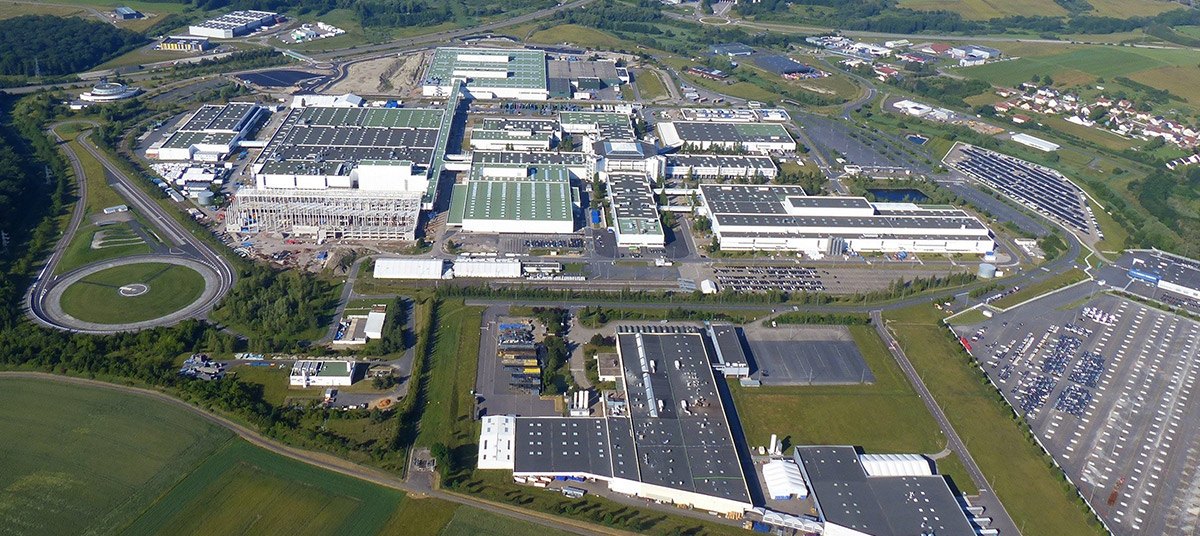
Volkswagen said yes first, in 1991. Two years later Ferdinand Piëch took over Volkswagen and the project quietly died; VW had its own tiny-car ambitions and did not need a watchmaker's. So Hayek went to Stuttgart. In March 1994 he and the parent company of Mercedes-Benz, then called Daimler-Benz, announced Micro Compact Car AG. The car would be built in a brand-new factory at Hambach in eastern France, a few kilometres from the German border. It opened in 1997 and everyone called it Smartville: suppliers built their own plants around the assembly hall so that parts arrived by walking rather than by truck. Mercedes sold the site to Ineos in 2020, and it now builds the Grenadier, which is about as far from a fortwo as a factory can travel.211
It was brilliant at being small and less good at being driven.
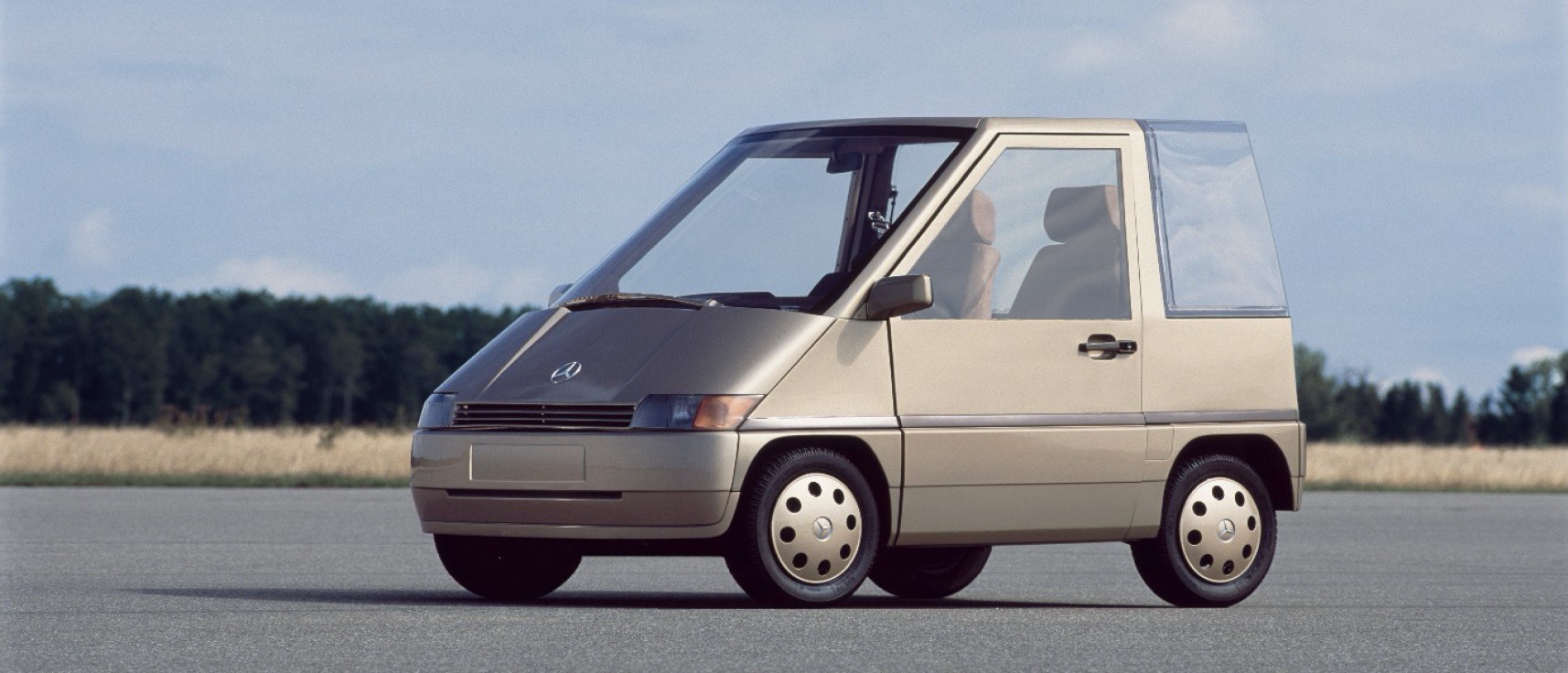
Mercedes had form here. In 1981 it had built a study called NAFA, a glass box on four wheels, to see how small a city car could be. It had been sitting in a museum ever since. Hayek arrived with a reason to build it.3
Two seats, a safety cell and a lot of nerve
The first car reached customers in 1998 as the City-Coupé, later renamed fortwo, which at least saved the sales staff an explanation. It was about two and a half metres long, engine at the back, two seats, and it wore its structure on the outside: a dark or silver frame that smart called the Tridion cell, with coloured plastic panels clipped over it. The safety cage was the styling. You could pick one out across a car park.4
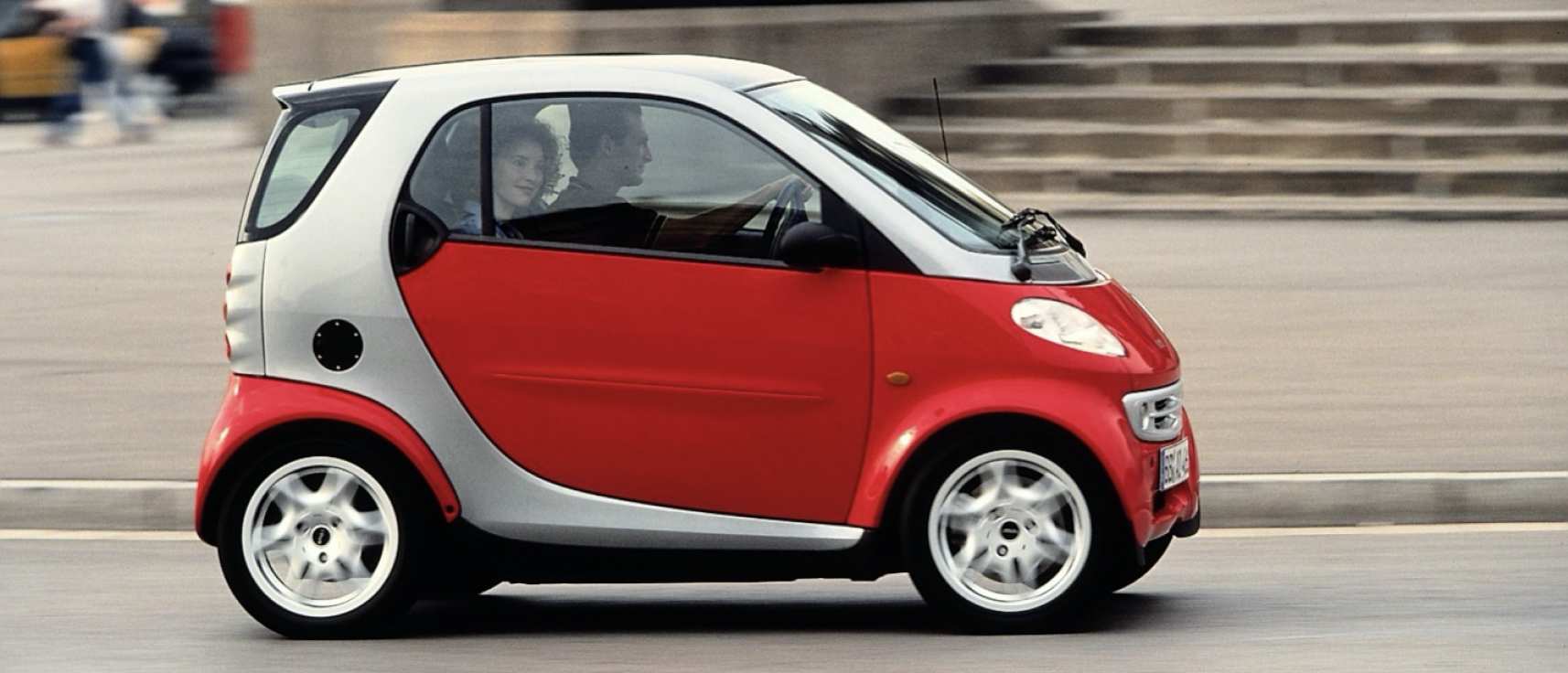
It was brilliant at being small and less good at being driven. The automated manual gearbox lurched between ratios like it was thinking about something else, and every road tester of the era said so.
Hayek did not stay to see it. He had wanted the car electric; it launched with petrol. Daimler bought out the Swatch stake in 1998, the year the car went on sale. His contribution survived in the name and in the idea.23
The wonderful detour
Then smart built a sports car.
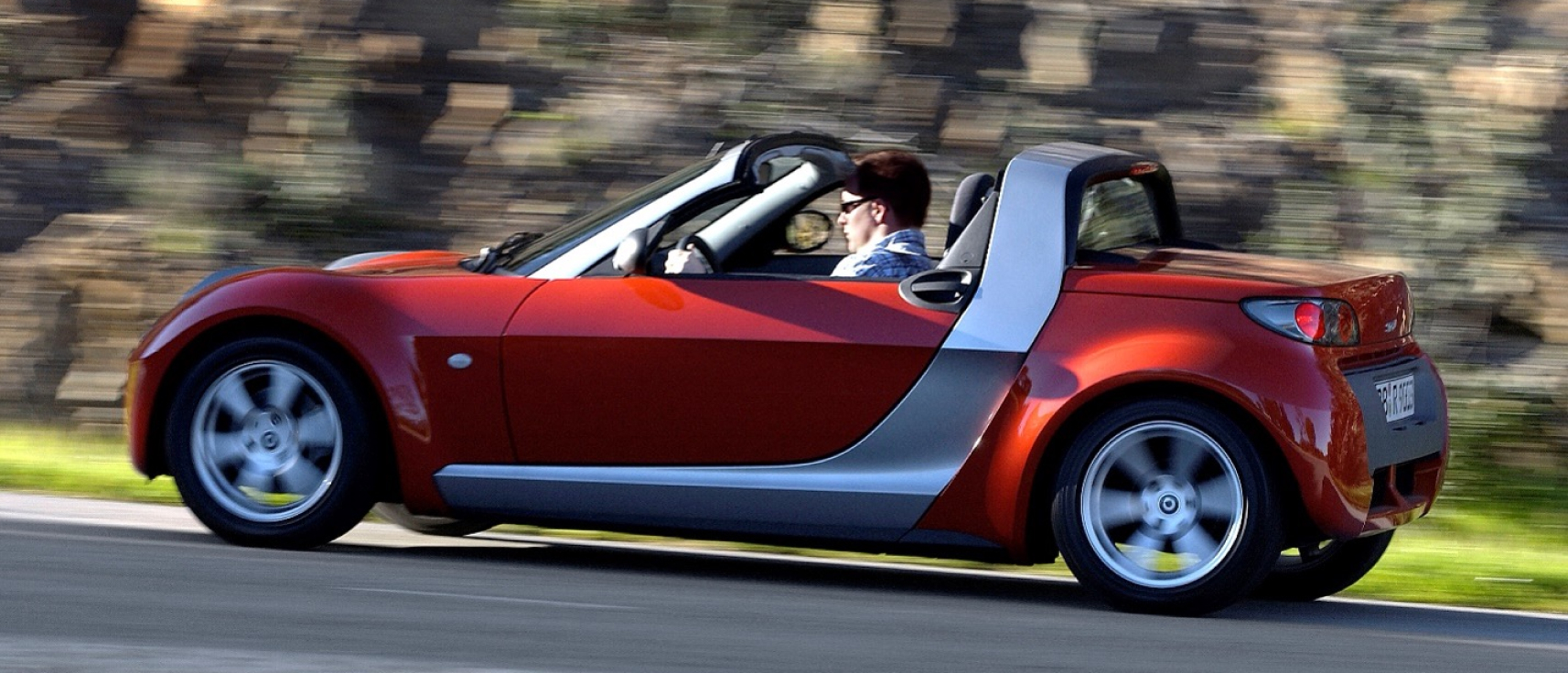
The Roadster arrived in 2003 with a 698cc turbocharged three-cylinder behind the seats, as an open car or a Roadster-Coupé with a glass rear canopy. It weighed about 790 kg in its lightest form, and around 40 per cent of its mechanical parts were shared with the fortwo, according to a 2022 retrospective by Hagerty, the classic-car insurer and magazine. That is how a city-car company managed a sports car at all. The jerky gearbox came along for the ride.5
A four-seat forfour followed in 2004, built with Mitsubishi on the same bones as the Colt. The Roadster ended production in 2005 and that first forfour in 2006, leaving the fortwo to carry the range. The four-seater returned in 2014: a second-generation forfour developed alongside the Renault Twingo, with its engine at the rear.35
Enter Geely
The electric fortwo Hayek had wanted finally appeared as a 100-car trial in London in 2007. It made complete sense: a car built for short urban trips, with owners who had already accepted its limits, and a motor that removed the gearbox everyone hated.3
The company that would rebuild smart around that idea was one most people here have never bought a car from. Geely is a private carmaker from Zhejiang, founded by Li Shufu, who started out making refrigerator parts. It bought Volvo from Ford in 2010 and went on to collect Lotus, a stake in Polestar and, in 2018, just under ten per cent of Daimler itself, which made Li its largest single shareholder at the time. Geely does not sell cars under its own name in Singapore, but you have probably driven something it owns.6
In March 2019 Daimler and Geely announced a 50:50 joint venture for the next generation of smart. It was formally set up in January 2020, headquartered in Ningbo. The split was simple: Mercedes designs the cars, Geely engineers and builds them in China.678
Somebody has enlarged the smart
The first product of the new company was the #1 in 2022, a five-door electric crossover. smart had built four-seaters before, but this was a much larger car, on a new electric platform. The #3 followed, then the #5, which stretches to about 4.7 metres against the original City-Coupé’s roughly 2.5.36
In Singapore the badge came back through Cycle & Carriage, which signed the distribution agreement in January 2024. C&C has been in this business since 1899 and has sold Mercedes-Benz here for decades, alongside Kia, Mitsubishi, Citroën, Peugeot, Leapmotor and ORA. For a reborn brand, that is about as much dealer credibility as Singapore offers.9
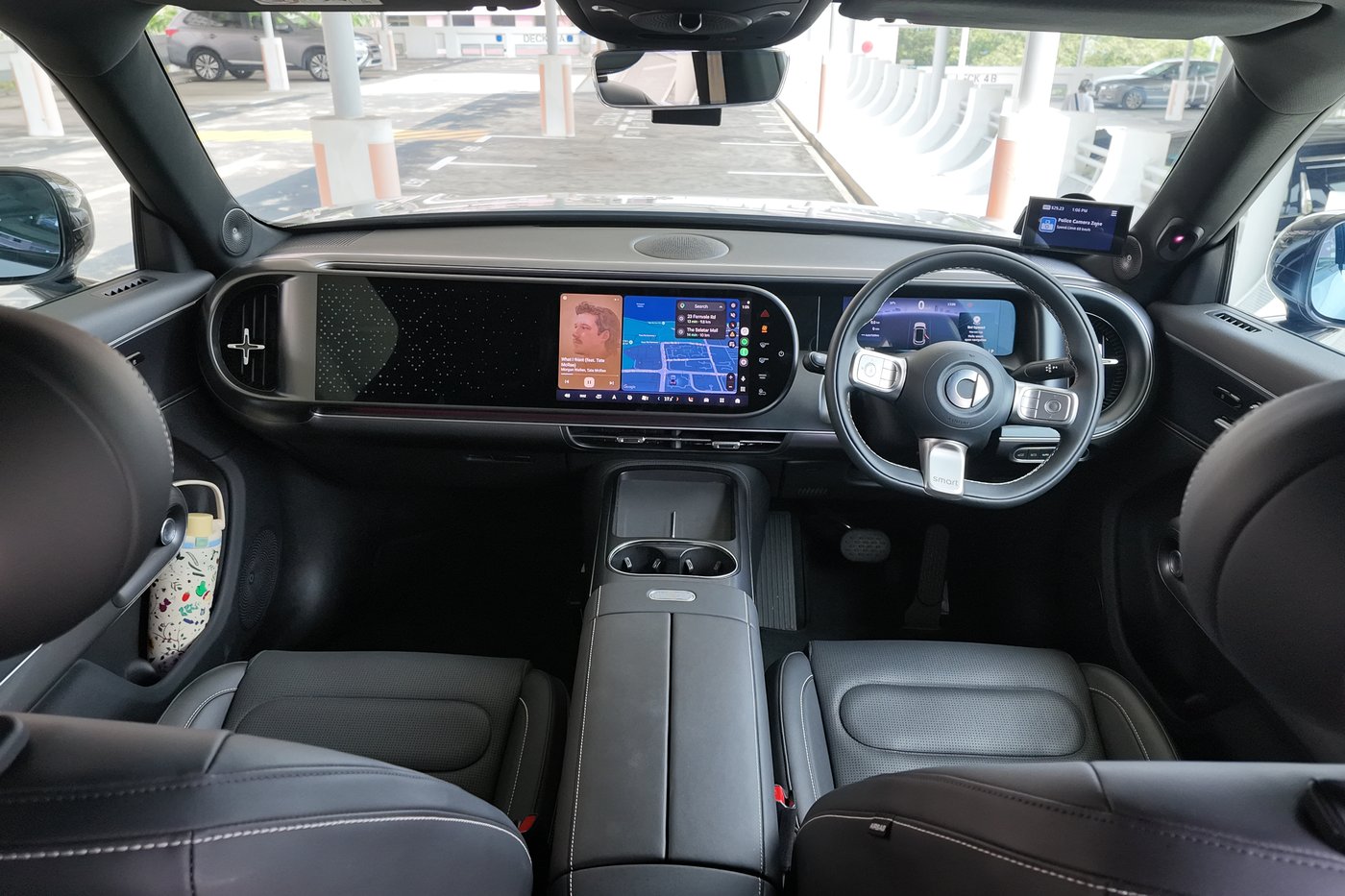
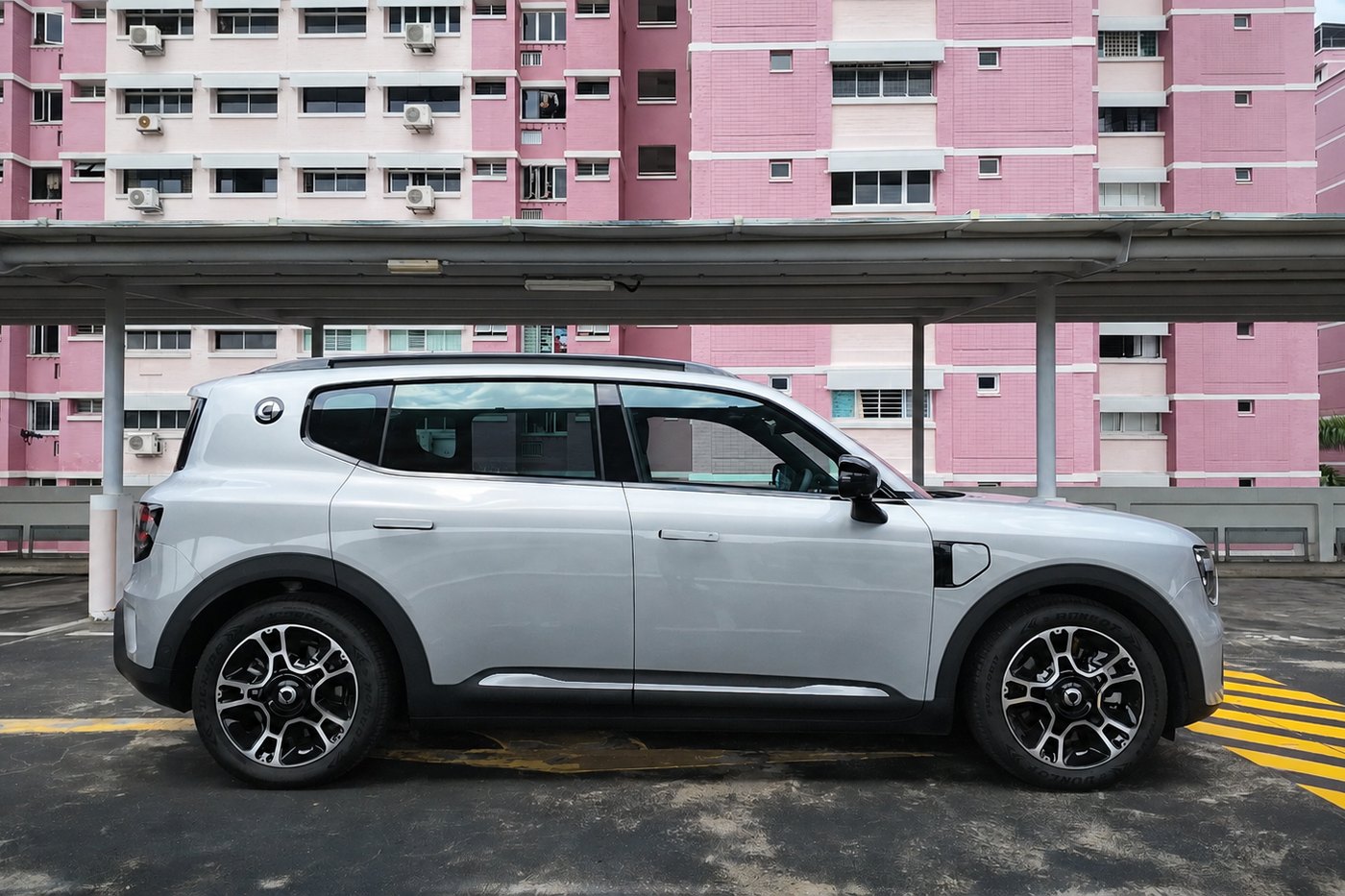
We lived with the #5 Pro for a week, and it is a smart in the way a Range Rover is a Land Rover. Everything you touch is soft, the seams line up the way they do in a Mercedes, and the back seats are better than the front ones. They recline, too.
The details are the fun part. A 72-litre frunk for the cables. An air vent running through the centre console that keeps a drink cold on a 33-degree afternoon. A boot release hidden inside the letter "a" of the rear badge, which is the most Swatch thing about the whole car.
It drives like it looks: comfortable, soft, not remotely exciting. It also beat its own efficiency claim in our hands, which is not something the European press will tell you. The catch is that 76 kWh is not much battery for a 4.7-metre SUV, so real range is about 430 km, and the fast-charging figures in the brochure belong to the dearer Premium. We gave it 7.4. Big, likeable, short-legged.10
The short version
A watchmaker wanted a small electric car. Mercedes built it as a petrol one, nearly killed it, and then sold half of it to a Chinese company that finally made it electric. Thirty years on, the car is four times the size Hayek imagined and the drivetrain is the one he asked for. He would have called that a win, and then asked why it took so long.36
Sources11
- 1Swatch Group: the quartz crisis and the 1983 Swatchswatchgroup.com ↗
- 2smart marque: the Hayek, Volkswagen and Daimler chronologyen.wikipedia.org ↗
- 3smart: official heritage archivemedia.smart.com ↗
- 4smart fortwo: first-generation constructionen.wikipedia.org ↗
- 5Hagerty UK: revisiting the smart Roadster, Antony Ingram, 2022hagerty.co.uk ↗
- 6Daimler and Geely: joint-venture announcement, March 2019media.smart.com ↗
- 7Mercedes-Benz and Geely: formal establishment, January 2020media.smart.com ↗
- 8smart: division of design and development responsibilitiesmedia.smart.com ↗
- 9smart: Cycle & Carriage Singapore agreement, January 2024media.smart.com ↗
- 10eevee: smart #5 Pro revieweevee.sg ↗
- 11Ineos Automotive: acquisition of the Hambach plant, 2020ineosgrenadier.com ↗
Photographs credited to Wikimedia Commons are reproduced under their stated Creative Commons licences, unaltered except for scaling. Manufacturer and heritage images are used editorially with credit to the source.