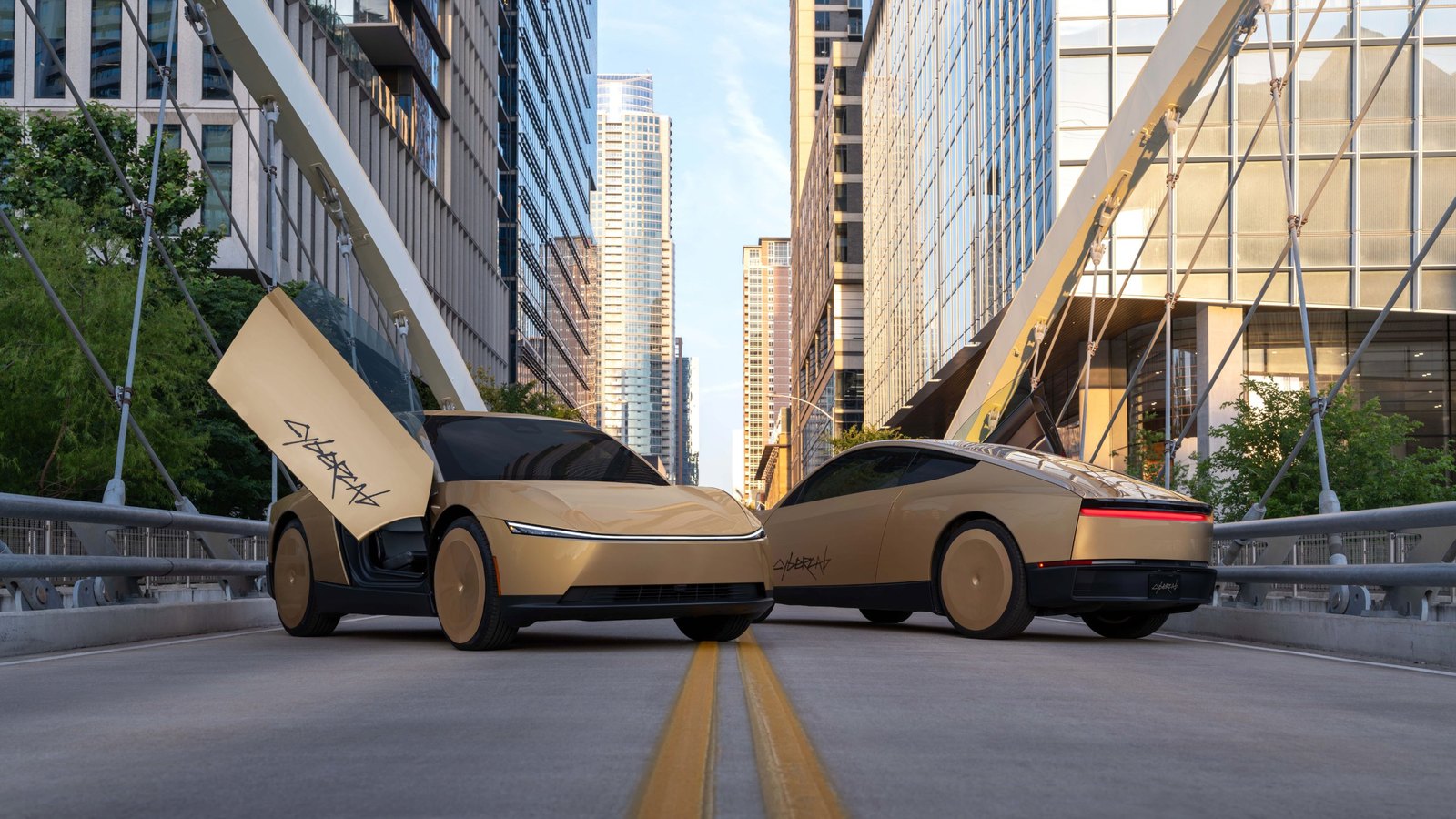
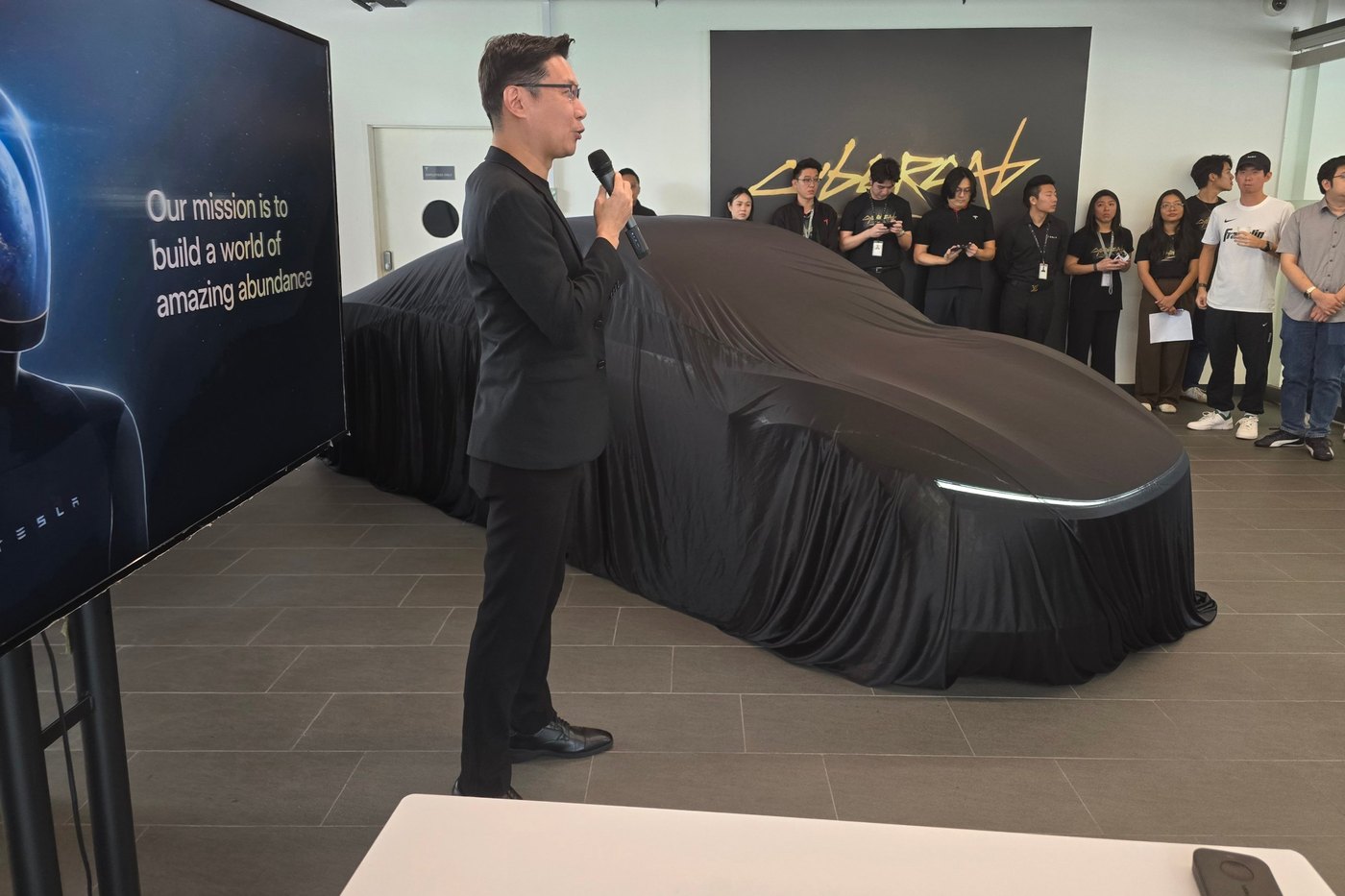
The car came in under a black sheet at the Tesla Experience Centre in Toa Payoh. A short speech, sheet off, and there it is: gold, low, two doors hinged at the front pillar and pointing at the ceiling. Every phone in the room went up at once, mine included.
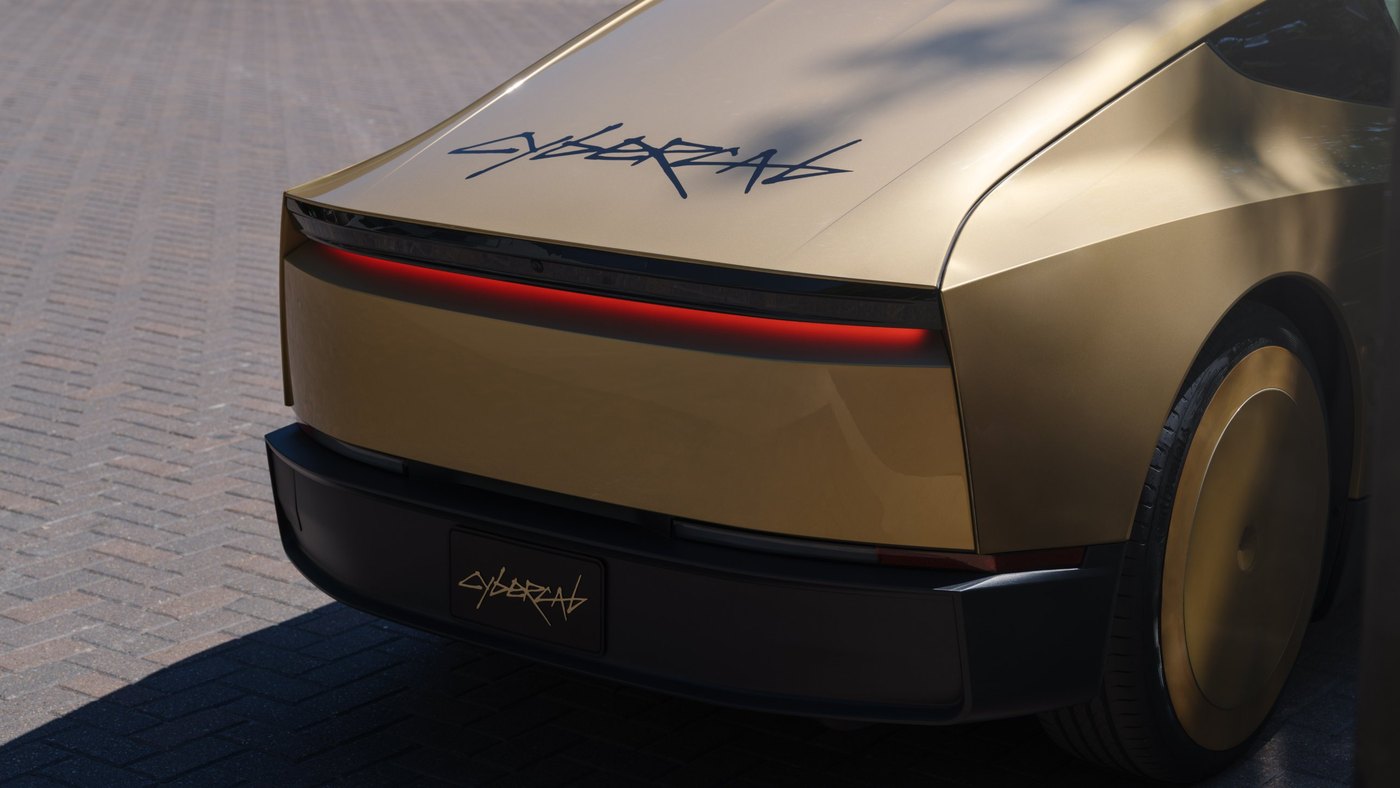
This is the Cybercab, Tesla's purpose-built robotaxi. It is in Singapore from 22 to 27 October on a tour that has already stopped in Hong Kong, Tokyo, Beijing and Shanghai. Nobody drives it here because nobody drives it anywhere. There is no steering wheel, no pedals, no side mirrors and no rear window. So this is a first look, not a first drive. No score, no Soul.
What it is
Tesla showed the Cybercab in October 2024. The first production car left Giga Texas in February 2026, and paid rides started in Austin in September through Tesla's Robotaxi app. It seats two. Tesla's reasoning is that most rides carry two people or fewer, so the other three seats are dead weight.
The spec sheet reads like the opposite of every other Tesla. One motor driving the front wheels, a 48 kWh battery, around 219 hp. Tesla's US filings put range at roughly 470 km and the drag coefficient under 0.20, and the company calls it the most efficient car it has built. The gold is not paint. The panels come out of the mould already coloured, which Tesla says saves time and money. There is a DC charge port but no AC charging at all, so it will never plug into a wall box. Wireless pads at depots are the plan.
It drives on cameras alone, no lidar. Waymo, the other name in this story, does it the opposite way. If you want the longer Tesla story, from the Roadster to the first Model S registered here, it is in Who is Tesla.
Sitting in it
The door swings up and forward on its own. Butterfly, not gullwing, and there is nothing to pull from outside. You step down onto a wide, well-padded bench with two belts and two cup holders in the middle. The dash is a shelf with a light bar running the full width and a centre screen that looks and behaves like the one in a Model 3. Carpet underfoot, Tesla plastics, Tesla seat stitching. If you have spent time in a Model 3 or Y you know this cabin before you sit in it.
It is comfortable. More comfortable than a two-seat taxi has any right to be.
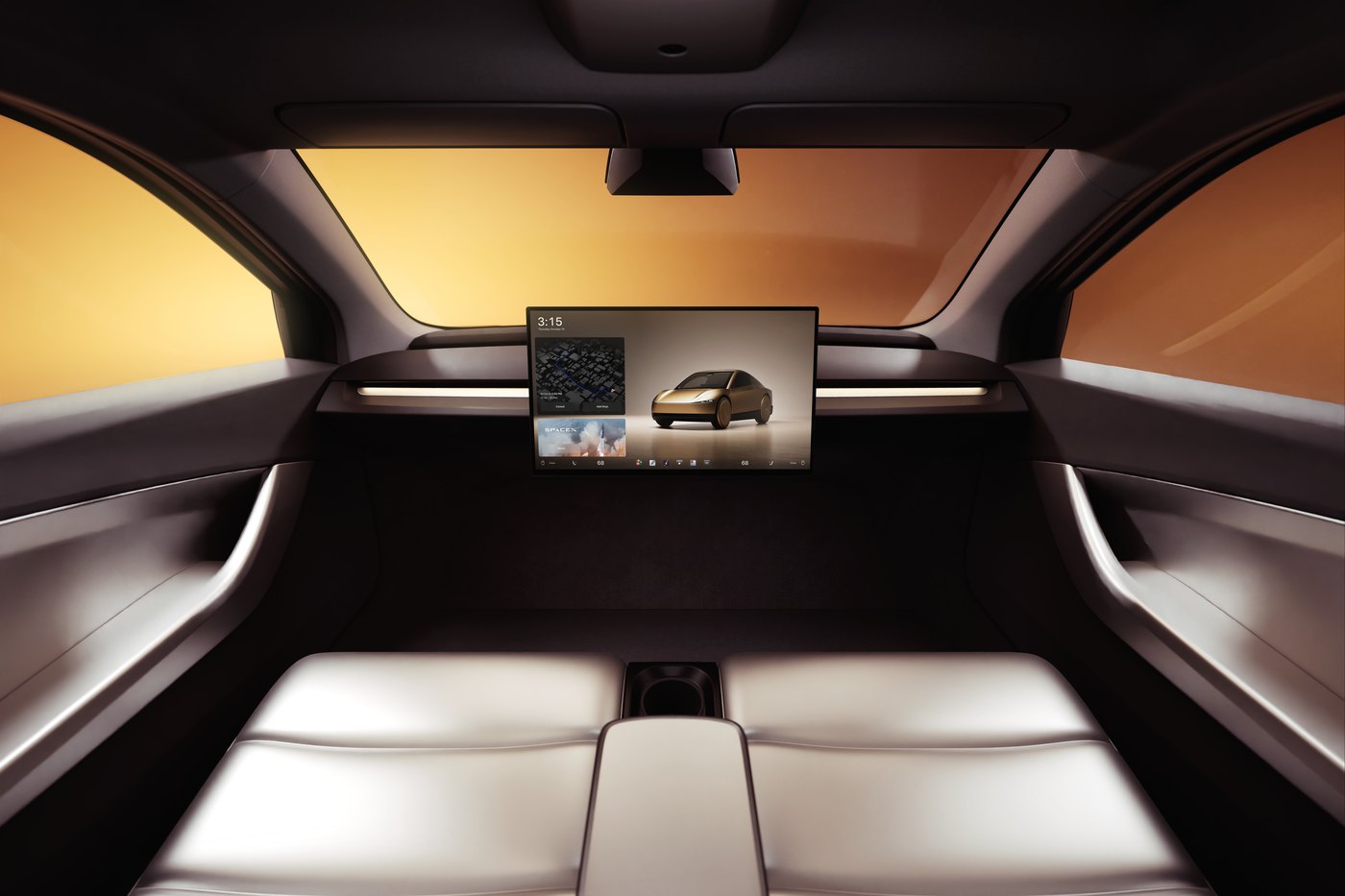
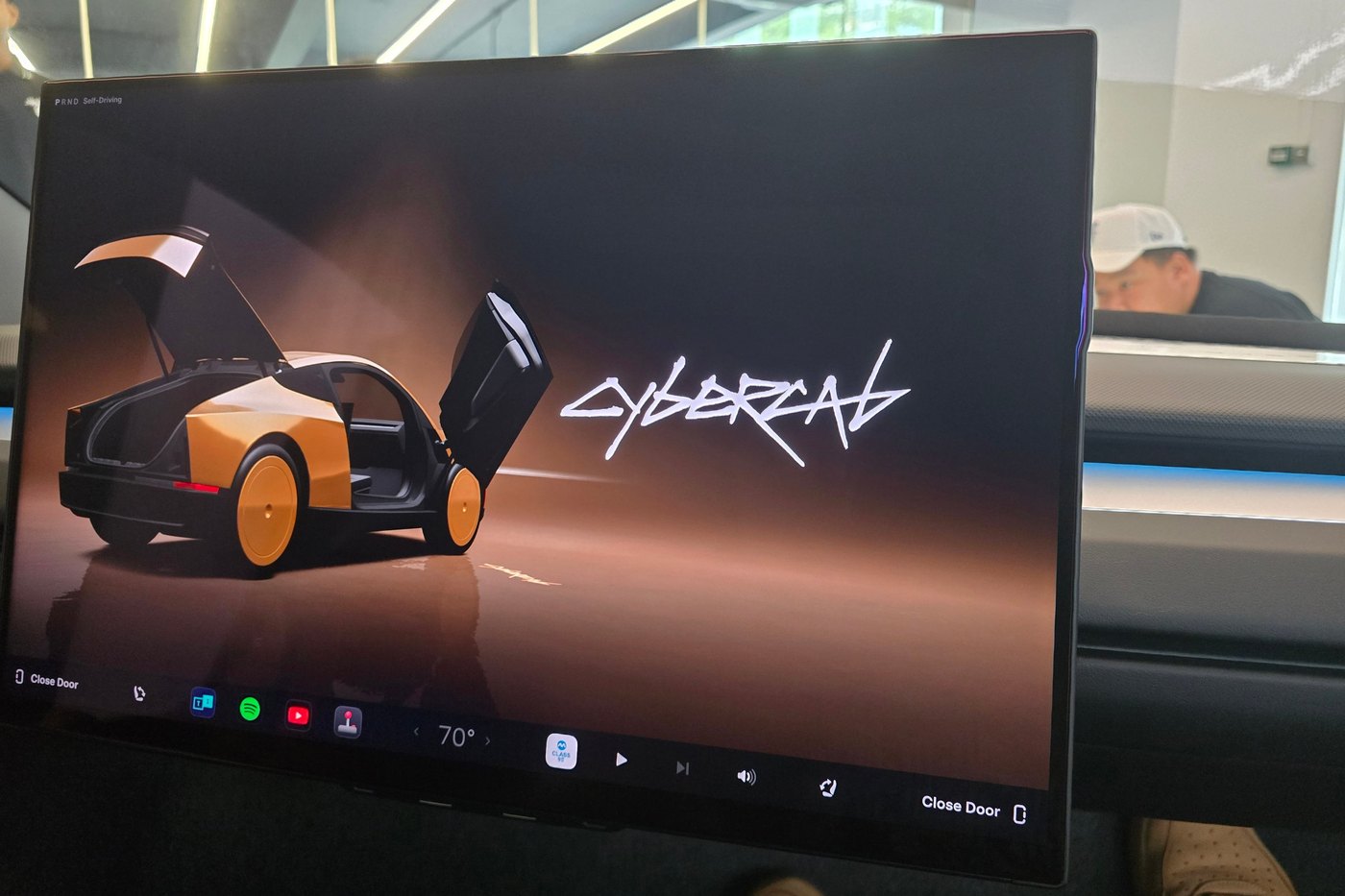
The screen gives the game away. PRND and Self-Driving sit in the corner where a gear indicator would be. The dock has Spotify, YouTube, a games icon and a radio app, and a Close Door button at each end, because there is no handle. The show car was set to 70 degrees Fahrenheit. A sheet of A4 on the windscreen said Not for Sale, in case anyone got ideas.
The boot
This is the bit nobody warns you about. The hatch lifts and the boot underneath is enormous. Deep, wide, carpeted, and far past what two passengers with a weekend bag would ever fill. Tesla's own event page mentions luggage, golf clubs and scooters. Having looked in, I believe it. There is no frunk, which is also what the first owners in Austin report.
What Tesla would not say
When it arrives for real. What it would cost to ride. Whether anyone has spoken to LTA. Tesla Singapore's post said "coming soon", and the staff and spokespeople on the day would not go past that.
So where does that leave Singapore? Right now three companies are allowed to run driverless cars here: ComfortDelGro, Grab, and since last month, Waymo. Waymo's plan is already out in the open. Its Jaguar I-PACEs land in the next few months, they spend 2027 learning our roads with a human on board, and the app switches on in 2028. There are 16 self-driving cars pottering around Punggol as you read this. The government wants this to happen. It just has not said yes to Tesla.
And Tesla's version is a harder yes. There is no steering wheel, so if something goes wrong there is nothing for a human to grab. The software is a version of Full Self-Driving that no customer car has yet. In America, Tesla signed off on the car's safety itself, and the regulator opened an investigation the day after the first paid rides. LTA will have read all of that. Until it is satisfied, the gold car in Toa Payoh stays a showroom piece.
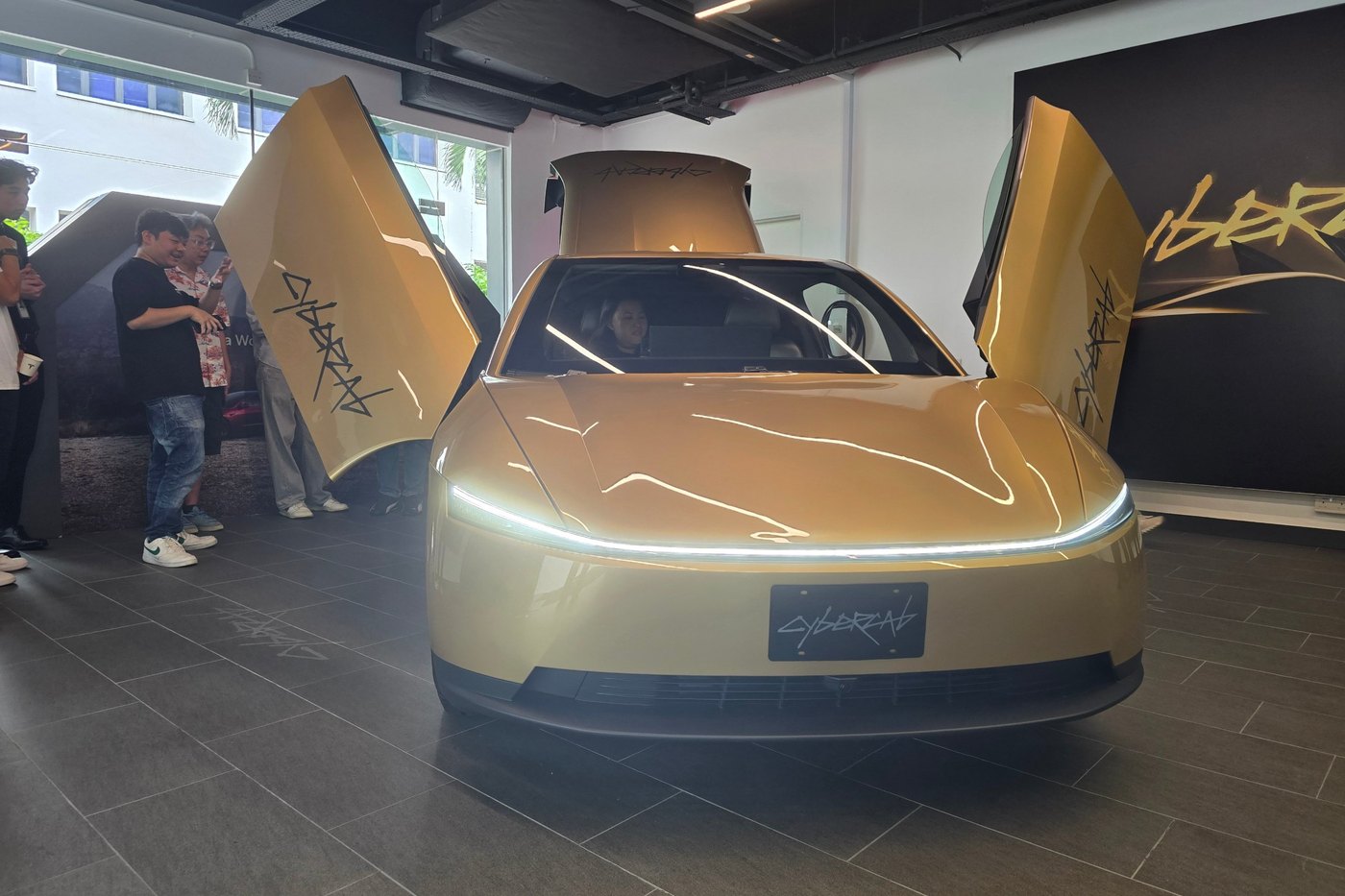
Two seats, no steering wheel, and a boot you could lose a scooter in.
If you want to see it, slots run 10am to 6pm through Monday 27 October at Lorong 8 Toa Payoh. Register, sit in it, close the door from the screen. Then go and look in the boot.