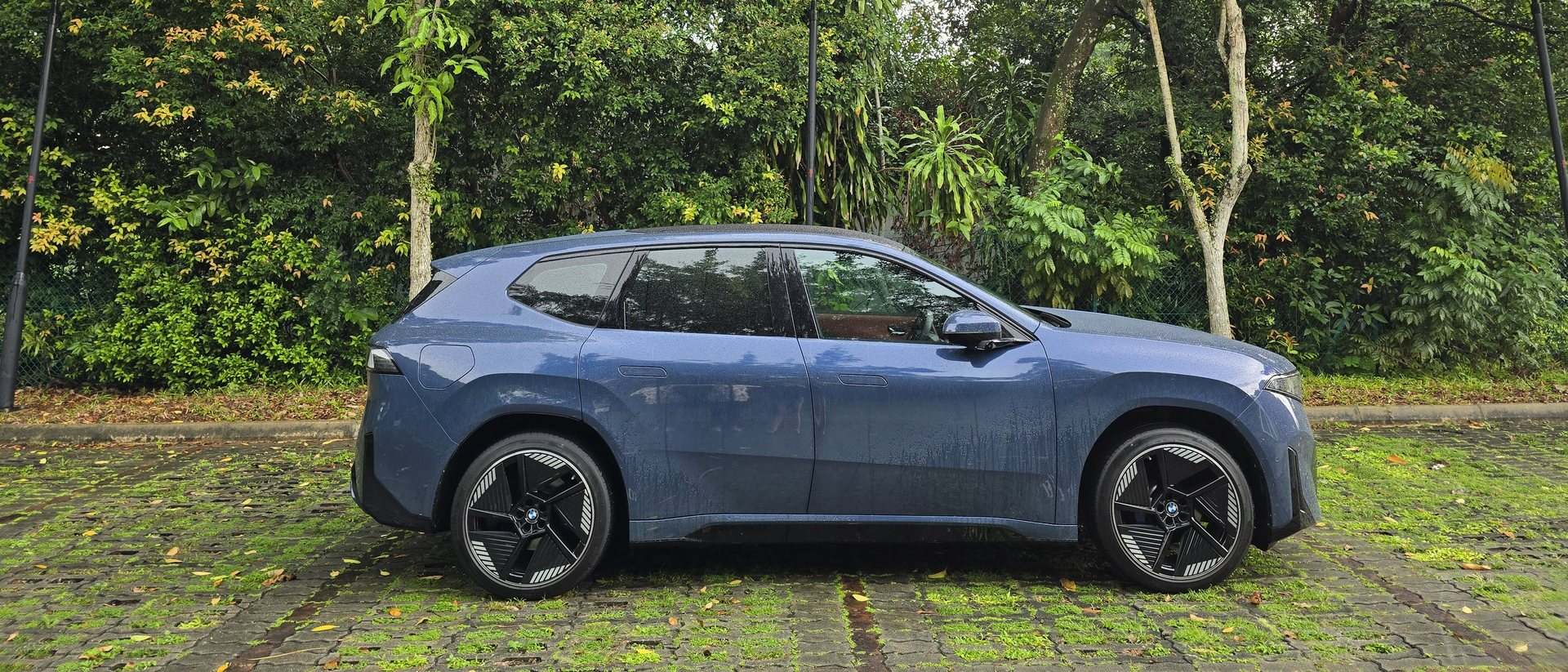
My first BMW was an F20 116d. Three-cylinder turbo diesel, 116 horsepower, and slower than most things it shared a lane with. It also had rear-wheel drive, near-perfect balance and steering that told me things I did not know cars could tell you.
Before that car I liked cars. After it I loved them. Everything eevee is came out of a slow diesel hatchback.
I bought two more BMWs after it. Both were better cars. Faster, quieter, safer, better made.
Both were a little less of a BMW. The steering went quiet. The chassis stopped talking.
Nothing was wrong with any of them, and that was sort of the problem: they had become extremely competent appliances wearing a badge that used to mean something else.
I have been to the museum in Munich. I bought the magnets. I bought the hat. I had also more or less made my peace with the idea that the thing I loved about the F20 was gone and was not coming back.
So I got into the iX3 with my guard up. Neue Klasse, the great reset, BMW's electric future. I have heard that speech before, and I have paid for it before.
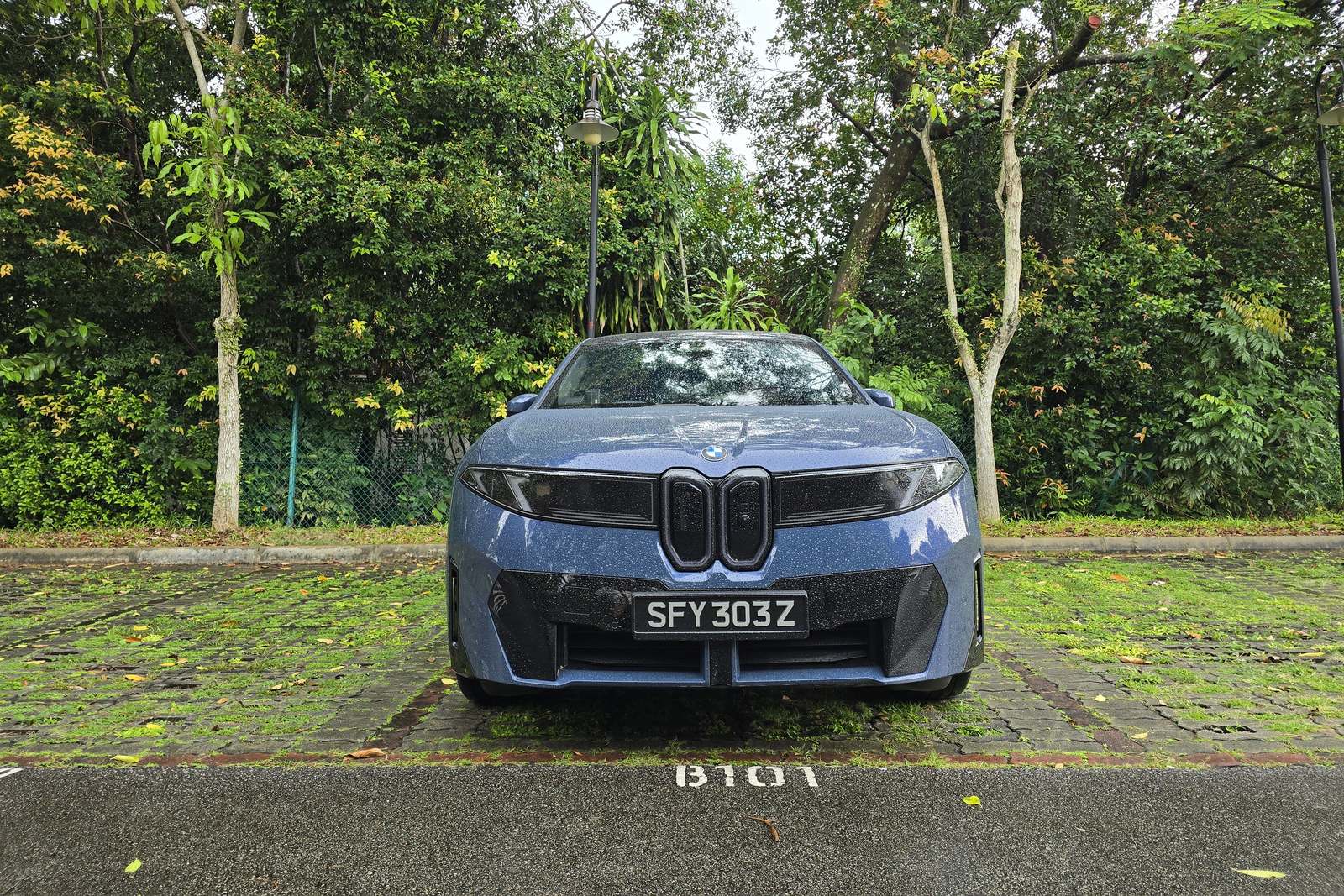
It took five minutes
This is the best BMW I have ever driven. It is also the best EV I have ever driven, and one of the best cars I have driven full stop.
Not because of the numbers. 469 hp and 645 Nm across both axles, 4.9 seconds to 100 km/h. Fast, but fast is not the interesting part of this car and it is not why the score is what it is.
It is the way everything answers at once. Steering, throttle, brakes and body all respond to the same input in the same instant, with no lag anywhere in the chain and no sense that four different systems are negotiating a compromise on your behalf.
BMW runs all of it through one control unit now, which it has called Heart of Joy. It sounds like the worst kind of marketing until you drive the car and realise it is just an accurate description of what they built.
The car feels like it was made by people who agreed with each other.
The brakes are the part I keep thinking about. Almost all of your everyday stopping happens on regeneration alone, and the final crawl to a standstill is handled by something BMW calls Soft Stop.
In practice: no lurch, no handover shudder between regen and friction, no last-metre nod. The car simply arrives.
It is the most natural stop I have felt in any electric car, and it is the sort of thing nobody puts on a brochure because it is impossible to photograph.
The ride is sublime. Genuinely, properly sublime, on 21-inch wheels, on the roads we actually have.
Every BMW I bought after the 116d was a better car and less of a BMW. This is the first one to go the other way.
The windscreen is the dashboard
There is no instrument cluster in this car. There is nothing behind the steering wheel at all. Instead there is Panoramic Vision, a strip of display projected onto a blacked-out band across the base of the windscreen, running the full width from pillar to pillar.
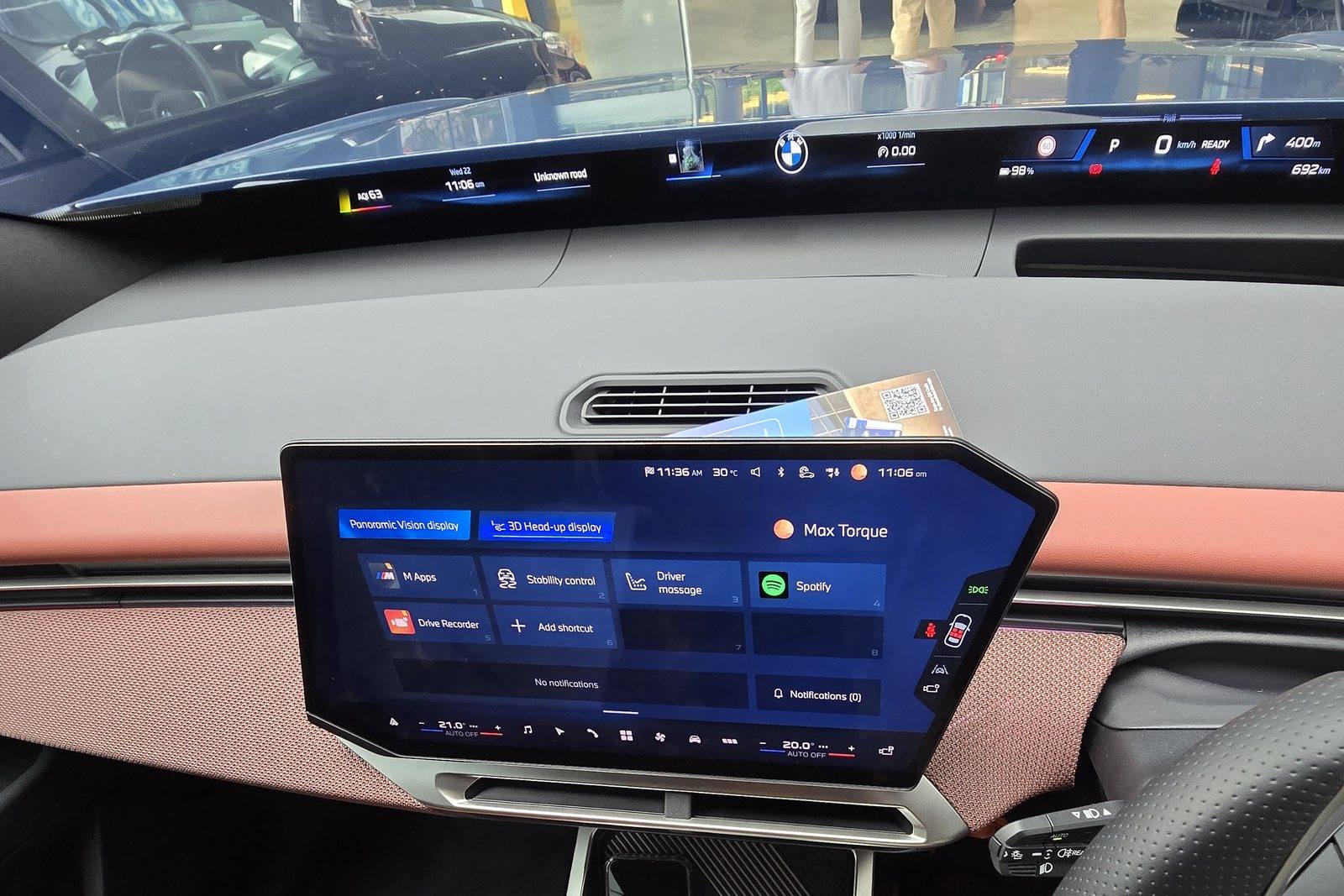
It sounds like a gimmick. It is the single best piece of in-car interface design I have used.
Your speed, your navigation, your assists and up to six widgets you choose yourself all sit in your natural line of sight. Your eyes never come off the road. Not "barely come off the road", the way head-up displays are usually sold. Never.
After some time in it, dropping your gaze into a binnacle feels like a thing cars used to do.
Which creates a small, funny problem. The 3D head-up display, standard here, projects navigation and driving graphics above the Panoramic Vision strip. It is good. It is also completely redundant, because everything it shows you is already six inches lower and easier to read. I switched most of it off and did not miss it once.
Below and to the right is a 17.9-inch central screen with a genuinely odd cut-out shape, running BMW's new Operating System X. It is fast, the menu logic is sane, and the QuickSelect widgets down the driver's edge mean the things you use constantly are one tap away rather than three.
This is the best version of iDrive there has ever been, and iDrive was already the best system in the business.
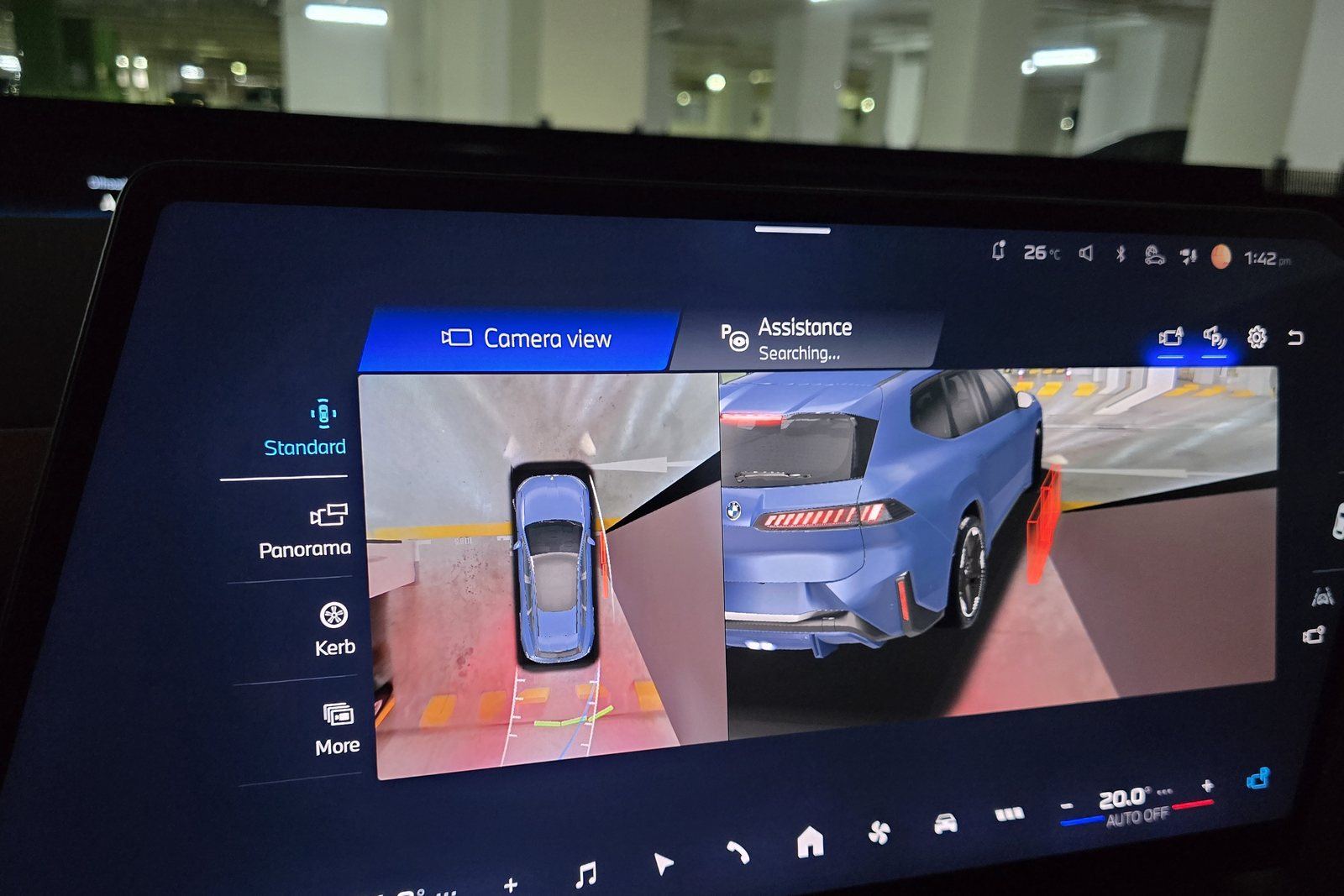
The part I want other manufacturers to copy: BMW kept the buttons. Wipers, indicators, mirrors, volume, gear selector, defrost, parking brake, all physical, all where your hand expects them. After a year of testing cars that bury the aircon three menus deep, sitting in something that trusts you with a switch feels close to luxury.
It is not perfect. The aircon still needs a fair amount of screen time, and I would rather have had a dial for temperature the way I have one for volume.
But the climate panel is one tap from anywhere and it sits right there on the QuickSelect strip, not buried three menus deep the way it is in half the cars we test.
Adjusting the aircon in an iX3 is a mild irritation. In some rivals it is a genuine safety issue. There is a difference, and BMW is on the right side of it.
Then there is the steering wheel, and here we part ways.
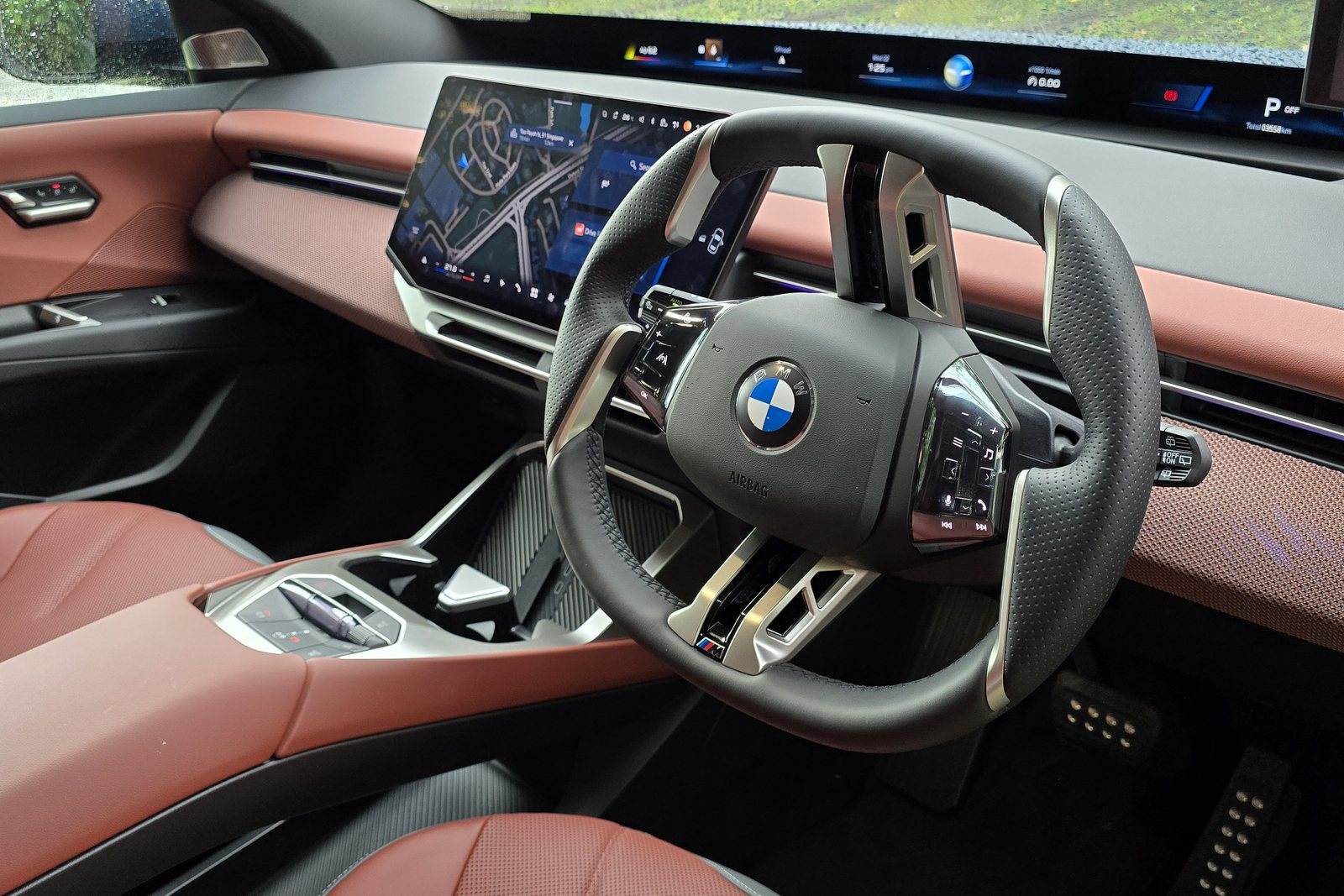
It is a strange thing. Vertical spokes, a squared-off top section, illuminated button panels that light up only when a function is available. The illumination trick is clever and I understand the logic, since there is no display behind the wheel for the spokes to block.
But it is design that draws attention to itself, and a steering wheel should be the one part of a car you never think about. I never fully stopped noticing it.
Two of the criticisms in this review are things I would happily live with. This one I would look at every single day.
The cabin
It is a lovely place to sit, and it is a step up from the combustion X3 that shares the showroom floor.
The dashboard is wrapped in fabric rather than plastic and flows straight into the door cards, which makes the whole front of the cabin feel like one continuous object instead of a set of parts.
The panoramic glass roof is standard here, with solar filtering that actually works in this climate. The cabin stays bright without turning into a greenhouse at 2pm.
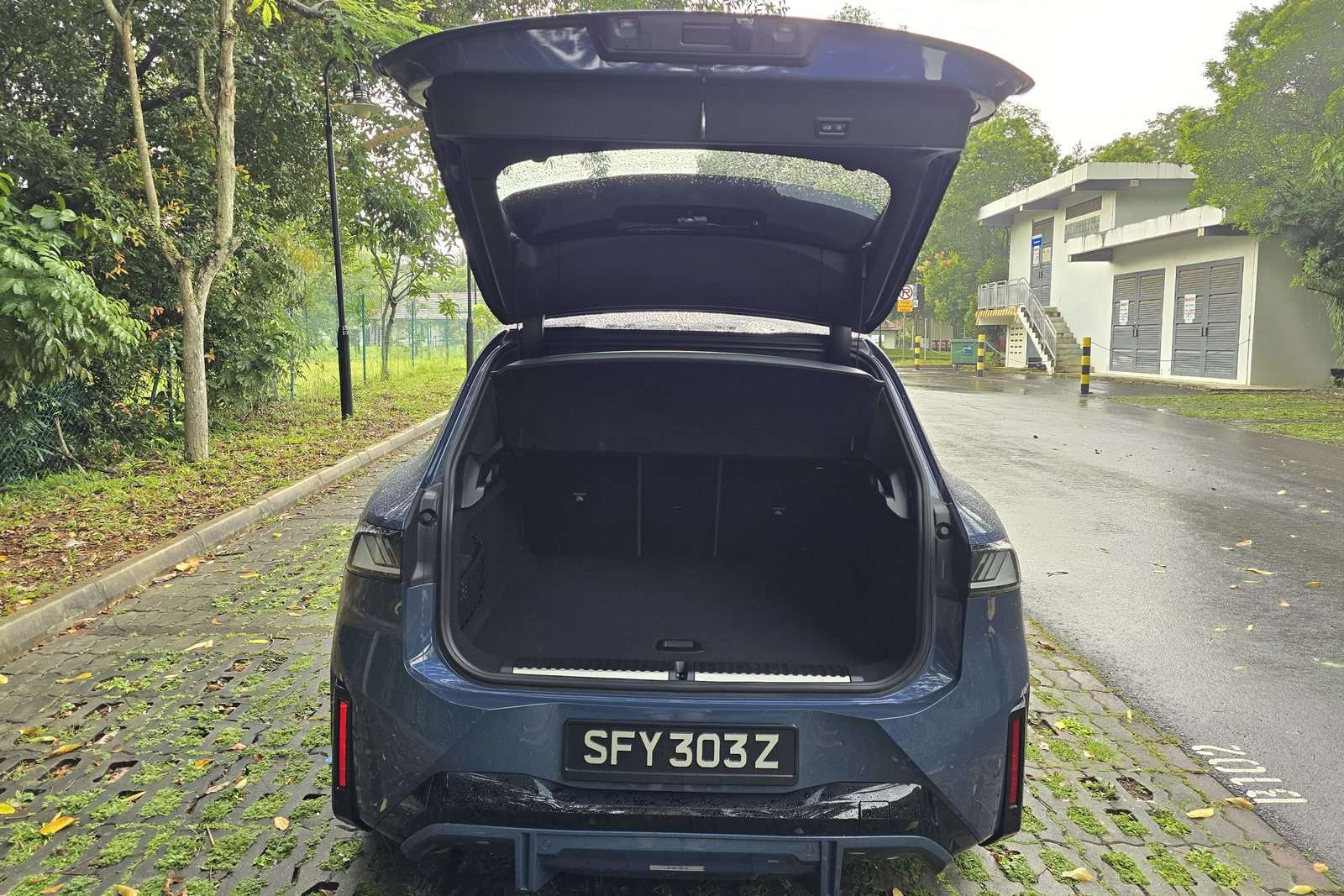
Space is not an argument. Five adults fit properly, the rear floor is flat, and rear legroom is generous by any standard and startling by BMW's. The boot takes 520 litres before you fold anything and 1,750 after. There is a 58-litre frunk that is exactly the right size for the charging cable, which is the correct amount of frunk.
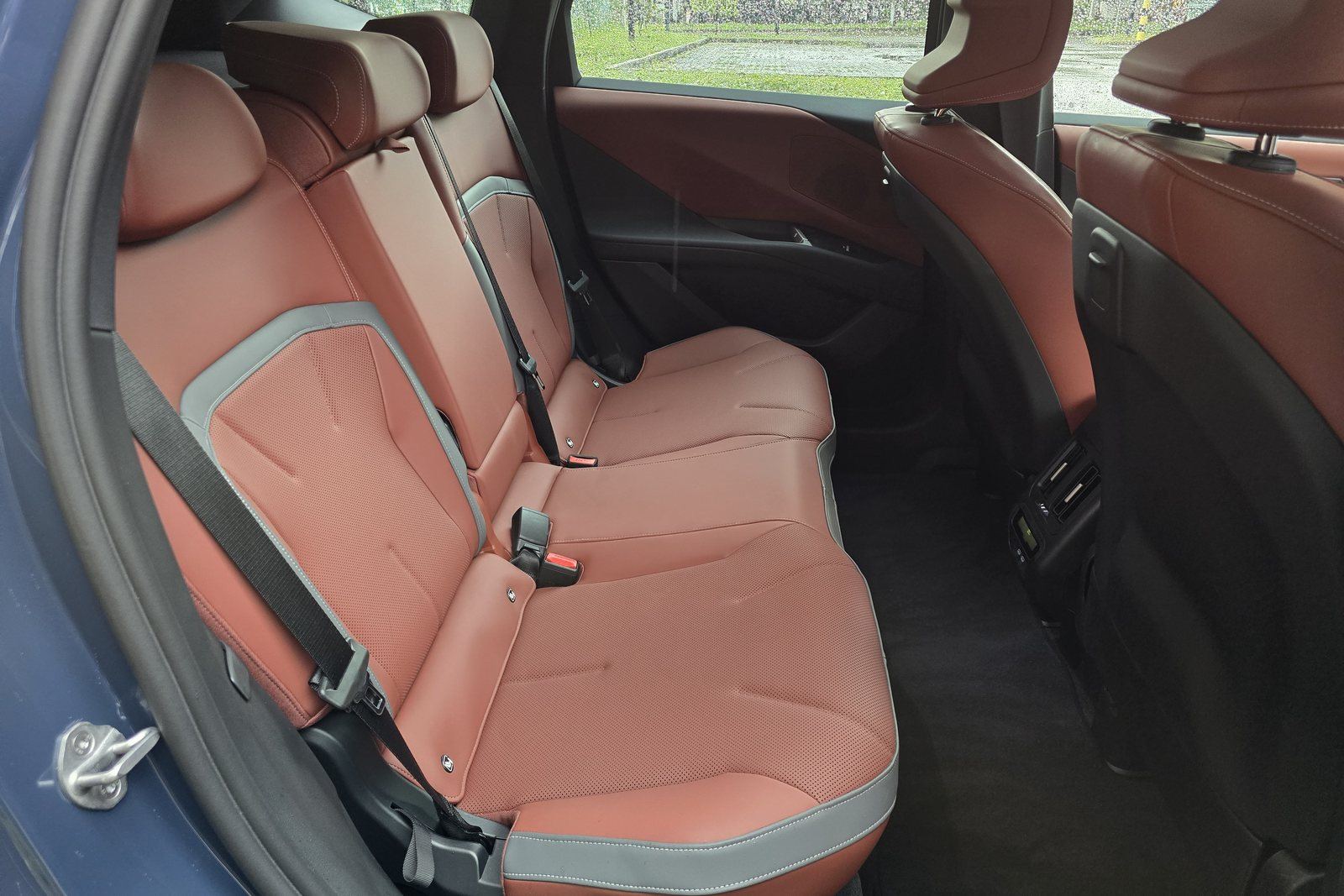
Now the part that matters most here and gets the least attention in overseas coverage: this cabin is built for heat.
The aircon is properly cold and gets there fast. The front seats are ventilated, which in July in Singapore is not a luxury feature, it is the difference between arriving and surviving.
And they massage you, which sounds like a party trick until you are stationary on the AYE at 6.40pm and the car quietly starts working on your lower back.
Three-zone climate, solar-filtering glass overhead, ventilated and massaging seats, all standard. Somebody at BMW has clearly driven in a tropical city.
The Harman Kardon system is standard on Singapore cars and it is superb. Thirteen speakers, real weight at the bottom end, and it holds together at volumes where most factory systems start to smear.
The weird bits
Nobody warned me the iX3 is weird, and this turns out to be my favourite thing about it.
There is a camera in the cabin whose entire job is taking photographs of the people in the car. Not parking. Not driver monitoring. Selfies. It points at your face while you drive, and it exists because somebody at BMW decided it would be fun. It is completely pointless and I used it more than I would like to admit.
Change drive mode and the car sings to you. BMW calls this HypersonX (the MINI Aceman JCW does its own version), and it is not trying to imitate an engine. Sport mode sounds like a spaceship. Genuinely, unmistakably, a spaceship.
There is a version of me that finds this embarrassing and a version of me that kept flicking into Sport on the CTE just to hear it. The second version won by a distance.
The grille is small and vertical and looks a bit odd, which after a decade of BMW kidneys expanding towards the horizon reads as an apology. At night it lights up.
This is the first BMW in a very long time with a sense of humour. That matters more than it sounds like it should, because character is the thing this brand quietly stopped delivering, and it is the thing you cannot buy back with a bigger battery.
Living with it in Singapore
Range is a solved problem. I saw about 685 km from a full charge, driving normally, in this heat, with the aircon doing real work.
Against a WLTP claim of up to 805 km that is a very strong real-world result. In a country you can cross in under an hour it means you plug in when you remember to, not when you need to.
Two weeks of ordinary Singapore driving between charges is entirely realistic.
Charging is where the 800V architecture earns its money. 400 kW peak, 10 to 80 percent in 21 minutes, and 22 kW on AC for condo charging.
Nothing in Singapore will feed it 400 kW today and that is fine, because it means the car is never the limiting factor. Plug into anything decent and you are done before you have finished a coffee.
One small annoyance: there is no spare wheel. You get a tyre repair kit, which will get you 200 km at up to 80 km/h and will not help you at all if you properly destroy a 21-inch tyre on a kerb at Ophir Road.
This is normal for the class now. It is still worth knowing before you need to know it.
The verdict
And then the price.
Just south of S$400,000 with COE. There is no way to make that number look friendly. It is a Category B car with 469 hp, and Category B is where the money goes to die.
Here is the argument for it anyway. We are living through a wave of Chinese EVs that are fast, well built, well equipped and dramatically cheaper, and eevee will keep telling you that many of them are genuinely good, because they are.
What none of them have yet is this: a company that has been arguing internally about how a car should feel since before most of us were born, throwing away the entire platform, starting again, and coming out the other side with the feel intact.
BMW has been at this since 1916. It did not build its first car until 1928. Nearly a hundred years of that argument is sitting in how this thing brakes.
Would I tell you to cross-shop it? Yes, and hard. There are EVs at half this money that will handle the school run, the airport run and the groceries just as well.
Those are the drives you have to make. The iX3 is the first BMW in ten years that made me want to make one I didn't.
I had stopped expecting that. The F20 used to have me taking detours on the way home from the office for no reason I could have defended.
The two cars after it never did. The strange part is that I never noticed the habit going. It just quietly stopped, the way habits do, and I put it down to getting older rather than to the cars.
This one gave that feeling back inside five minutes.