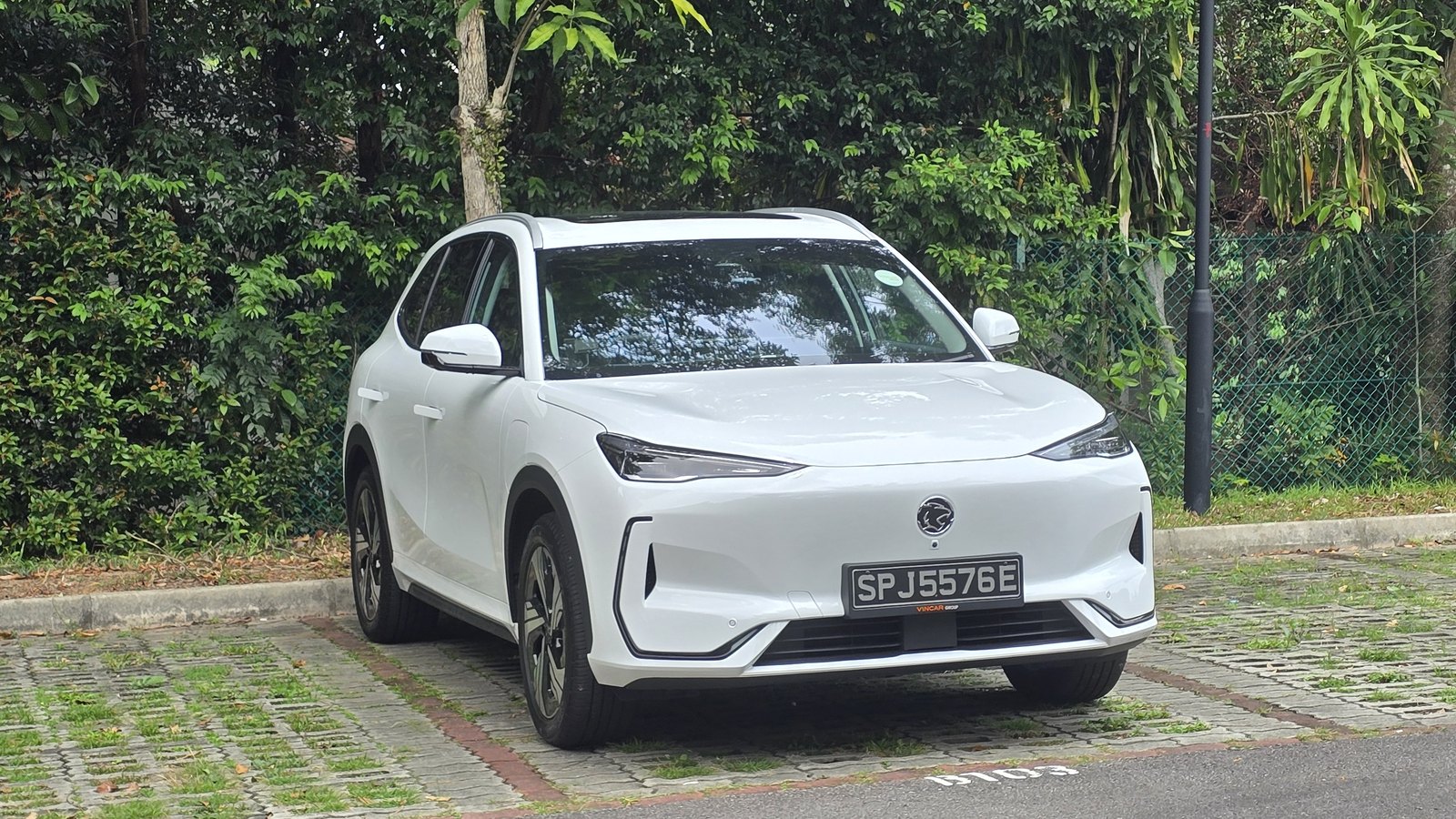
If you grew up in Singapore, you already have an opinion about Proton. It is probably not kind.
Hold that thought, because the car in these photos has very little to do with it. The e.MAS 7 is a Geely in all the ways that count, it is one of the most generously equipped cars I have tested at any price, and it is, I think, the best value for money EV I have driven.
Who is Proton?
Proton is Malaysia's national car company, set up in 1983, and for decades the badge meant cheap and basic. Singapore knew it that way too. Cycle & Carriage sold Protons here in the early 2000s, a second distributor tried again, and the brand left in 2014.
Then Geely bought 49.9 per cent of Proton in 2017. The Chinese group behind Volvo, Polestar, Zeekr and smart now supplies the platforms, the software and most of the engineering. The e.MAS 7 is the first car from Proton's electric sub-brand, built on Geely's GEA platform with Geely's Flyme Auto software, and closely related to the Geely Galaxy E5 sold in China. Singapore is attempt number three, through VINCAR Group, the same people who sell the AION UT. The Cat A version I drove was built for this market, with the motor capped at 100 kW to get under the COE line.
Inside
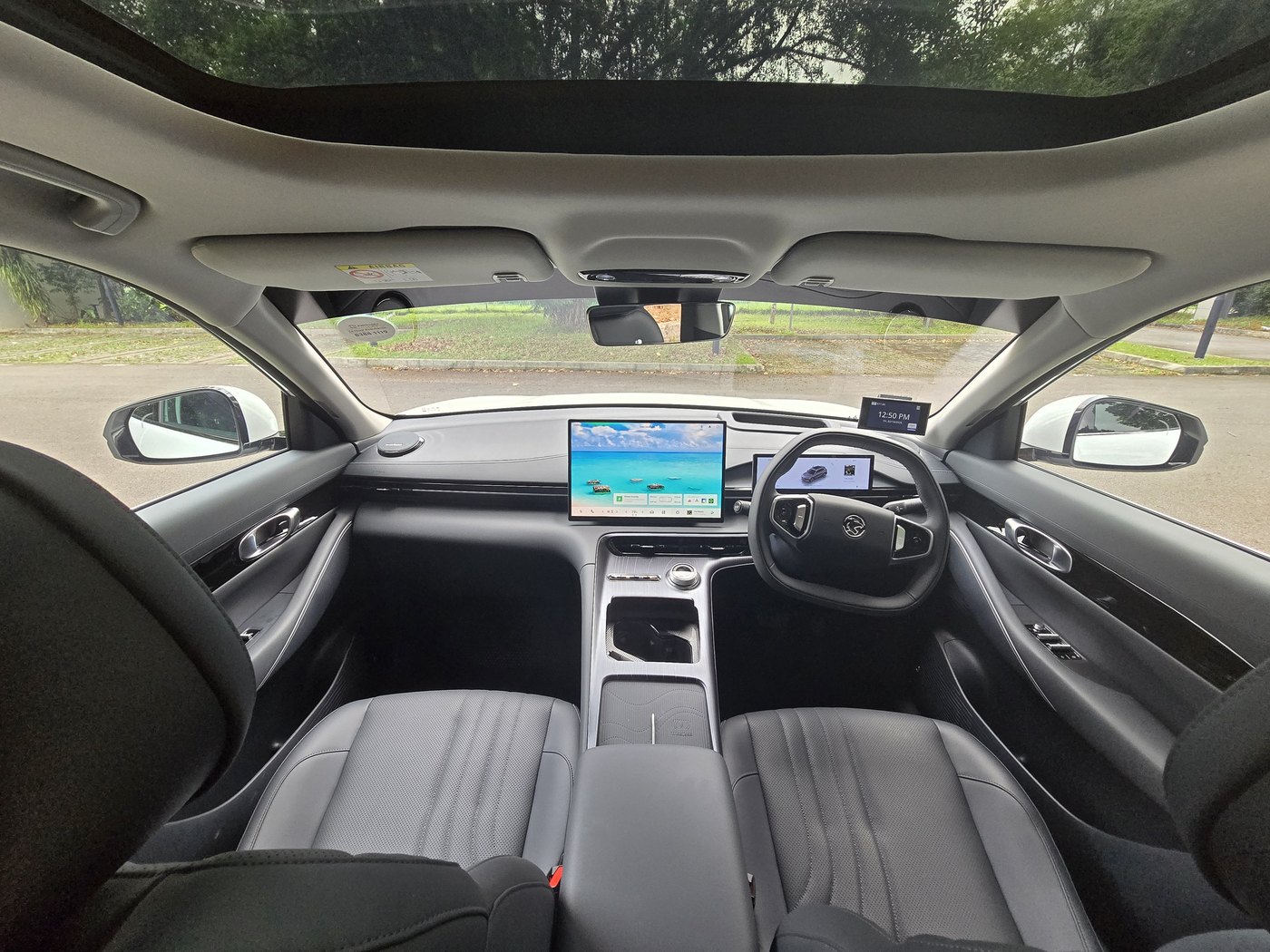
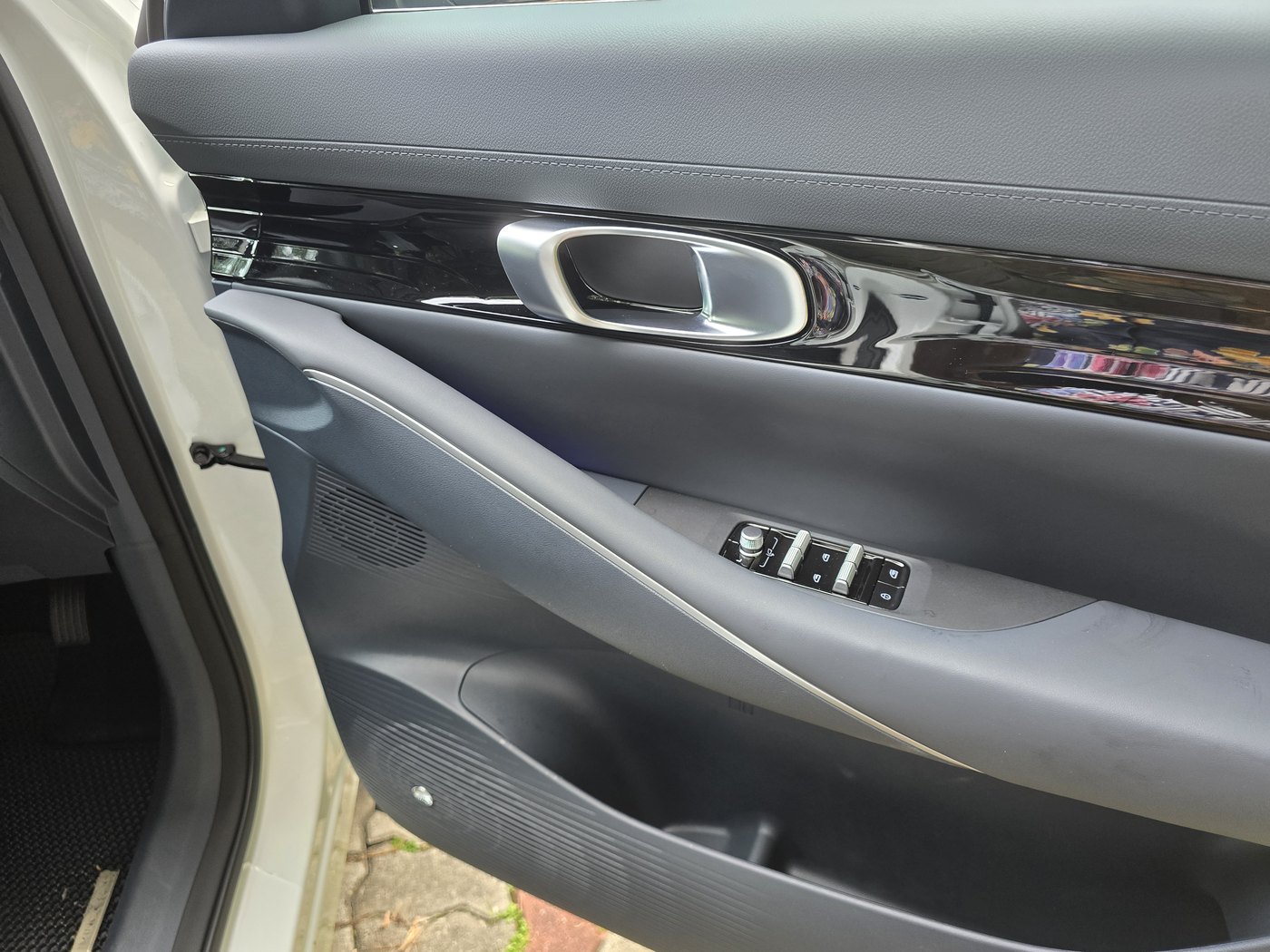
The cabin is the best thing about this car, and the e.MAS 7 is a comfortable car first and everything else second. The ride is soft and settled. The seats are deep and comfy. The cabin is quiet and well insulated, and the aircon is properly cold, which in Singapore is worth more than any number on a spec sheet.
You get hard plastics, plenty of them. Fine. They are placed where your hands do not go. The bits you touch are soft and squidgy, the finishes are tasteful, and nothing rattles. It is a cabin that was clearly built to a cost, by people who knew where the cost should and should not be spent.
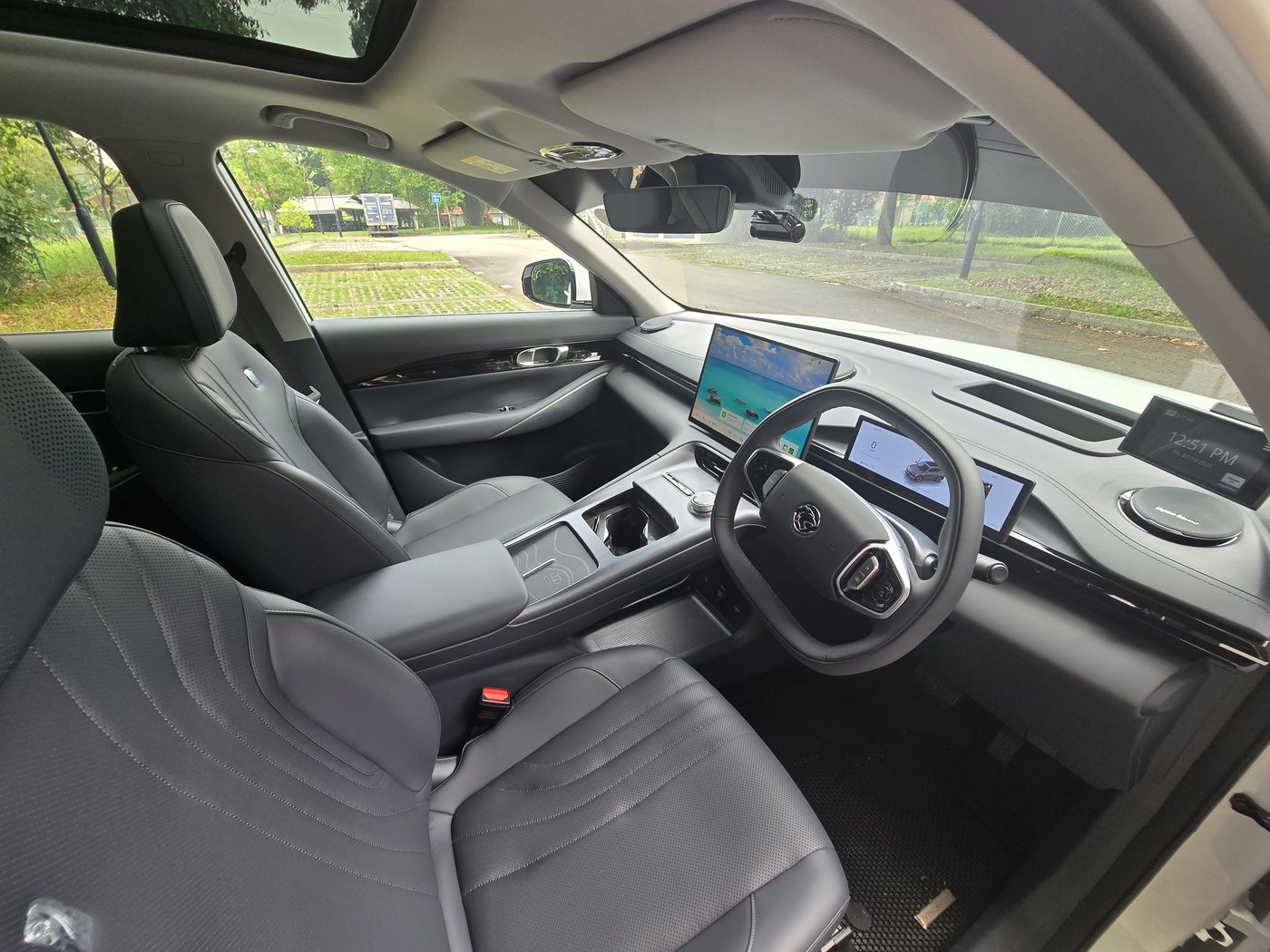
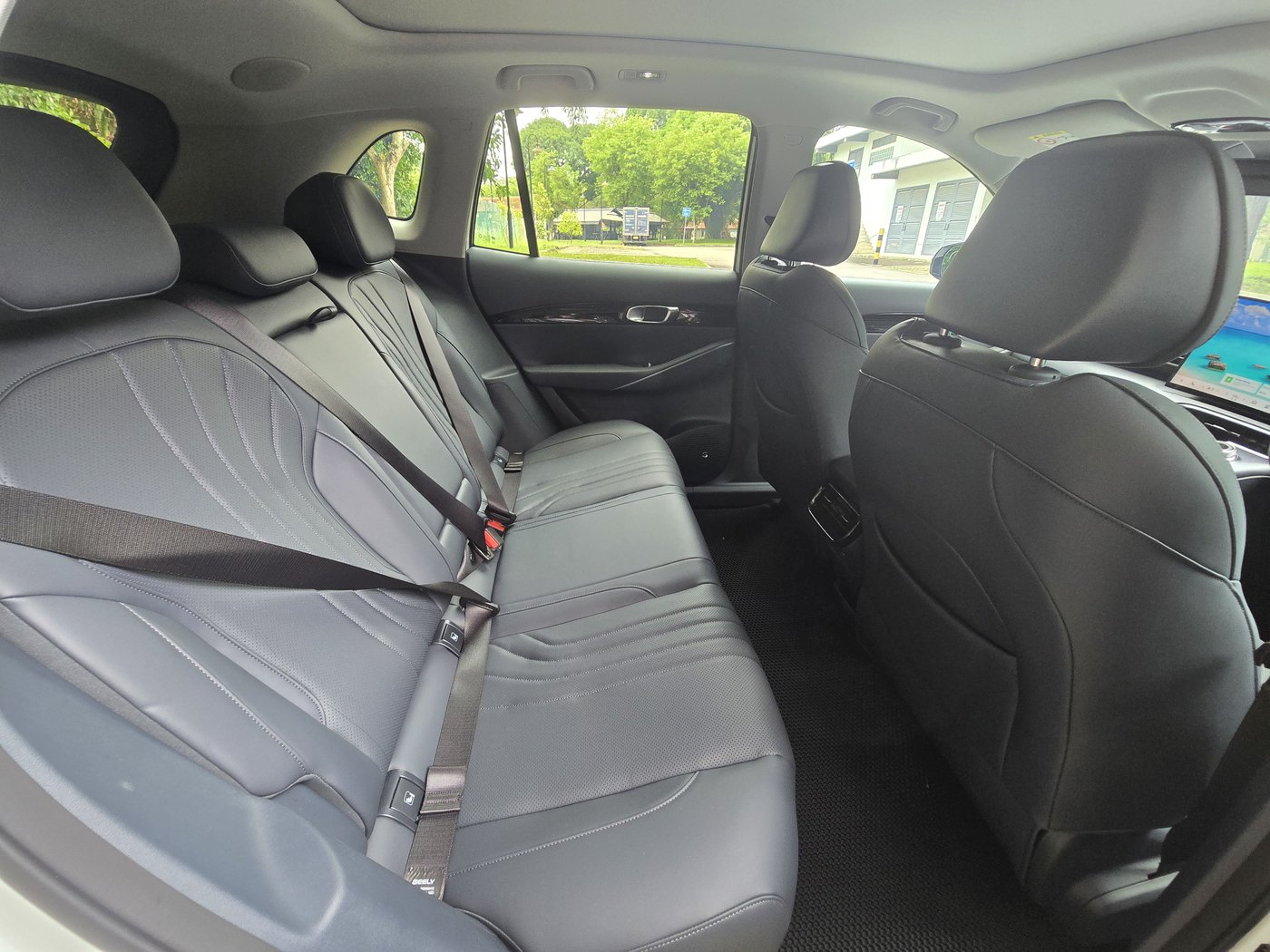
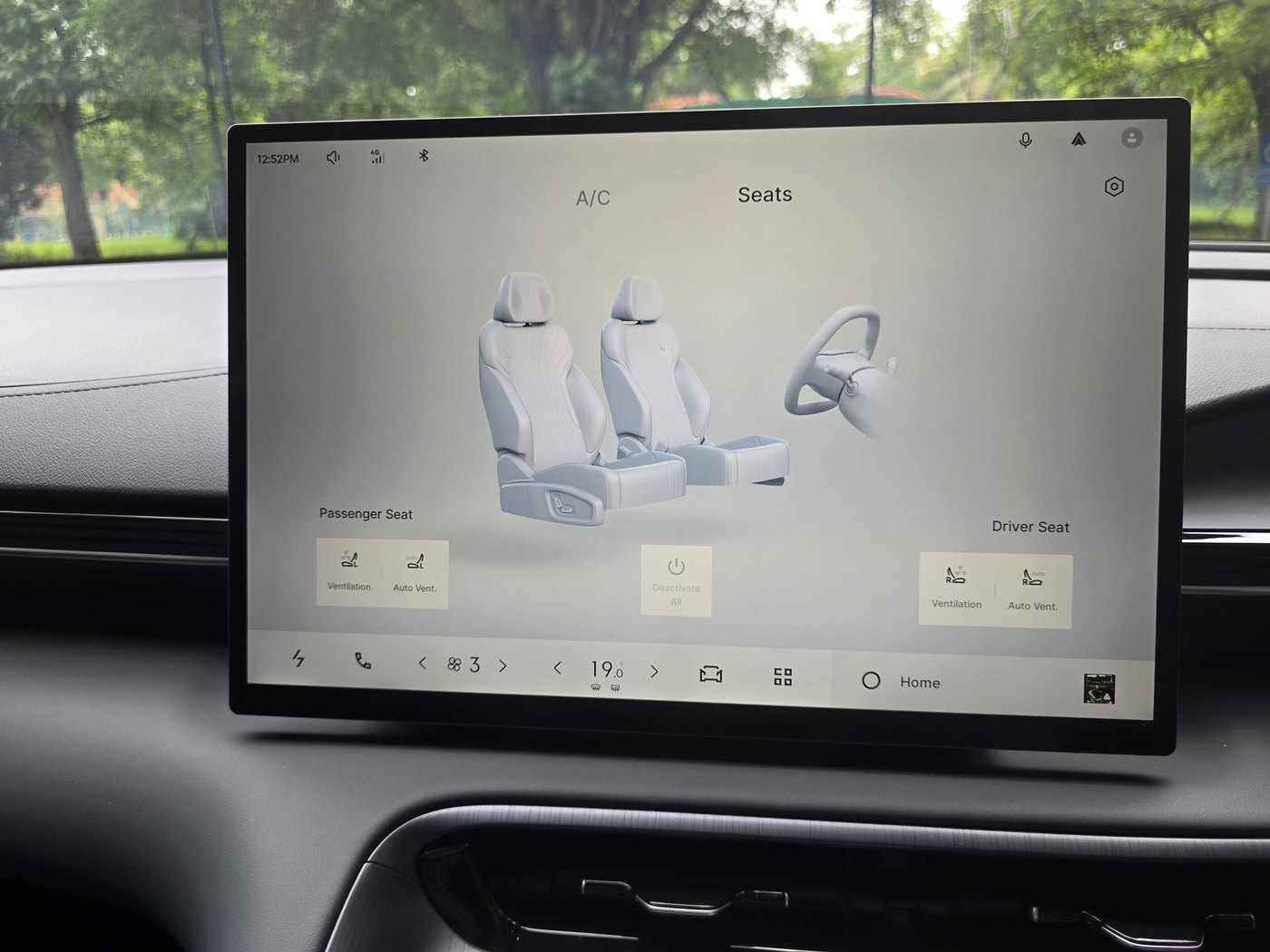
Both front seats are ventilated, which at this price is a small luxury I did not expect. The passenger seat also reclines flat, and the back seats recline in two steps, so the people in the back are looked after too.
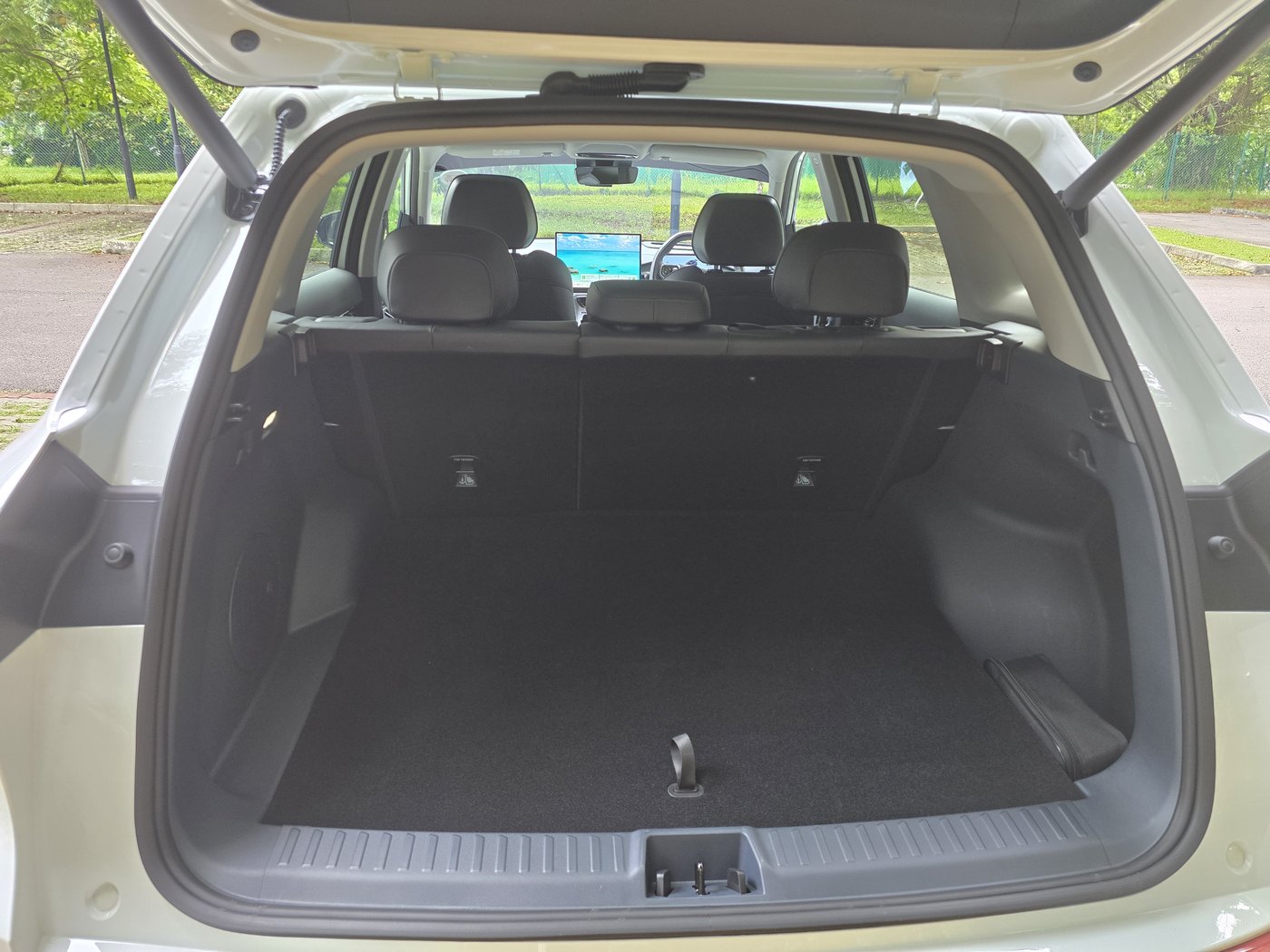
Storage is generous, and some of it is clever. There is a pull-out drawer under the rear seat, a well under the boot floor, and cubbies keep turning up in places you do not expect. The back seat is large. The boot is very large: 461 litres with the seats up, 1,877 litres folded, and a 51-litre well under the floor. There is no frunk.
Screens and buttons
This is where the Geely connection pays off.
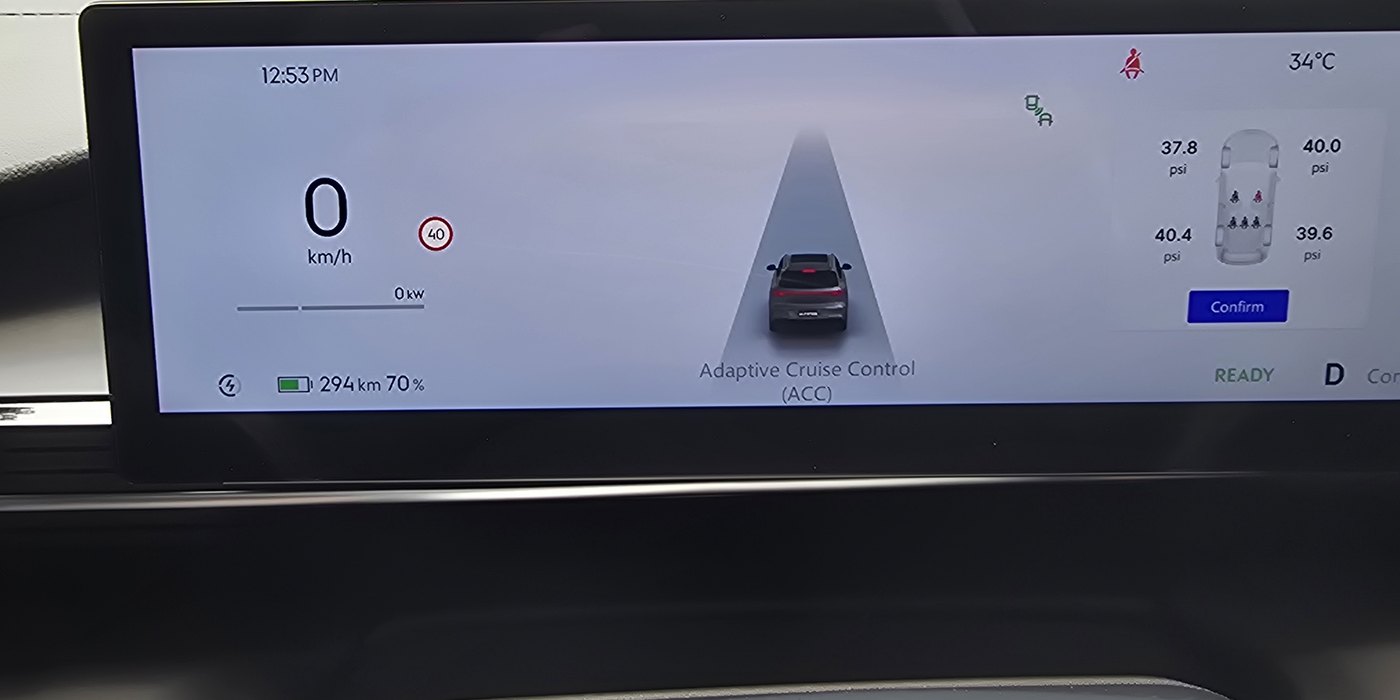
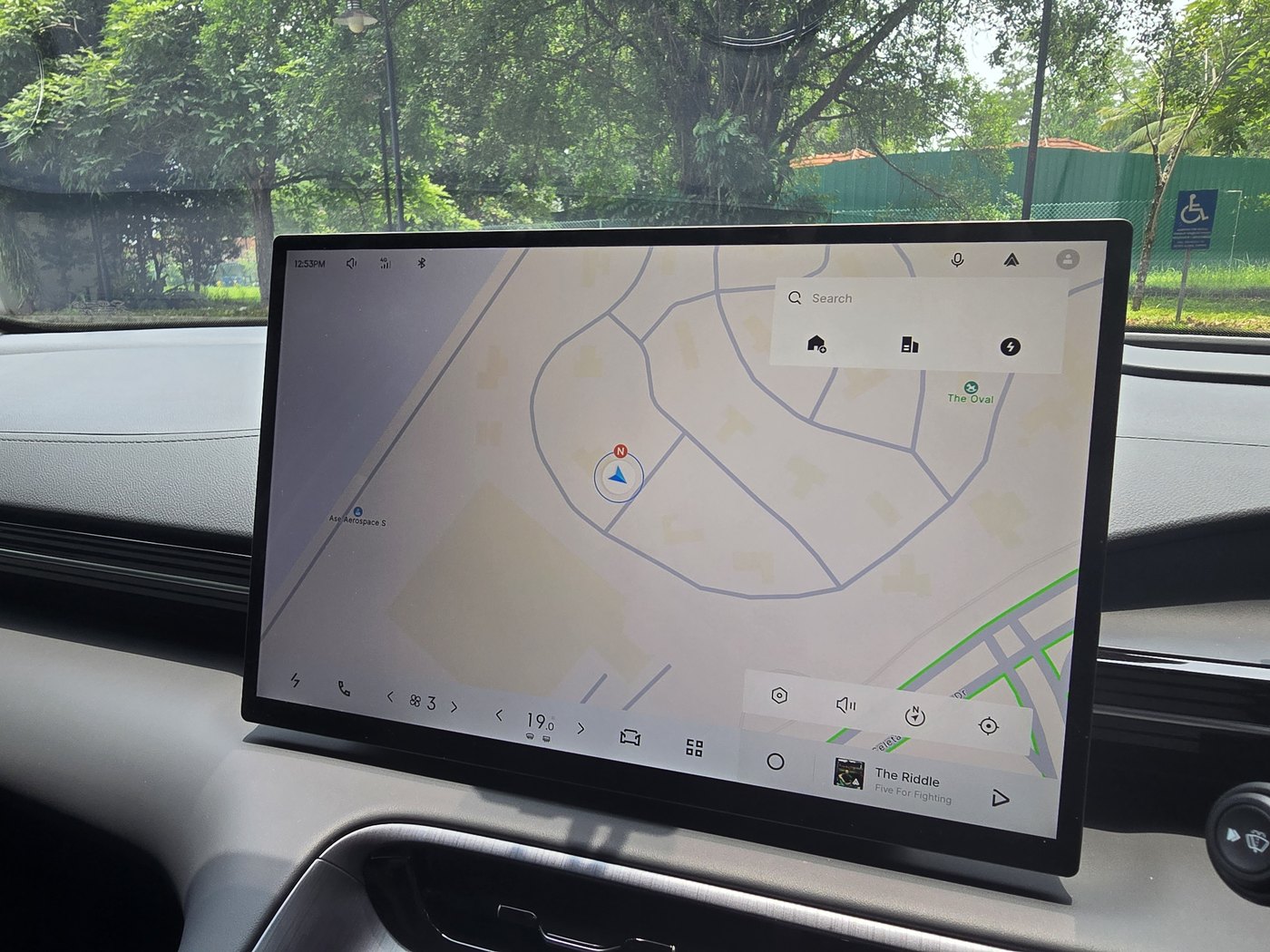
The 10.2-inch driver display is crisp. The 15.4-inch centre screen is big and quick, runs Flyme Auto with its own app store, and handles infotainment and the car's core functions without lag. Above it sits a head-up display that shows your speed, navigation turns and lane-keeping status on the windscreen. HUDs are usually a premium-tier extra. Finding one this good on a car at this price was a surprise.
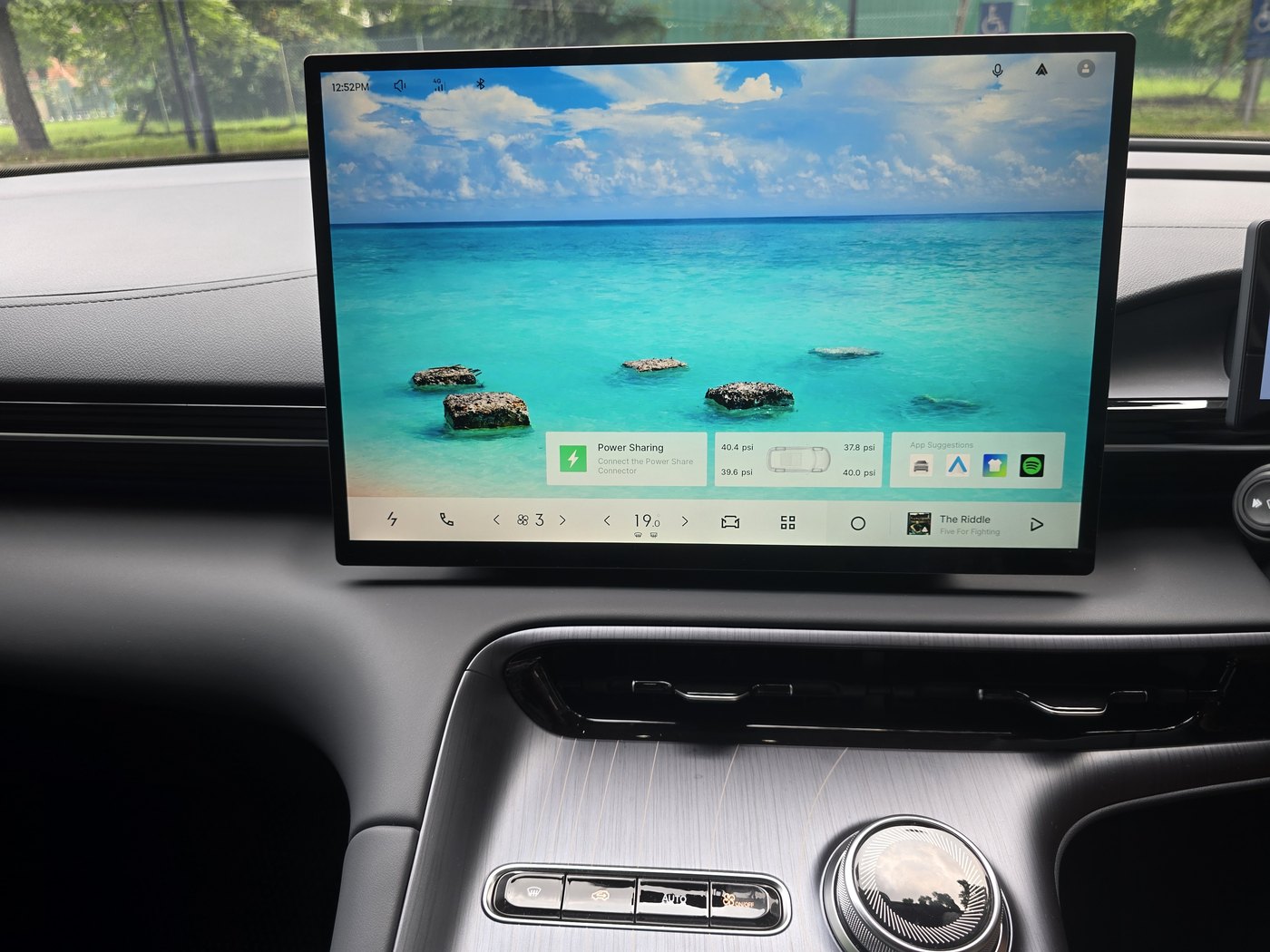
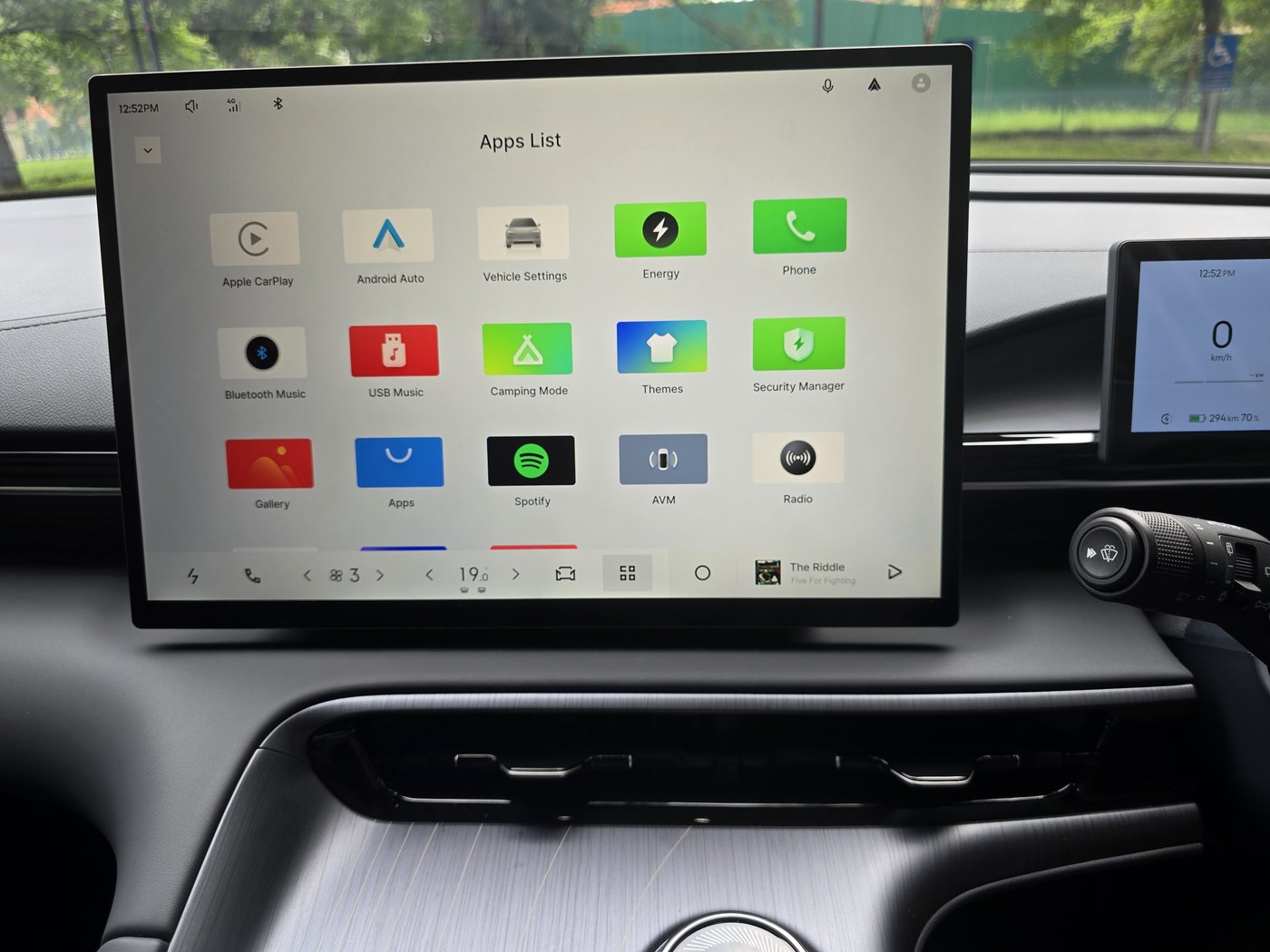
The best thing in the cabin is a knob. A big one, on the console. By default it does volume. Press it and it switches to fan speed, or the wallpaper, or a handful of other settings. My passenger could turn the music down without touching the screen. That should not be rare in 2026, but it is, and it made every drive a little less annoying.
My passenger could turn the music down without touching the screen. That should not be rare in 2026, but it is.
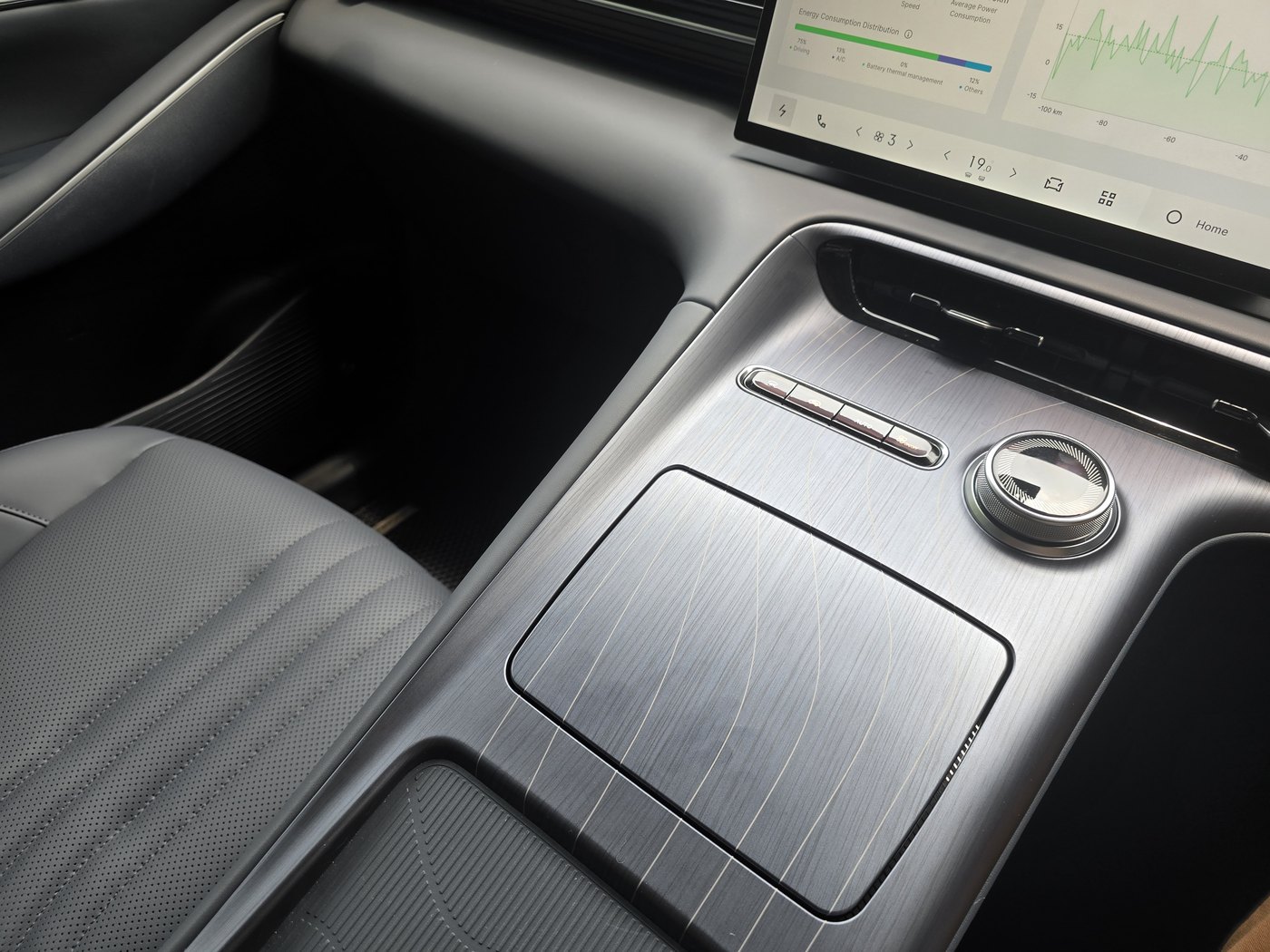
There are physical buttons too. Enough of them. Someone at Geely still believes in switches, and I am grateful.
The voice assistant is okay. Not the best I have used, not the worst. Wireless Android Auto and CarPlay both connected first time and stayed connected, no issues there.
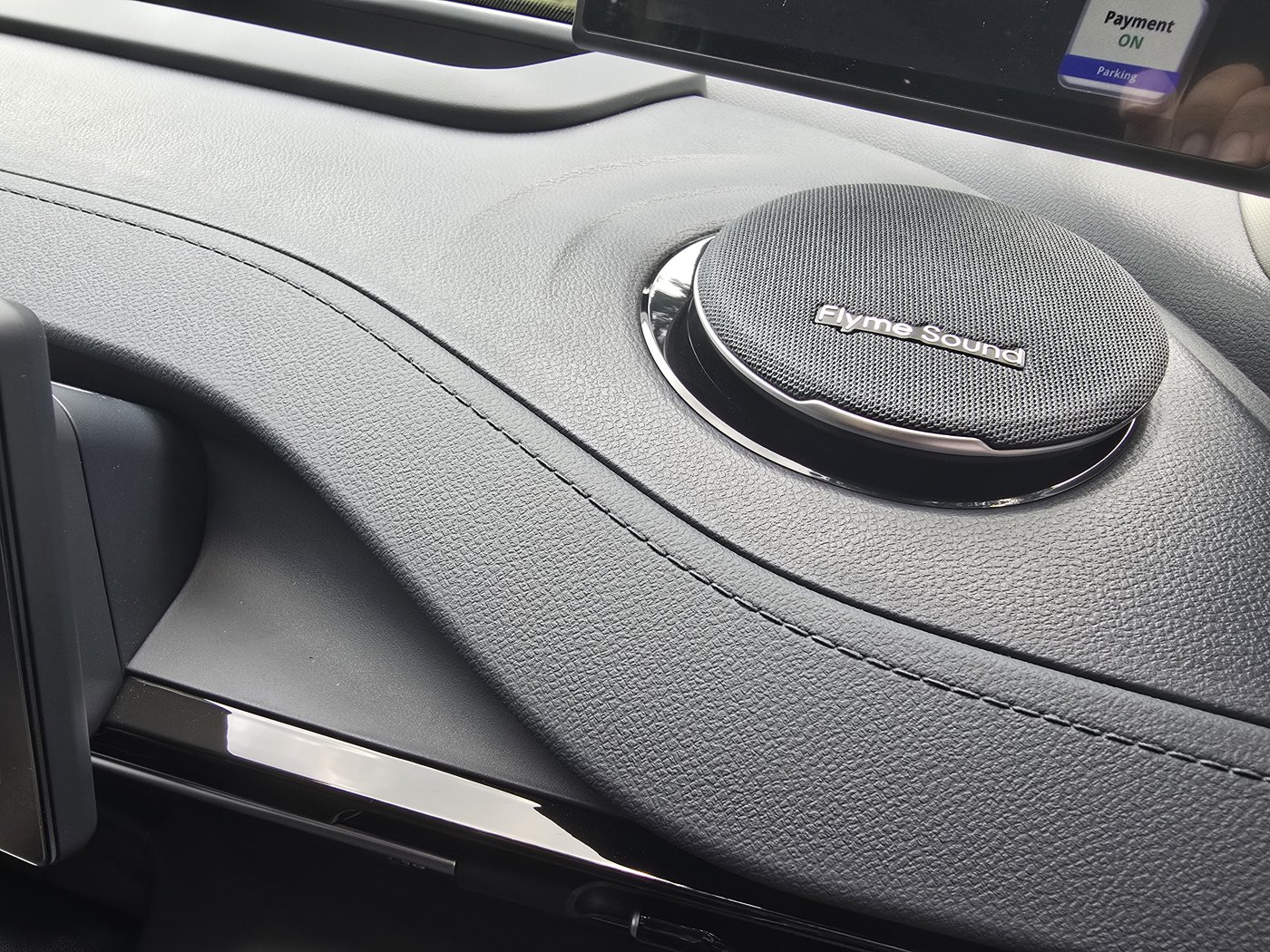
Now the speakers. The 16-speaker system is branded Flyme Sound, Geely's own audio line, and it is the standout feature of this car. Headrest speakers for the driver, a quiet cabin to put them in, and a tuning menu that lets you shift the sound signature to suit what you listen to. Out of the box it leans towards EDM; switch profiles and it settles down. I have driven cars at twice the money with worse audio. For the price, I have not heard better.
The 360 camera is sharp and has a 3D view, which helps in a car this wide. What it does not have is auto parking. There is none, at all, which is a strange omission on a car this size and at this level of tech. You will be squeezing it into HDB lots the old-fashioned way.
How it drives
It is slow.
Not slow in a way that will get you honked at. Slow in the way that you press the pedal, the car thinks about it, then gets going at a pace that feels appropriate rather than exciting. This is a heavy SUV with 100 kW to move it, and Proton quotes 9.9 seconds to 100 km/h, so that is physics rather than a fault. If you are coming from almost any other EV, you will miss the shove off the line.
Steering, brakes and regen are all fine. Comfortable, no drama, nothing to complain about and nothing to write home about.
The ride is comfortable and a bit dull. There is no sense of the car wanting to play. It goes where you point it, it does not complain, and it does not reward you for trying. For the family-workhorse brief, that is correct. For Soul points, it is not.
The driver aids are the one thing I would change on day one. Lane keeping, the chimes, the nudges on the wheel: all of it is tuned aggressively. If you are a confident driver, go into the settings and turn most of it off. If you lean on these systems, they work and the car feels safe. Either way, expect to be told off a lot until you do something about it.
Living with it in Singapore
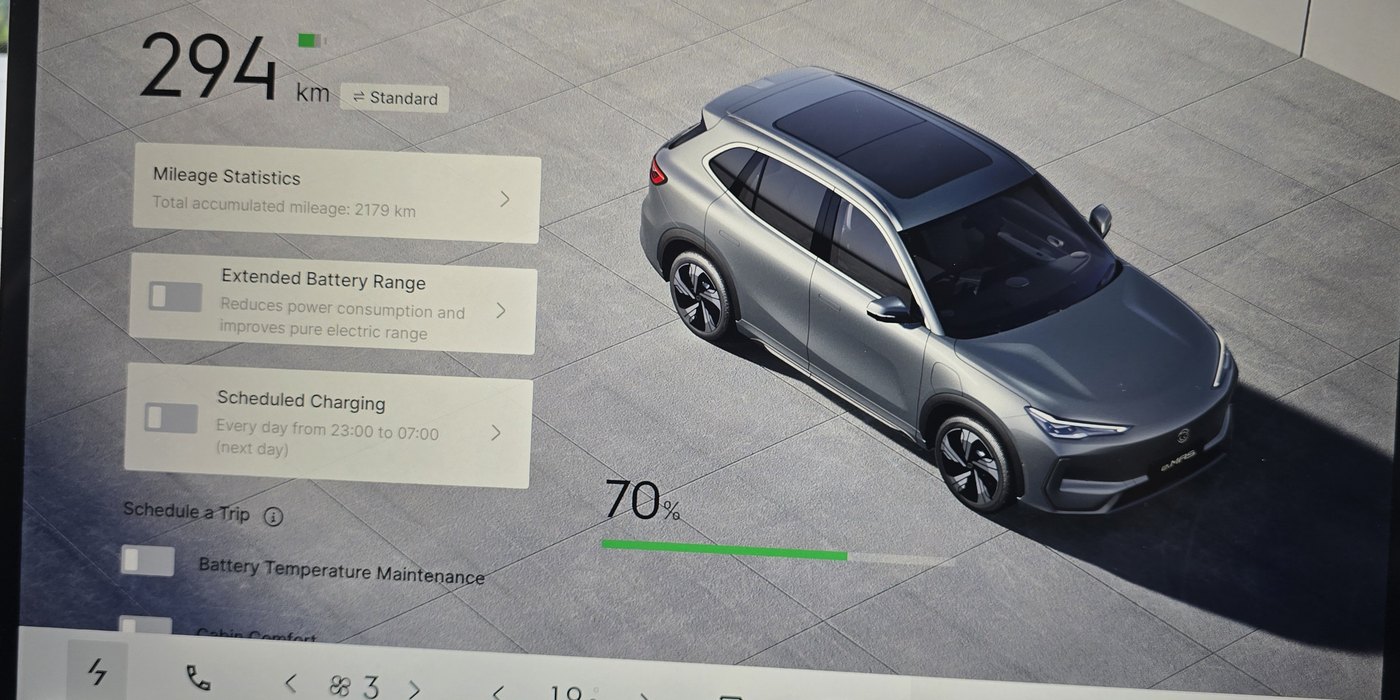
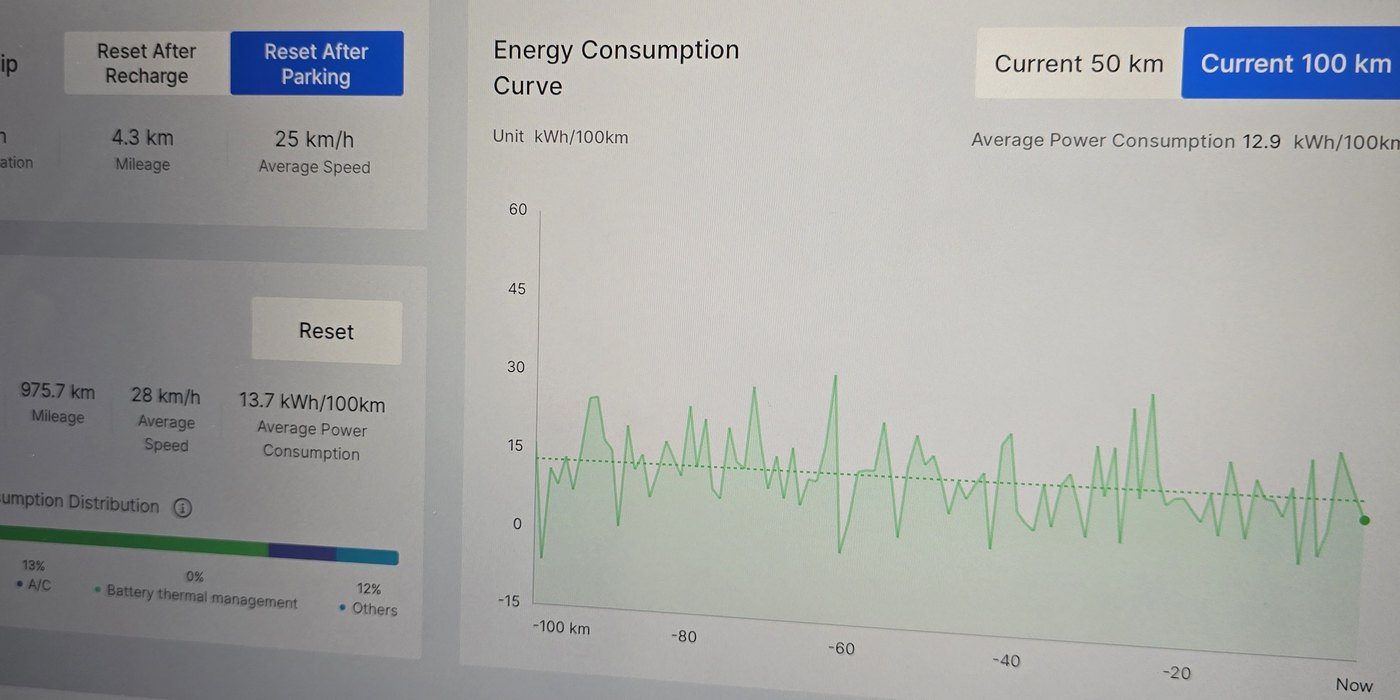
Range is the car's weak spot. At 70 per cent battery the screen showed 294 km, which puts a full charge at a little over 400 km, right on Proton's 410 km WLTP claim. The trip computer read 12.9 kWh/100 km over the previous 100 km, well under the official 16.6, so the car is efficient. The battery, at 60.22 kWh, is simply not that big for a car this size.
It is a shame, because the e.MAS 7 has the makings of a brilliant Singapore to Malaysia cruiser: quiet, comfortable, cheap to run, and VINCAR advertises a cross-border warranty, so the car is covered on the other side of the Causeway. You would just be stopping more than you want to. Proton quotes 100 kW DC with 30 to 80 per cent in 20 minutes, and 11 kW AC. I did not charge the car on the loan, so those are Proton's numbers.
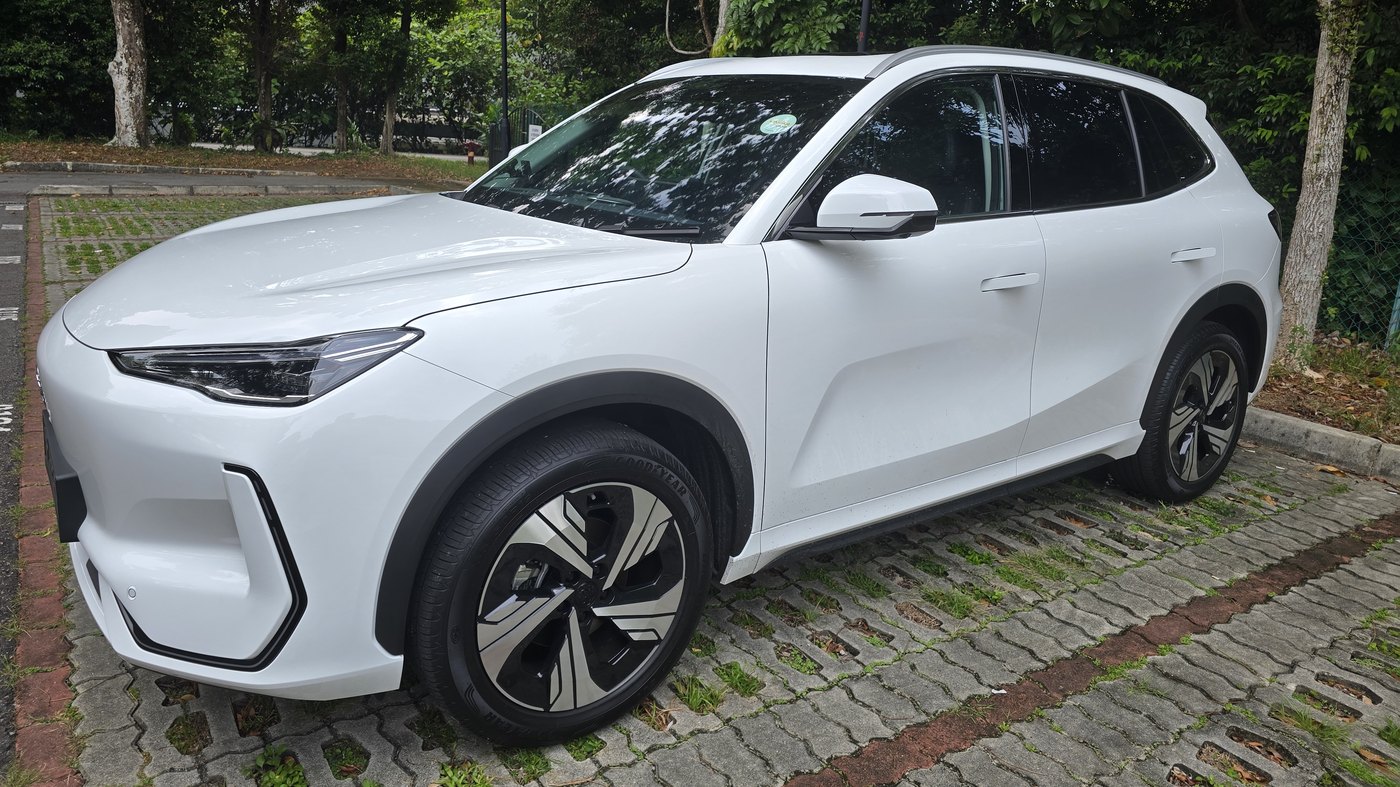
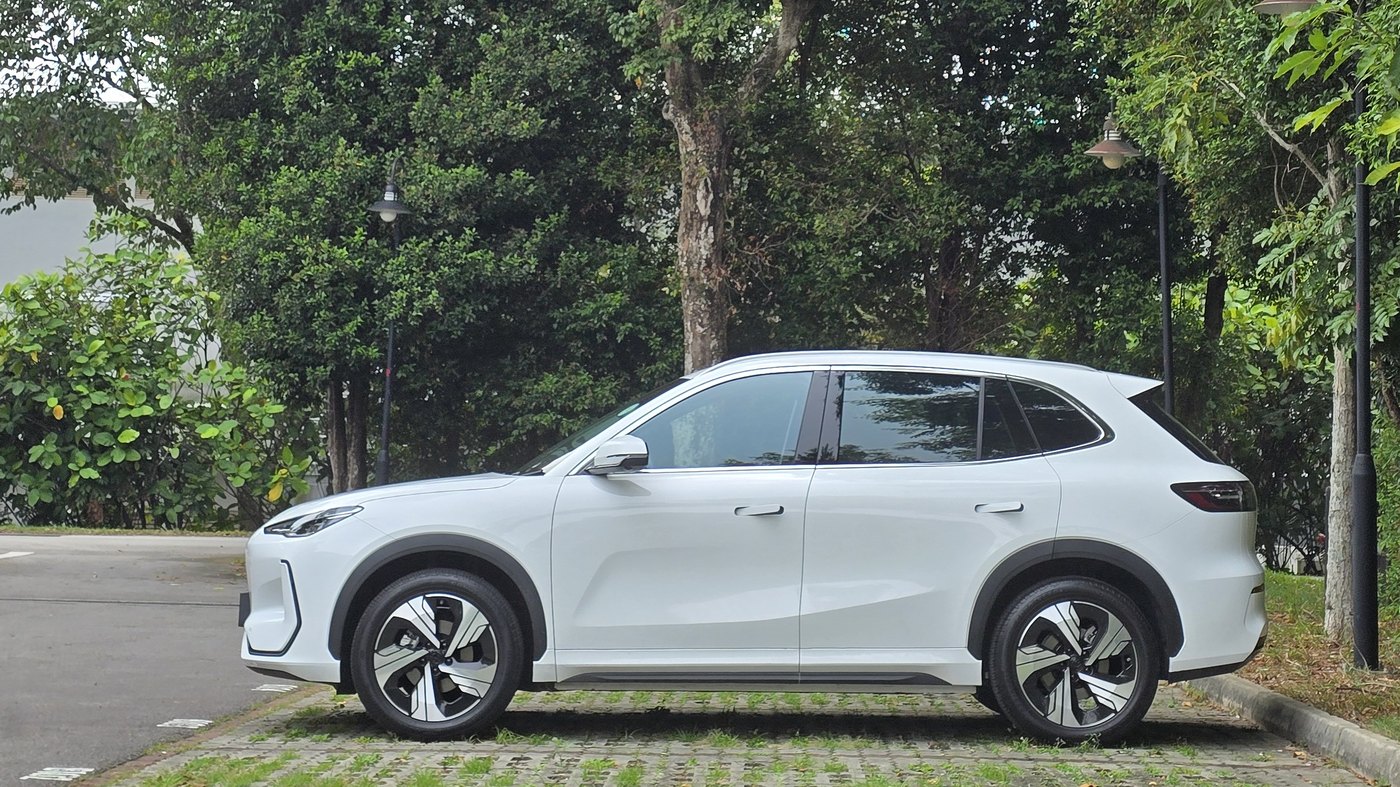
Looks are the one thing I will not score for you. The tiger badge, the slim lights, the general sense of a lot going on: some people like it, some do not. For what this car is trying to be, a spacious, well-equipped family SUV that does not cost a fortune, I think it looks fine.
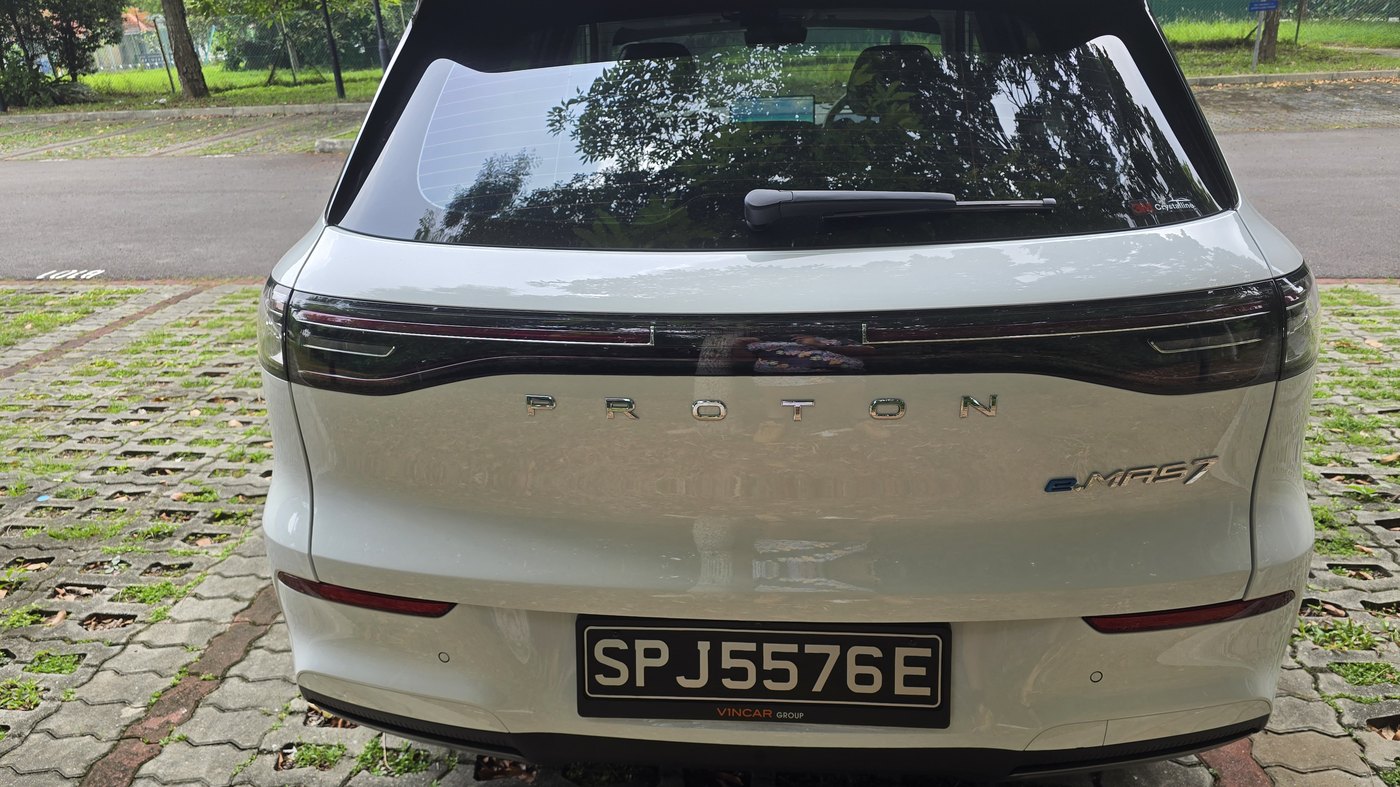
The bigger issue is the word on the tailgate. Singapore has decades of memory attached to that badge, and most of it is of a cheap, poorly made car from across the Causeway. The car in front of you has nothing to do with that. It is a Geely in every way that counts. I think it would sell far better here wearing the Geely badge, and I think it deserves to.
Buying one
VINCAR's price list valid until 18 November 2026 has the e.MAS 7 Premium 100 kW at S$198,988 with COE on Assure Plus, which guarantees four COE bids, or S$203,988 on Assure Max with two bids. Those are the promotional prices, which need in-house finance on a 60 per cent, seven-year loan, in-house insurance and a trade-in, so the number on your contract may differ. The list price before any of that is S$245,988. The battery warranty is 10 years with unlimited mileage, and both the warranty and roadside assistance work across the Causeway; confirm the vehicle warranty term with VINCAR.
There is one e.MAS 7 for Singapore, so the choice is the smaller e.MAS 5 at S$185,988 on the same list, or something else. The same-size Cat A cross-shop is the Leapmotor C10, which was S$197,999 on October lists and which we scored 7.2. A step smaller and cheaper are the BYD Atto 3 Evo at S$187,888 and the MG S5 at S$191,888 on October lists, and the Omoda E5 at S$178,999, which we scored 6.6. None of them gives you a head-up display, 16 speakers and this much back seat for the money. Line them up in our compare tool.
The verdict
The e.MAS 7 is the best value for money EV I have driven. Space, comfort, a head-up display, a good screen, a great stereo, cooled seats, cold aircon, and a price that embarrasses cars with half the kit.
It is also slow, short on range and naggy, and it has to overcome a badge that most Singaporeans wrote off twenty years ago.
If you can get past that, and you are not buying a car to be entertained by it, this is the one to put at the top of the list. It is an earnest car. It does the job well, every day, and for the money there is nothing I would rather send a family to.