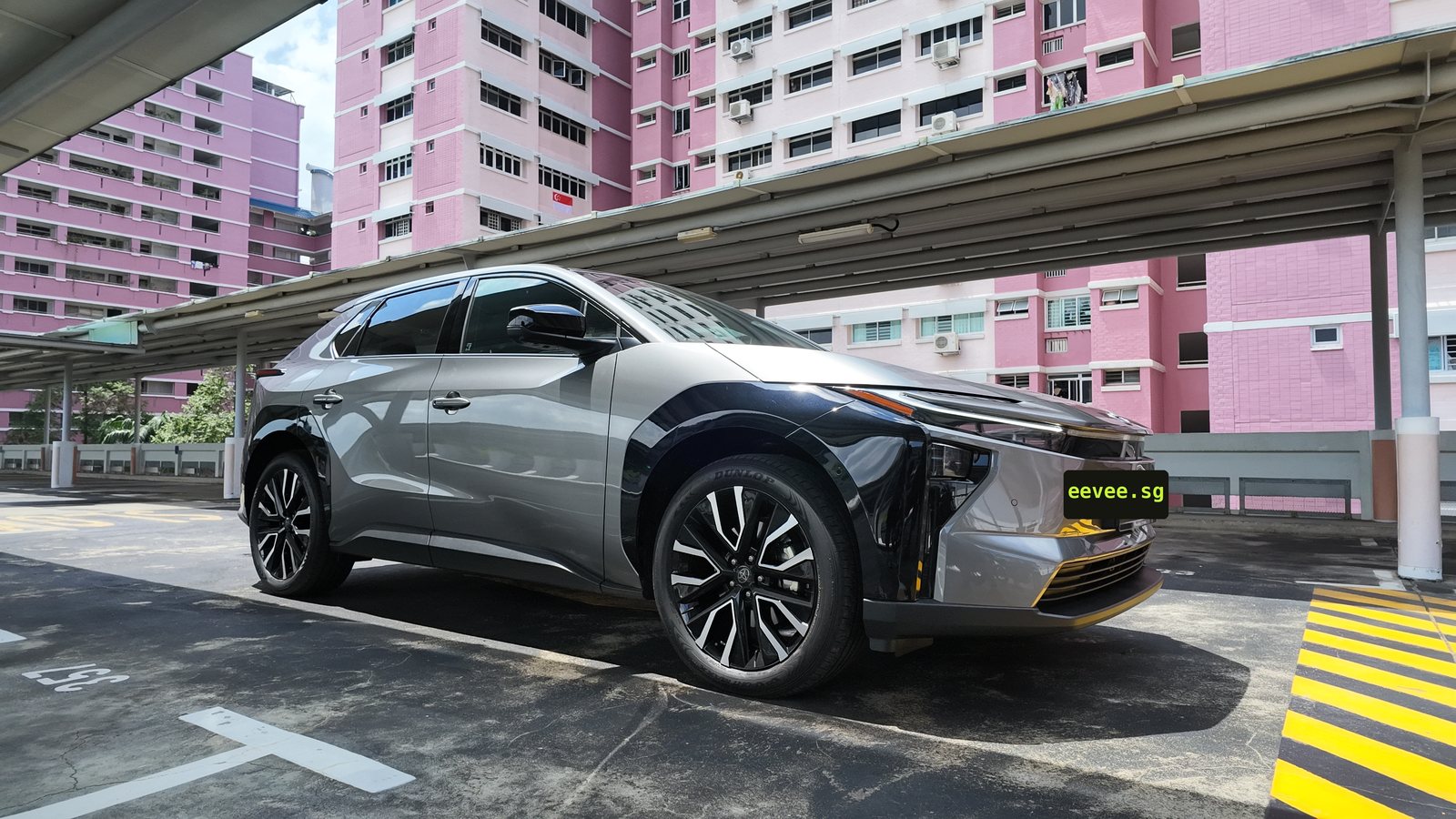
For as long as most of us have been driving, Toyota was the answer. Not the exciting answer. The correct one.
The Corolla Altis that just kept going. The Harrier your neighbour bought and never once complained about. The Sienta on the school run. Toyota was the byword for a car that starts every morning, costs nothing to keep, and holds its value when you sell it. For years it was Singapore's best-selling brand, and it was not close.
Then the Chinese arrived. Last year BYD registered 11,184 cars here. Toyota registered 7,466. A brand that did not sell a single car in Singapore before 2022 now puts one in five new cars on the road.
That is the ground the bZ4X lands on. And in electric terms Toyota is late. Tesla has been at this for years. The Chinese brands are on their third and fourth generations. Even fellow Japanese makers got here first, and the Germans committed long ago.
Toyota's first fully electric car sold to private buyers in Singapore arrives on the back foot, in a market it used to own.
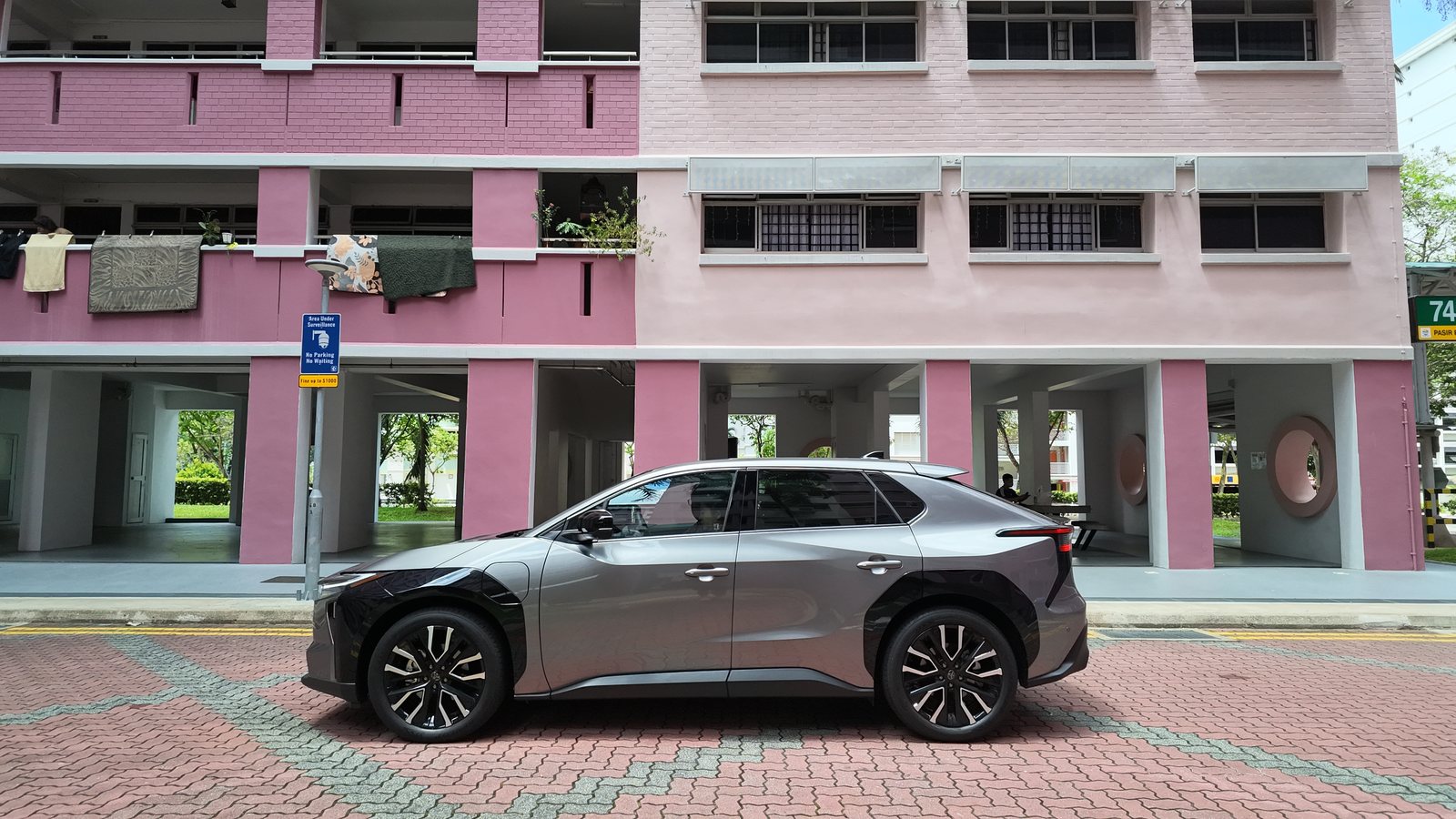
Which made the job clear. Toyota's first EV had to feel like a Toyota.
It does. That is not a backhanded compliment, it is the most impressive thing about this car. It has a power button, the first EV I have driven with one. The controls sit exactly where a lifelong Toyota driver would reach for them. Nothing has been moved into a menu to prove a point.
If you are stepping out of a Corolla or a Harrier and you have been quietly dreading the switch, this car will not frighten you once.
Wonderfully engineered
Start with the part Toyota clearly cared most about.
The chassis is solid. The drive system is excellent. The ride is comfortable, the suspension is genuinely good, and the power is exactly the right amount: quick enough to be satisfying, never silly. It feels secure. It feels safe. There is very little I can fault in the underpinnings, and in composure and quality it holds its own against things costing considerably more.
It also feels like it will still be doing this in ten years. Hundreds of thousands of kilometres, no drama. That is the Toyota promise, and this car makes it credibly, which is more than most new EVs manage.
Toyota clearly believes it too. Ten years of servicing, ten years of traction battery warranty, ten years of roadside assistance, and six years on the car itself. Nobody else in this segment is offering that here. It is a company putting a decade of its own money behind the engineering.
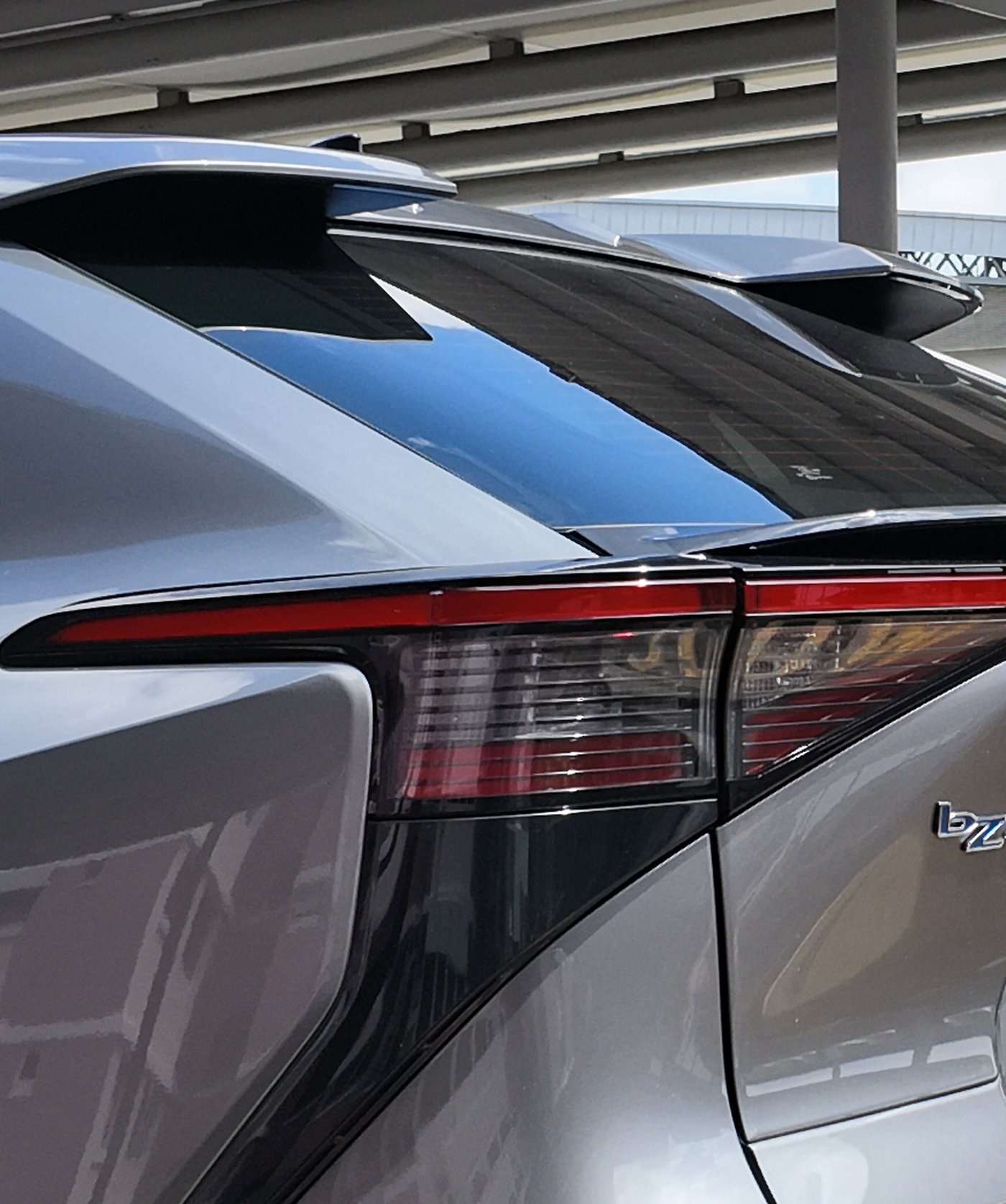
And then you look around
It is as though whoever engineered this car and whoever designed the cabin were never in the same room.
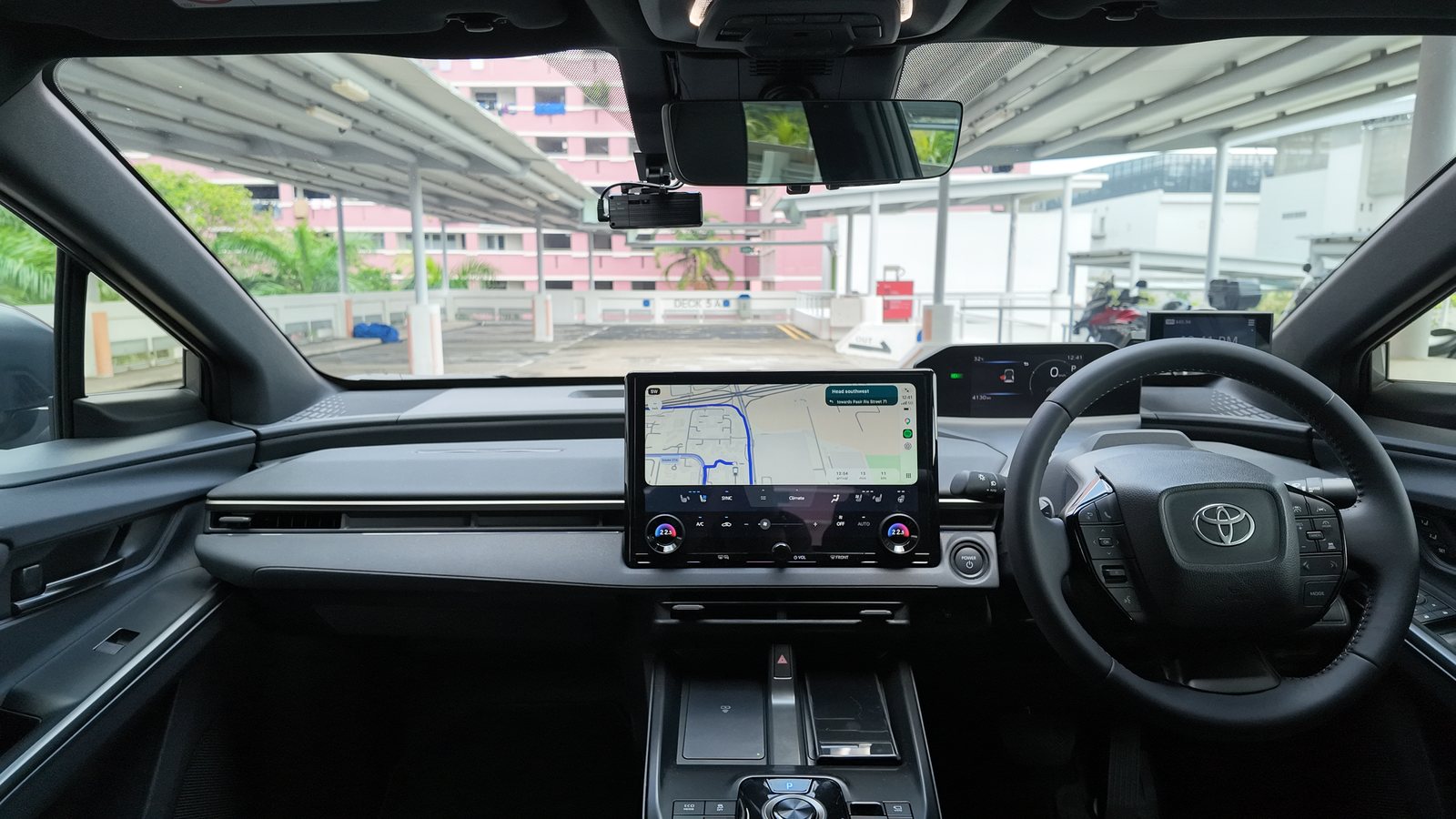
The interior is boring. Not cheap, not badly made, just flat. Soft-touch materials in the right places, build quality where you would expect it, and one interior colour: black. What is missing is any sense of occasion, and in 2026 that is a real absence.
Kia and Hyundai worked out years ago that an EV was a licence to have fun with a cabin, and they leaned into the flash and the flair. Toyota, like most of the Japanese, held back. The Chinese brands treat the interior as the main event.
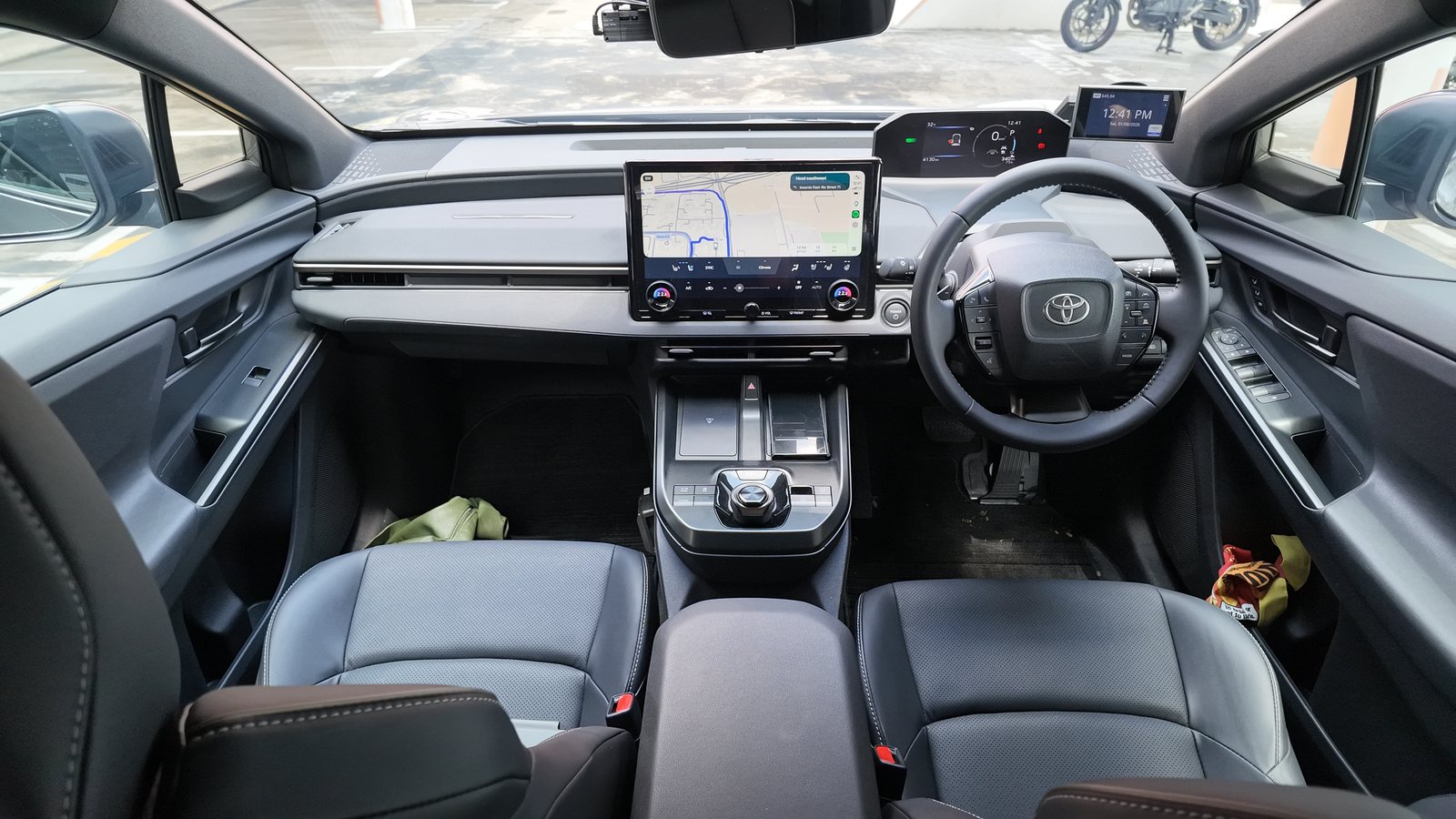
I reserve a special degree of dislike for the steering wheel. It is too small. It is oddly shaped. It is not comfortable to hold, and the buttons are crowded together so tightly they read as one mass rather than individual controls.
Worse, the wheel gets in the way of the driver's display. The top of the rim cuts across it, so I sit deliberately higher than I want to just to see the speedo. The brochure describes the cluster as unobstructed, thoughtfully placed to keep key information in your line of sight.
It is not, and I noticed within the first five minutes.
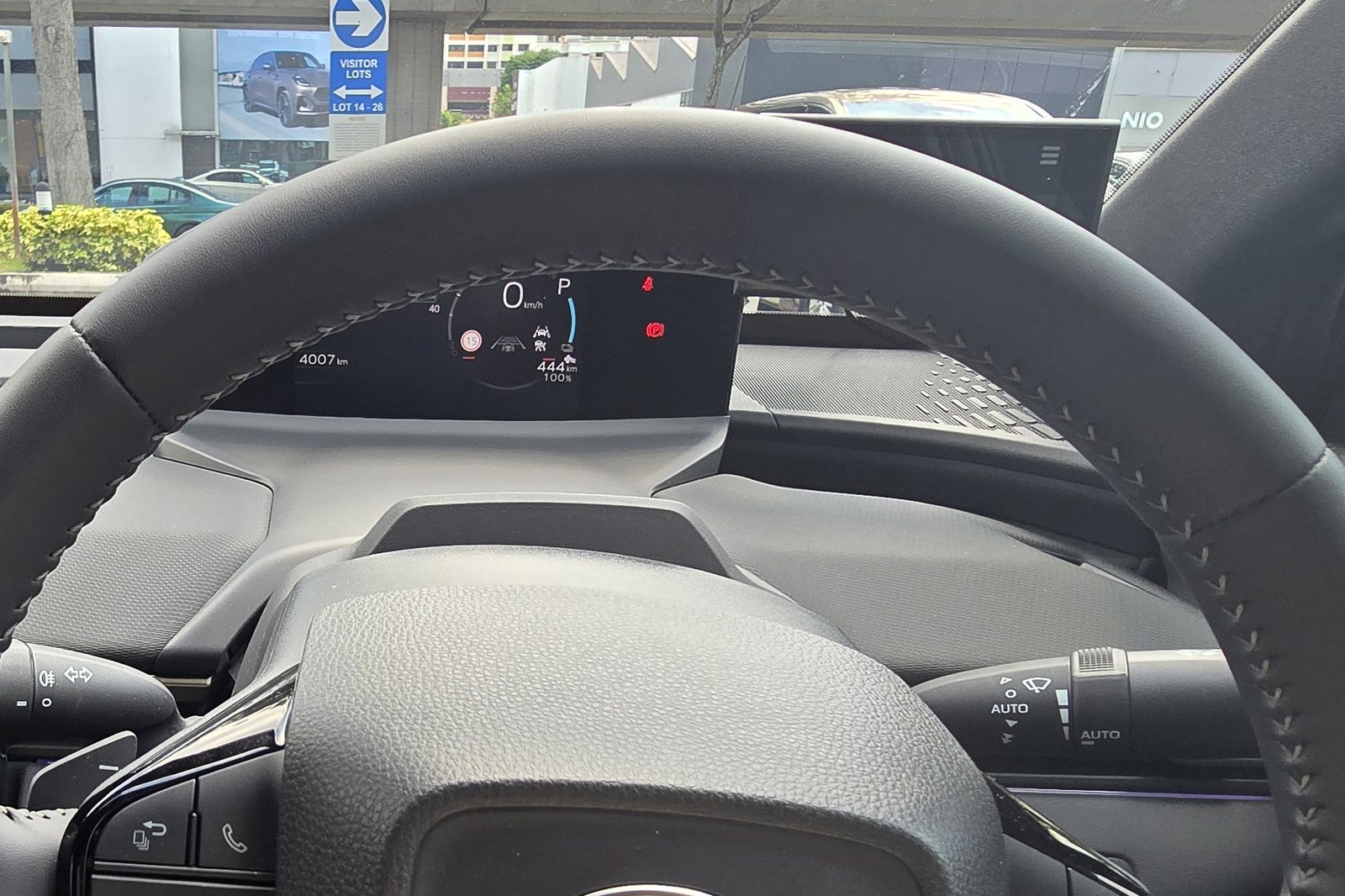
Whoever engineered this car and whoever designed the cabin were never in the same room.
There is real good in here. The infotainment is fast and the screen is crisp. Physical dials survived for climate and volume, which more expensive cars keep getting wrong. The aircon is very good. The ventilated seats are a godsend, and in this climate that is not a footnote.
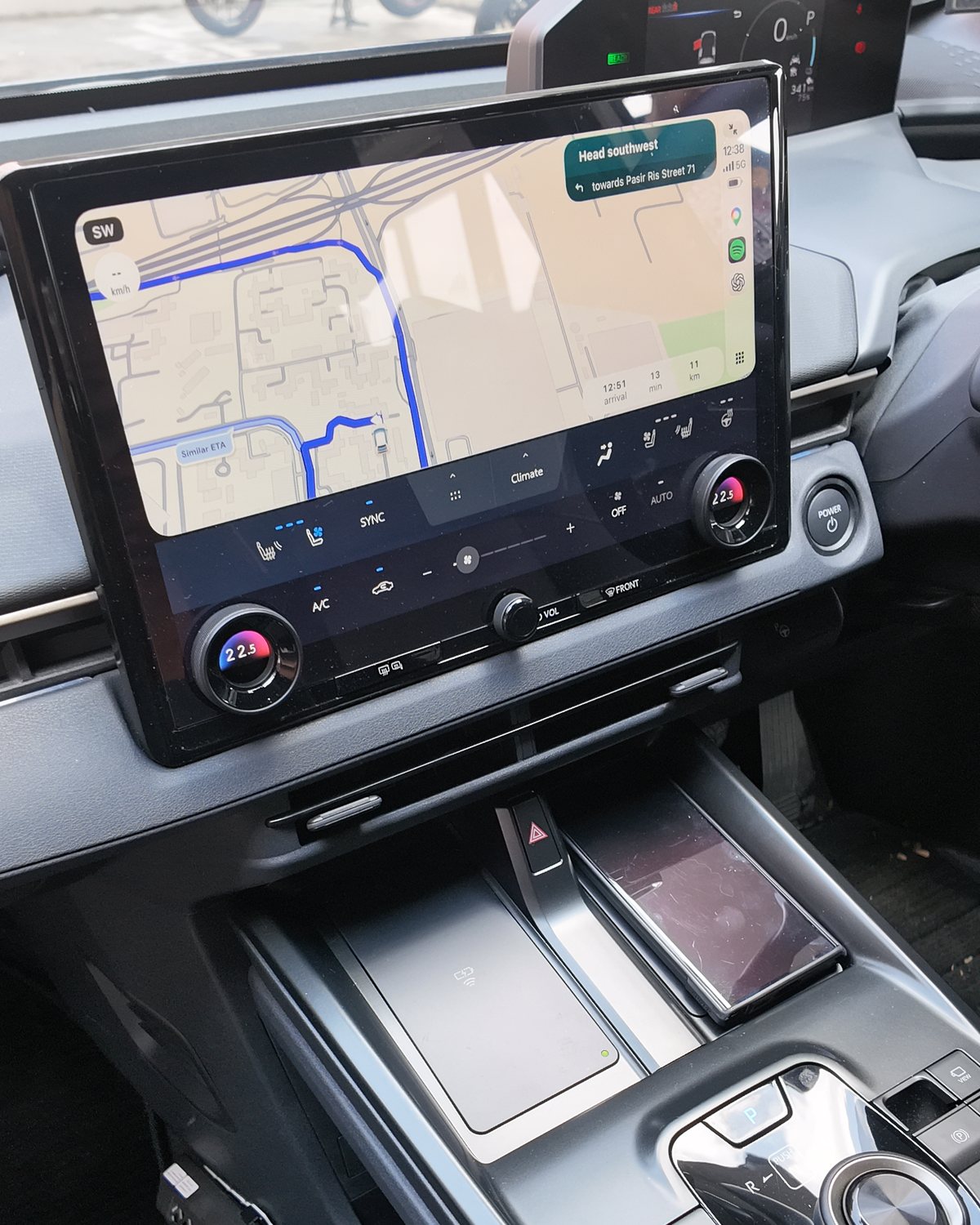
Then the small stuff starts to grate. CarPlay is wireless. Android Auto is wired. In a market where most phones are Android, that is a strange way round to get it, and there is no reason for the inconsistency other than nobody deciding it mattered.
The sound system is the more frustrating one. Six speakers, no upgrade offered, and it is heavily bass-forward. If you like bass you will like it. I found it too bass-heavy, and then discovered there is nothing I can do about it. No EQ. No speaker settings. No control at all. That is not a hardware limitation, that is software, and it is exactly the kind of thing that should be fixed rather than shipped.
One more, and it tells you something. The drive modes are Eco and Snow. That is the entire list. Snow, in Singapore, alongside heated front seats, a heated steering wheel and heated rear seats. Nobody localised anything. Meanwhile the car that is quick and composed and genuinely enjoyable to drive does not offer a Sport mode.
Practical, in the way that actually counts
Here is where the sensible engineering shows up inside.
The boot is big, 452 litres, and usefully square with it. The rear seats are the surprise: proper legroom, proper headroom, and comfortable enough that nobody complained on a longer run. A lot of EVs in this size class make the back bench an apology. This one does not.
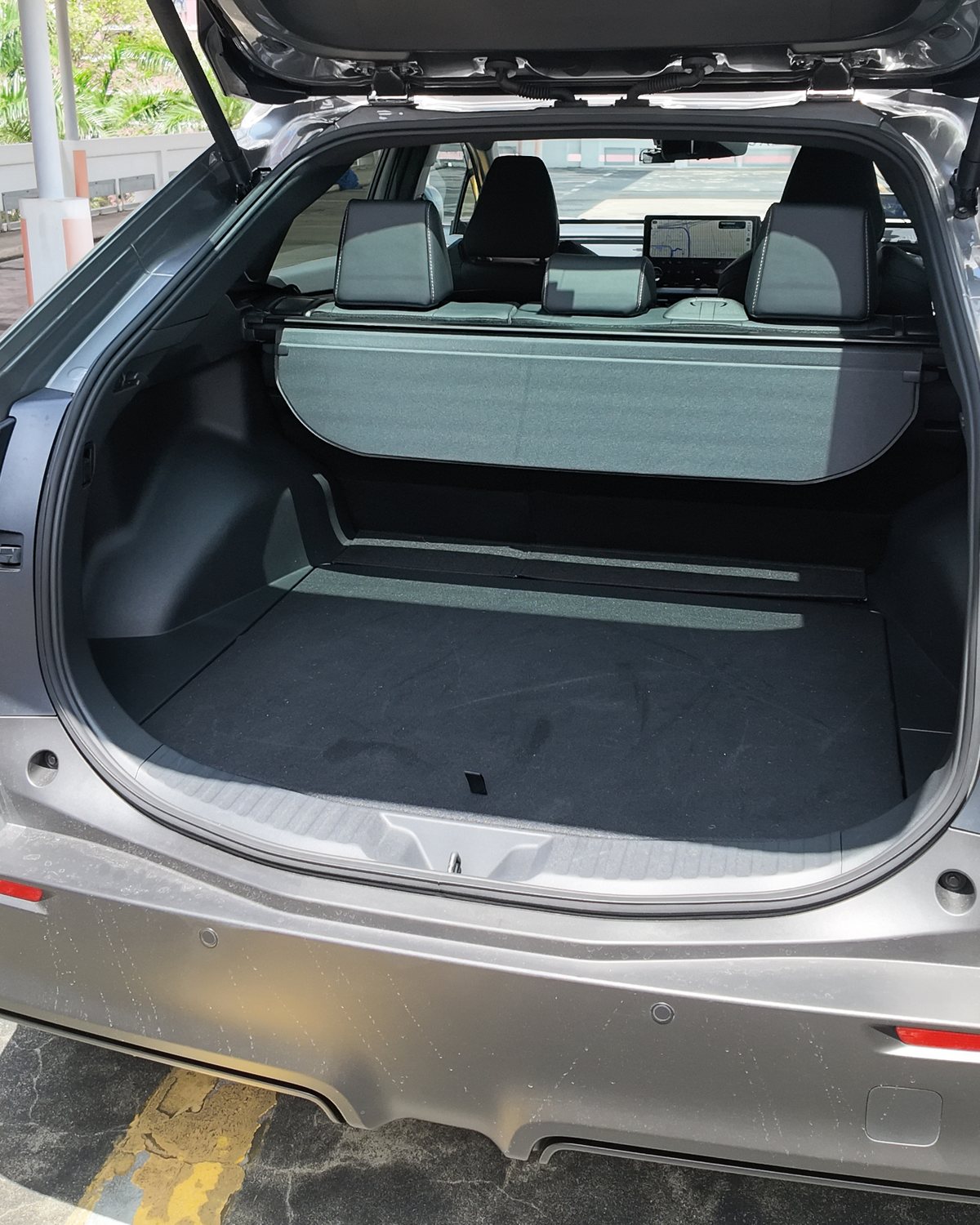
Add the kick-sensor tailgate, two wireless charging pads, USB-C front and rear, and rear air vents, and the daily-use case is genuinely well covered. None of it is exciting. All of it works.
Living with it in Singapore
A full charge shows around 450 km, and over a week I averaged about 16 kWh/100km. Toyota claims 16.3. The car is doing what it says it will, in real Singapore traffic, in real Singapore heat. For context on how good that is, the much larger smart #5 managed 17.2 on the same roads.
That is rarer than it should be, and it matters more than the headline range figure. This car's historic weakness was the gap between the claim and the reality. That gap has closed.
Charging is straightforward. 150 kW DC means a top-up is never an event. The 22 kW AC charger is the quiet highlight, because most rivals cap AC at 7 or 11 kW, and if you charge at home or at the office that is where you will feel the difference.
VES Band A. The harder Singapore number is the COE category. 223 hp puts this in Cat B, and that decision follows the car everywhere. At S$214,888 it is not competing with the Cat A crowd. It is competing with cars that ask a lot more money and usually give a lot more theatre.
Who this is actually for
Picture the Toyota uncle.
Corollas and Harriers for twenty years, never a problem, never a reason to think about it. Now he wants to go electric, and he walks into a market full of brands he has never heard of.
He does not want to gamble. He wants a car that works, from a company that will still be here in ten years to fix it.
This is that car. It is the safe choice in a market that has run out of safe ones.
That is what I mean by gateway EV, and I mean it as praise. Nothing here is strange. Nothing has to be learned. You get in, press the button, and drive, and it feels like every Toyota you have ever trusted.
Judged purely as an EV, against a market that has decided it wants a smartphone on wheels, it is not that. It is a well engineered car with a cabin that has not kept up. BYD will sell you a Sealion for meaningfully less money and considerably more flash.
The verdict
This is a real shame, and I want to be precise about why. Not because the bZ4X is a bad car. Because it is a lovely one. It rides beautifully, it drives better than its price suggests, it carries four people in comfort, it feels built to outlast its owner, and it is the easiest EV in Singapore to move into from petrol.
Toyota did the hard engineering and did it properly.
It just needs some sexiness. It needs the next version to look at what Lexus is doing, or at what its Chinese rivals are doing, and understand that in this market the cabin is not the afterthought.
Get that right and this becomes an easy recommendation. As it stands it is a superb car that keeps apologising for itself from the driver's seat.