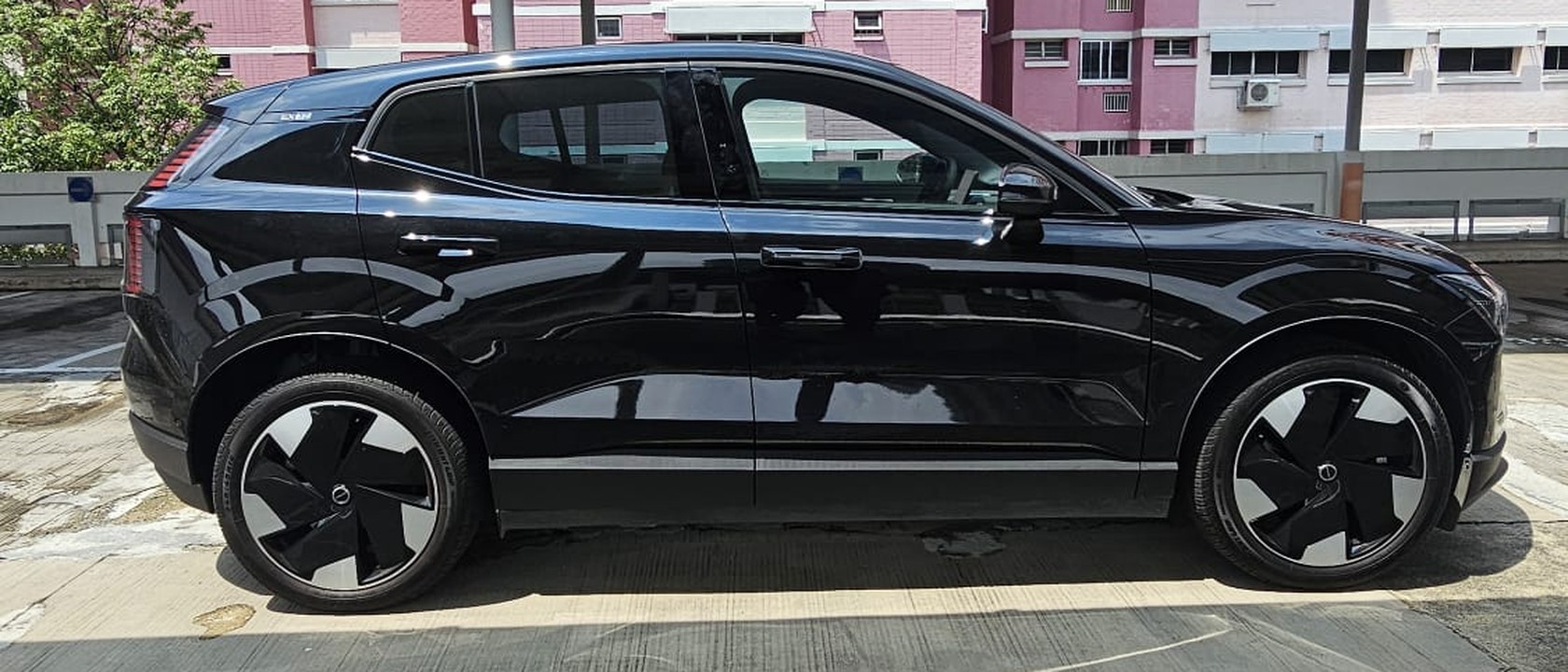
Volvo has spent most of a century building sensible, boxy things designed above all to keep you alive. The EX30 is the first in a long time that also seems to want you to enjoy the drive there. It is the smallest and cheapest car the brand sells, and after a week with the top-spec Ultra, I think it might be the cleverest.
This is not a car for people who read power figures at breakfast. It is a car for people who want something that feels expensive, keeps them calm and comfortable, and carries them across town without a shred of fuss. Judged on that, it very nearly delivers in full. Nearly.
Everything lives in the screen
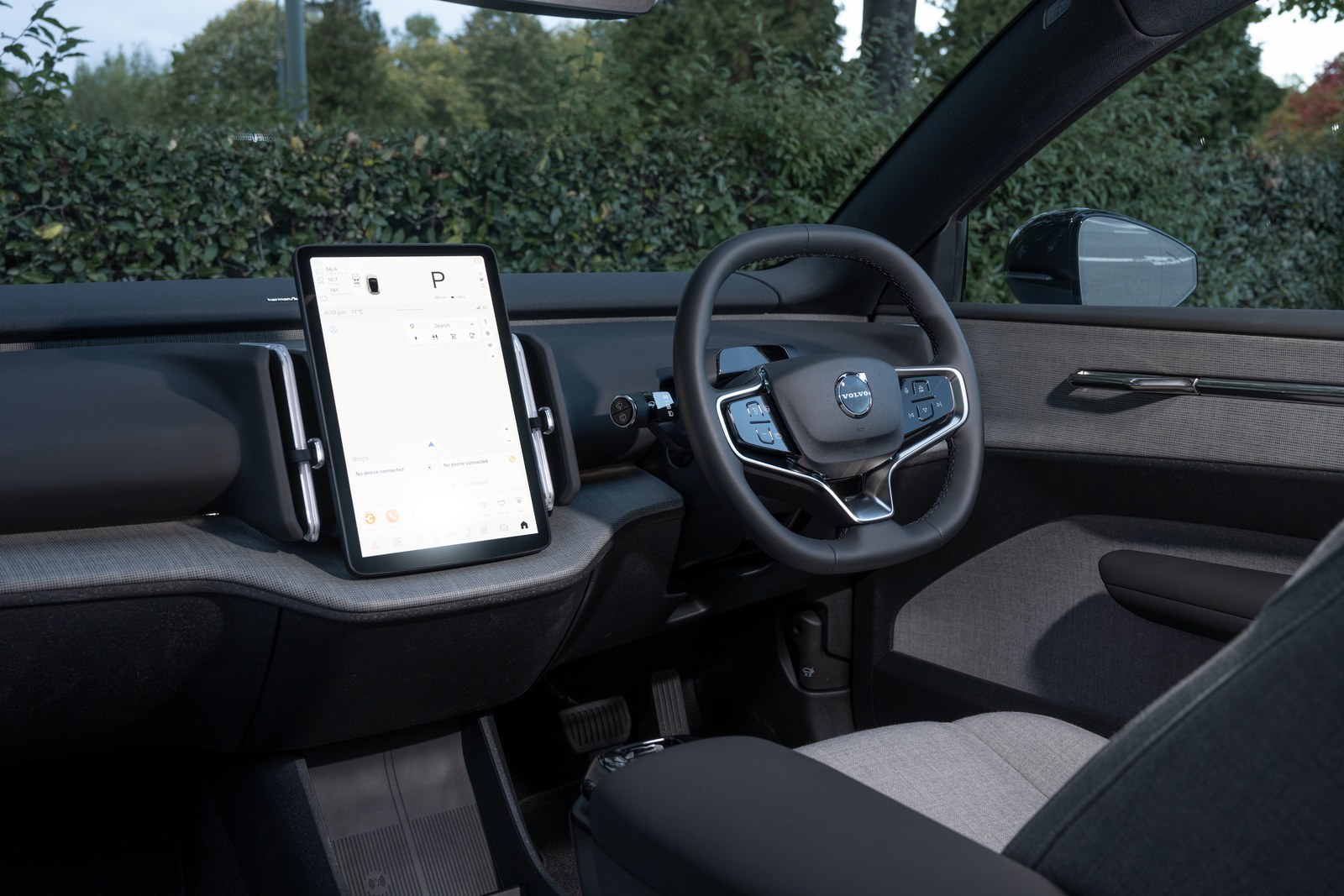
There is one screen in the EX30, a 12.3-inch portrait panel in the middle of the dash, and it runs the entire car. I walked in expecting Google's system to wear on me. It did the opposite. It is quick, it is clean, the built-in app store is properly useful, and Gemini, which Volvo runs here in Singapore, is comfortably the best in-car assistant I have used. You talk to it the way you would talk to a person, and it answers like one, with none of the stilted command words or the three attempts it takes to set a destination in most cars. I liked it enough that when I plugged in Android Auto, I was back on Volvo's own layout inside a day. The portrait shape feels strange for about that long, then it clicks, especially for maps, where you see far more of the road ahead than any widescreen manages.
So the software itself is a genuine high point. What I am far less sure about is what Volvo has decided to do with it. Everything, and I mean everything, lives in that screen. Your speed, because there is no driver's display in front of you at all. Your climate. Even the wing mirrors, which you adjust by first calling them up on the touchscreen and then nudging them with the buttons on the wheel. However good the screen is, it is still a screen, and for something as basic as squaring up a mirror or checking how fast you are going, I badly missed a dial or a button I could find without looking down. It is the one place where the cleverness has gone a step too far.
The Google software is the best I have used in a car. What Volvo has chosen to do with it is another thing entirely.
A cabin worth sitting in
Everywhere else, the cabin is a lovely place to spend time. The recycled materials look and feel a clear class above the price, it is elegant in that restrained, unmistakably Volvo way, and it stays comfortable through a long, sticky Singapore afternoon. There are five ambient lighting themes with gloriously Scandinavian names, and Northern Light in particular keeps a little of the Nordic strangeness that the best cars from up there always seem to carry. The retractable cupholders tucked into the armrest are one of those small ideas you never notice until you use them, and then wonder why every car does not think this way. If I am honest, the same minimalism that keeps it all so calm can, here and there, tip into feeling a touch bare. Serene, yes, but a little light on personality. A small mark against a genuinely nice interior.
And then there is the sound, which has earned a paragraph of its own. Volvo has done away with the usual door speakers and run a Harman Kardon soundbar across the base of the windscreen instead, the same idea as the one sitting under your television at home. Nine speakers, more than a thousand watts, and the result is bass with real weight, audio that holds together when you push the volume, and a soundstage that fills the whole cabin. There is a clever knock-on, too: with nothing living in the doors, the door bins are far bigger. It is exactly the sort of quiet, sensible cleverness that runs right through this car, and I did not want to get out. Better still, in Singapore it is standard, not something you have to climb a trim ladder to reach.
On the road
On the move, the EX30 is comfortable, quiet and completely undramatic, and that is entirely the point. There is a satisfying shove the instant you touch the pedal, the way electric cars always deliver, so it feels eager pulling out of a junction or slotting into a gap in traffic. Ask it to actually hurry, though, and the 8.6 seconds it needs to reach 100 km/h tells the real story: this is brisk enough, not quick. Point it down a run of bends and it gently reminds you it was never built for that. It stays calm, it stays comfortable, it gets on with the job. This is not a driver's car and it has never once pretended to be, and taken as effortless, comfortable transport, which is exactly what it is, it does the job beautifully. The safety kit is everything the badge promises, a full suite of assists watching over every corner of the car. Once or twice the lane-keeping got a little panicky and chimed at me, but never the relentless, teeth-grinding nagging that some of these systems inflict.
Living with it in Singapore
Range is decent rather than dazzling. The Ultra is rated at up to 475 km, and driving normally I saw around 425 km on a full charge, which is comfortably a week of Singapore running between plugs, with the odd trip up to JB well within reach if you plan it. Find a proper fast charger and it will take 10 to 80 percent in about 28 minutes, solid, middle-of-the-road pace rather than class-leading. The local sweetener is a real one: the EX30 now slips under the Category A COE cap, it sits in VES Band A, and Volvo backs it with a five-year, 160,000 km warranty. Work that maths through and it starts to look like a lot of premium EV for the money.
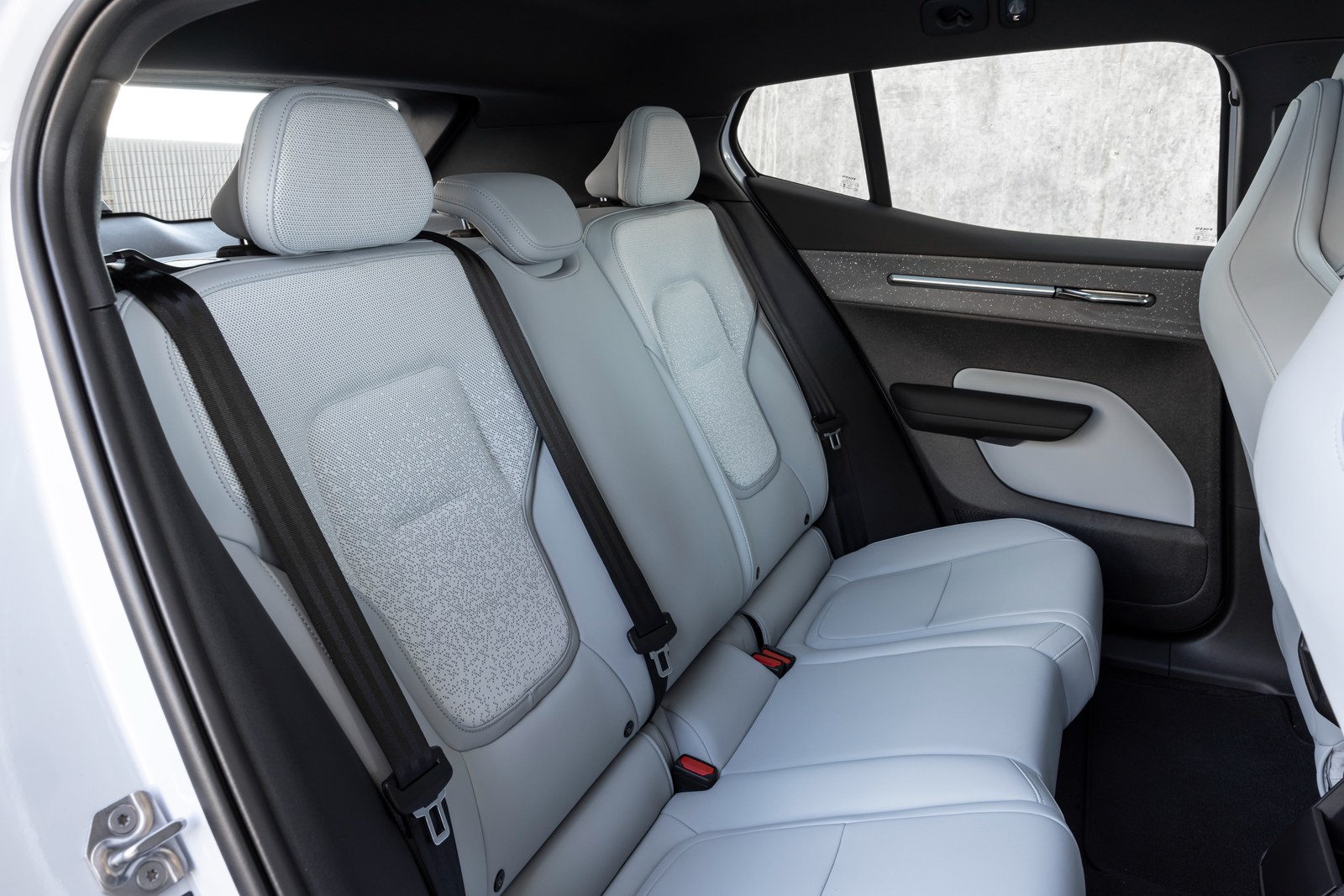
Where the small footprint does bite is practicality. The 318-litre boot is modest for the class, so a proper family shop or a pair of big suitcases will have you dropping a rear seat. The 7-litre frunk up front is a lovely surprise, though, exactly the right size to swallow the charging cable so it never ends up tangled with the shopping. The back seat is the other compromise. It is perfectly fine for Singapore, for kids and short hops across town, but sit three adults across it on a longer drive and it will be a squeeze. This is a small car, and every so often it makes sure you remember that.
The verdict
So here is where I land. The EX30 is a small, premium, seriously tech-forward EV that knows exactly what it is and refuses to pretend otherwise. It looks wonderful, it sounds even better, it keeps you calm and safe, and it asks for only one thing in return: that you make your peace with running your whole car through a single screen. If that one catch does not put you off, and for the buyer this car is built for, the one who wants premium, point-to-point calm and none of the noise, it is very easy to recommend. It is not trying to thrill you. It is trying to look after you, and it turns out to be rather good at it.